
Dominique Munongo: DRC Deputies' Achievements Rejection
Summary
- National Deputy Dominique Munongo Imamizi, an opposition member, rejected a request from the DRC National Assembly bureau to provide photographic proof of deputies' achievements.
- Munongo's statement emphasized that the responsibility of parliamentarians is not to substitute themselves for the executive branch.
- The request aimed to compile an assessment of deputies' accomplishments, which Munongo and other opposition members opposed.
- This incident highlights a debate over the constitutional boundaries and separation of powers between the legislative and executive branches in the Congo.
- Munongo's stance reinforces the distinct roles of law-making and oversight for parliamentarians, separate from executive implementation.
What Happened
Deputy Munongo articulated a clear stance, asserting that the legislative function of parliamentarians does not involve assuming the duties or roles typically assigned to the executive branch.
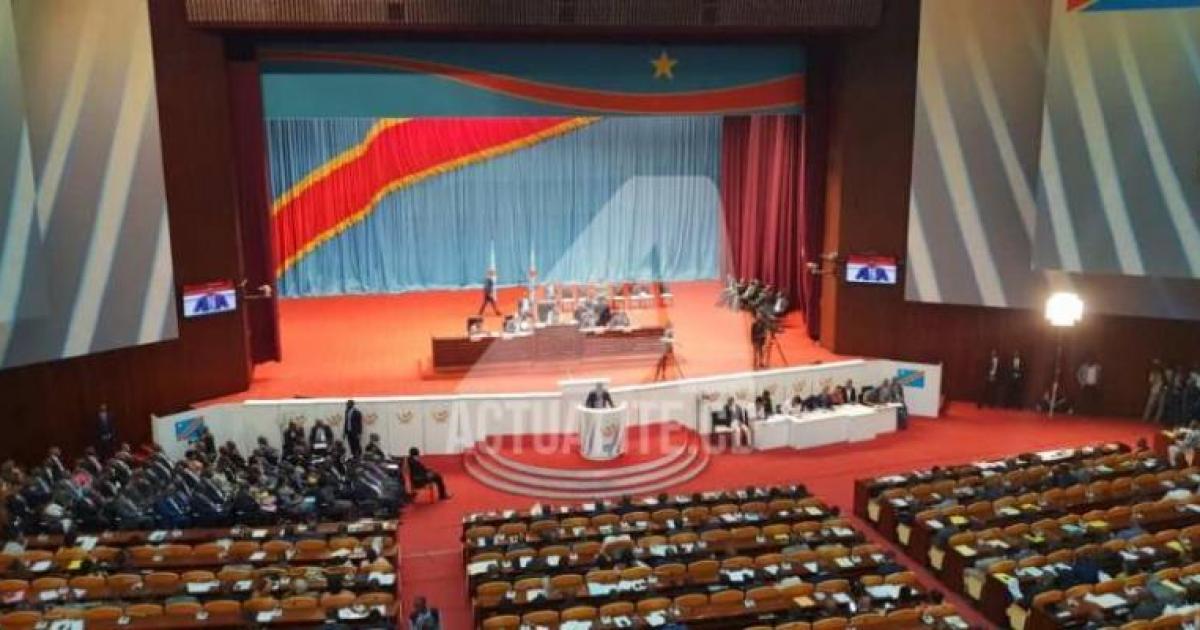
National Deputy Dominique Munongo Imamizi, a prominent member of the opposition, recently rejected a specific request issued by the bureau of the DRC National Assembly. This request had called upon elected officials, including deputies, to submit evidence of their accomplishments, particularly in the form of photographs. Munongo's rejection aligns with the position taken by several of her opposition colleagues, highlighting a broader disagreement within the legislative body regarding the nature of parliamentary duties.
The directive from the Assembly's bureau sought to compile a 'Bilan des réalisations des députés,' or an assessment of deputies' achievements. However, Deputy Munongo's response underscored a fundamental principle concerning the division of governmental powers. Her public statement on October 11, 2026, emphasized that the role of a parliamentarian is distinct from that of the executive branch, rejecting any perceived blurring of these constitutional lines.
Parliamentary Role and Oversight
In her statement, Deputy Munongo articulated a clear stance, asserting that the legislative function of parliamentarians does not involve assuming the duties or roles typically assigned to the executive branch. This perspective is crucial for understanding the Congo legislative responsibilities, which primarily revolve around law-making, representation, and oversight, rather than direct implementation of projects or executive actions. The request for deputies to provide photographic proof of 'achievements' could be interpreted as an attempt to measure legislative success through executive-style deliverables, a notion Munongo firmly opposed.
This rejection by Dominique Munongo regarding deputies' achievements highlights a critical aspect of DRC National Assembly oversight. While parliamentarians are tasked with scrutinizing the executive and holding it accountable, their own 'achievements' are generally understood in terms of legislative output, policy influence, and effective representation, not through tangible projects that fall under the executive's purview. Her statement serves as a reminder of the distinct functions within the state apparatus, reinforcing the principle that the parliamentary role executive substitution is inappropriate.
Constitutional Boundaries and Separation of Powers
Deputy Munongo's firm stance on the matter implicitly references the constitutional boundaries that delineate the powers and responsibilities of the legislative and executive branches in the Democratic Republic of Congo. By stating that parliamentarians should not 'substitute ourselves for the executive,' she is advocating for a strict interpretation of the separation of powers, a cornerstone of democratic governance. This principle ensures that each branch operates within its defined mandate, preventing overreach and maintaining checks and balances.
The request from the National Assembly's bureau, which prompted Munongo's reaction, could be seen as potentially blurring these lines by asking legislators to demonstrate achievements that might more appropriately belong to the executive's domain. Her Dominique Munongo statement therefore acts as a defense of the legislative branch's unique identity and purpose, asserting that its effectiveness should not be measured by metrics typically applied to the executive, but rather by its adherence to its core legislative and oversight functions.
Why It Matters
The rejection of the request for deputies' achievements by Dominique Munongo carries significant weight for the operational dynamics of the DRC's political system. It underscores an ongoing debate about the precise scope of legislative duties and the appropriate metrics for evaluating parliamentary performance. For legal practitioners, this incident provides valuable insight into the perceived constitutional boundaries of parliamentary action, particularly emphasizing a non-substitution approach to executive functions. Lawyers analyzing legislative intent or potential challenges to executive actions within the Congolese legal framework must consider this perspective on the separation of powers.
This event highlights the importance of maintaining clear distinctions between governmental roles to ensure effective governance and accountability. Munongo's position reinforces the idea that the legislative branch's primary contribution lies in its law-making and oversight capabilities, rather than in direct implementation, thereby safeguarding the integrity of the democratic process and the distinct responsibilities of each state organ.
Practical Implications
This statement by Deputy Munongo clarifies the perceived constitutional boundaries of parliamentary action in the DRC, emphasizing a non-substitution approach to executive functions. Lawyers should note this perspective when analyzing legislative intent, potential challenges to executive actions, or interpreting the separation of powers within the Congolese legal framework, particularly concerning oversight and accountability mechanisms.
Source
How does this affect you?
Get an AI analysis of this article grounded in your jurisdictions, practice areas, and any policy documents you've uploaded to Wansom.
Finish Reading the Full Story and the Expert Analysis.
Get the latest legal & regulatory intelligence in DR Congo
Wansom is AI and can make mistakes.