
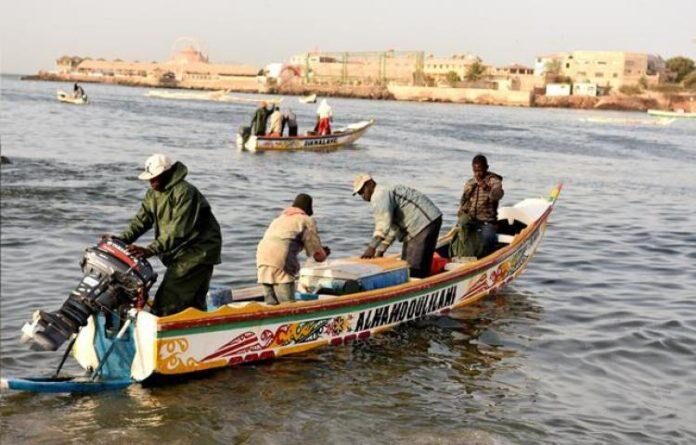
Djifère: 500m Fishing Exclusion Zone Impacts Senegal Artisanal Fishers
Summary
- Fishing professionals in Djifère report significant negative impacts from offshore oil exploitation near Sangomar.
- A 500-meter security perimeter around the oil platform prevents artisanal pirogues from accessing traditional fishing grounds.
- Local leaders highlight the rarity of certain marine species and severe coastal erosion as additional threats to livelihoods.
- Greenpeace Africa is conducting an "Advocacy Tour" to gather community concerns and help formulate collective demands.
- The community expresses frustration over the lack of follow-up on previous commitments from oil operators.
Djifère Fishermen Face Exclusion Zone Challenges
This Djifère 500m fishing exclusion zone now prohibits their traditional pirogues from entering areas that were historically vital for their work.
The fishing community in Djifère, located within the Palmarin commune, is grappling with significant challenges attributed to offshore petroleum operations near Sangomar. Local fishing professionals report a direct impact on their livelihoods, stemming from the establishment of a 500-meter security perimeter around the oil platform. This Djifère 500m fishing exclusion zone now prohibits their traditional pirogues from entering areas that were historically vital for their work.
Souleymane Thiaw, who coordinates the Local Council of Artisanal Fishing (CLPA), has articulated the profound disruption this measure causes. He highlights that the inability to access these traditional fishing grounds directly affects not only the fishermen themselves but also fishmongers and women involved in fish processing, underscoring a widespread Sangomar oil fishing impact Senegal. This restriction on maritime access rights in Senegal has effectively curtailed the ability of artisanal fishers to sustain their operations.
Broader Environmental and Economic Threats
Beyond the immediate concerns over restricted access, local stakeholders in Djifère are also observing a troubling scarcity of certain marine species. They believe these species typically reproduce in coastal waters, suggesting a broader ecological shift potentially linked to the offshore activities. This environmental concern adds another layer of difficulty for those dependent on the sea for their income.
Further compounding the community's woes is the severe issue of coastal erosion Djifère is experiencing. Cheikh Sadibou Diamé, the village chief, has voiced urgent calls for the construction of a protective dike to safeguard the coastline. He issued a stark warning that the potential disappearance of Djifère due to erosion could trigger a cascading effect, threatening the existence of neighboring communities such as Palmarin, Dionewar, and Niodior.
Advocacy for Community Rights and Engagement
In response to these escalating concerns, Greenpeace Africa has initiated an "Advocacy Tour" as part of its broader "Oceans" campaign. This initiative aims to gather firsthand accounts of the challenges faced by communities impacted by oil, gas, and coastal erosion across various sites. The organization recently convened meetings in Saint-Louis on September 9th and 10th, engaging fishing stakeholders to discuss the environmental ramifications of the Grand Tortue Ahmeyim gas project, illustrating a commitment to oil gas community engagement Senegal.
A primary objective of Greenpeace Africa Djifère advocacy is to empower local fishermen and processors to formulate a unified platform of demands. This strategy seeks to transform individual difficulties expressed in different regions into collective requests, strengthening their voice in negotiations. Souleymane Thiaw, from the CLPA, has already expressed disappointment regarding the perceived lack of follow-up on commitments made during prior engagements with oil operators, highlighting a gap in effective community dialogue. Following consultations in Saint-Louis, Lompoul, and Kayar, Greenpeace plans to consolidate these proposals to develop a comprehensive action plan and subsequently support its implementation in the affected areas.
Source
How does this affect you?
Get an AI analysis of this article grounded in your jurisdictions, practice areas, and any policy documents you've uploaded to Wansom.
Finish Reading the Full Story and the Expert Analysis.
Get the latest legal & regulatory intelligence in Senegal
Wansom is AI and can make mistakes.