
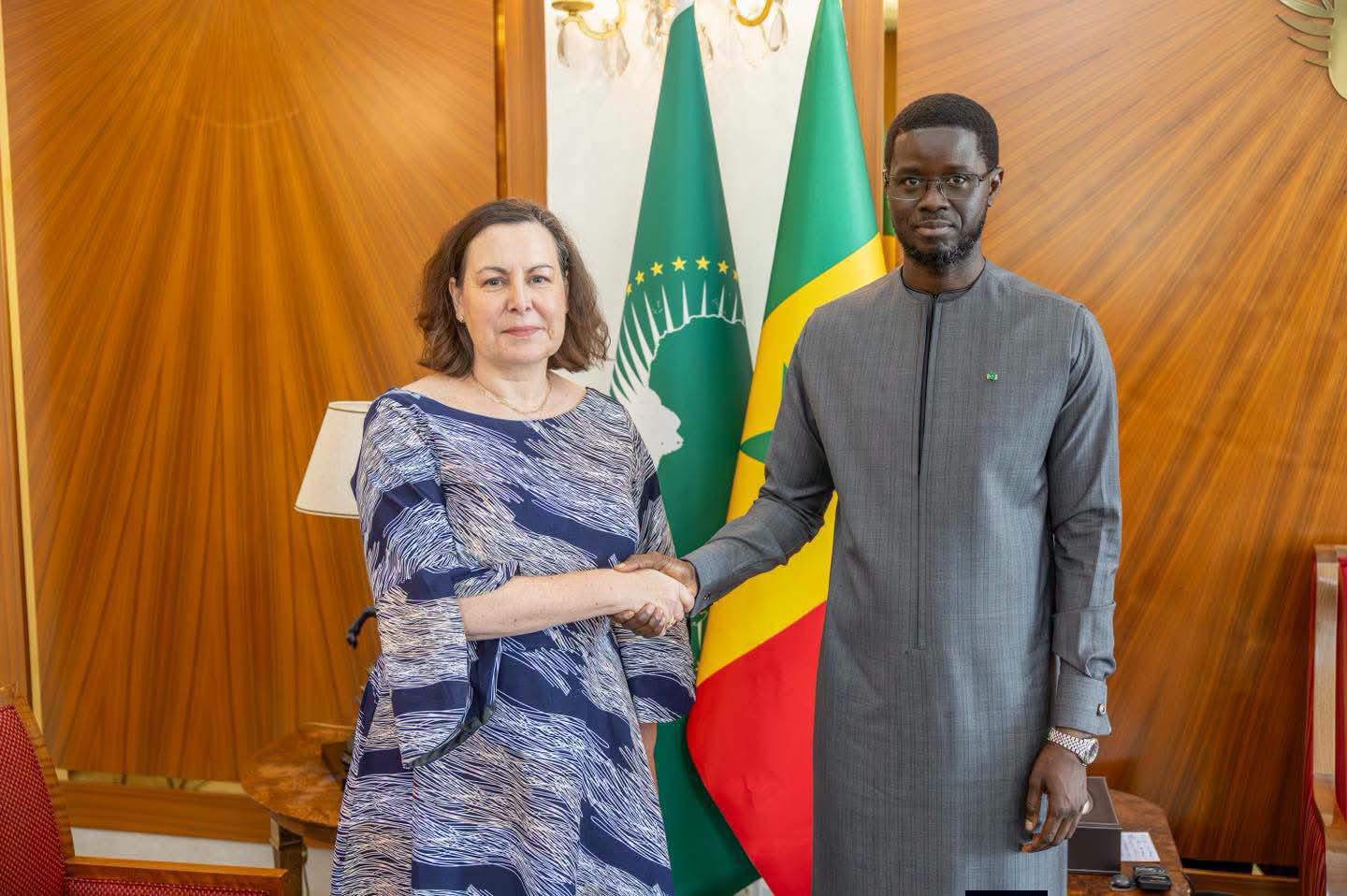
Diomaye Faye Senegal: Mandates IMF Reforms Acceleration
Summary
- President Bassirou Diomaye Faye has called for the rapid acceleration of government actions following a new technical agreement with the International Monetary Fund.
- The agreement will mobilize 1,243 billion CFA francs ($2.2 billion) over three years under the Extended Credit Facility.
- Key directives include fighting the high cost of living, controlling prices of common goods, strengthening consumer protection, and regulating rental costs.
- The President also emphasized revitalizing essential economic sectors and preparing for the next Presidential Investment Council meeting with private sector involvement.
- This push for reforms follows the IMF's commendation of Senegal's public finance consolidation and governance efforts, with public debt re-evaluated at 118.8% of GDP in 2024.
Presidential Directive on Economic Reforms
President Bassirou Diomaye Diakhar Faye has issued a strong directive to his government, urging an intensified pace of action following the finalization of a significant technical agreement with the International Monetary Fund.
President Bassirou Diomaye Diakhar Faye has issued a strong directive to his government, urging an intensified pace of action following the finalization of a significant technical agreement with the International Monetary Fund. This presidential mandate, delivered on Wednesday, September 2, 2026, from the Palais de la République, underscores a commitment to the swift implementation of economic reforms. The agreement, which had been thoroughly reviewed during a recent Council of Ministers meeting, is poised to unlock substantial financial resources for the nation.
Under the terms of this accord, Senegal is set to mobilize 1,243 billion CFA francs, equivalent to 2.2 billion US dollars, over a three-year period. This funding is structured within the framework of the Facilité élargie de crédit Sénégal, or Extended Credit Facility. The President specifically lauded the efforts of the Prime Minister, the Minister of Economy, Finance and Planning, and various state departments instrumental in the negotiation process, signaling the collaborative nature of this achievement.
However, President Faye's commendation was coupled with an unequivocal demand for rapid execution. He articulated a vision for a "Government of actions, achievements and results," emphasizing the critical need to address the expectations of the Senegalese populace. This directive highlights the administration's focus on tangible outcomes and the Diomaye Faye Senegal IMF reforms acceleration to deliver on its promises.
Key Policy Directives and Regulatory Focus
A central pillar of the President's recent instructions is the imperative to safeguard the purchasing power of citizens. To this end, the government has been tasked with a multi-pronged approach, including a robust campaign against the rising cost of living. This involves implementing stringent measures for the Contrôle prix Sénégal, specifically targeting common products and services to ensure affordability and fairness in the marketplace.
Furthermore, the presidential directives extend to the application of comprehensive consumer protection measures, designed to shield the public from exploitative practices and guarantee fair trade. A significant focus has also been placed on the Régulation loyers Sénégal, with President Faye calling for strengthened oversight and control over rental costs. This aims to alleviate financial burdens on households and promote housing affordability across the country.
Beyond consumer-centric policies, the President also stressed the importance of revitalizing essential economic sectors. This holistic approach to economic management seeks to stimulate growth, create opportunities, and ensure that the benefits of the IMF agreement translate into improved living standards for all Senegalese citizens. These directives collectively outline the government's immediate priorities in its economic agenda.
Context of International Financial Partnership
These strategic orientations from President Bassirou Diomaye Faye follow crucial discussions held in July with Zeine Zeidane, who serves as the Director of the Africa department at the International Monetary Fund. During these earlier engagements, the IMF had publicly acknowledged and commended Senegal's dedicated efforts in consolidating its public finances and enhancing governance frameworks, indicating a positive trajectory in the nation's economic management.
A significant aspect of this ongoing financial partnership involved a re-evaluation of Senegal's public debt. Following a meticulous reconciliation exercise conducted by the firm Forvis Mazars, the public debt was assessed at 118.8% of the Gross Domestic Product for the year 2024. This detailed financial scrutiny provides a clear picture of the economic landscape against which the new Sénégal FMI accord 1243 milliards is being implemented.
The Facilité élargie de crédit Sénégal, therefore, arrives at a juncture where the nation has already demonstrated a commitment to fiscal responsibility and transparent governance, setting a constructive foundation for the accelerated reforms now being demanded by the President. This collaboration with the IMF is integral to Senegal's broader economic stability and development objectives.
Future Economic Engagement and Investment
Looking ahead, President Faye has also directed the Prime Minister to commence preparations for the upcoming meeting of the Presidential Investment Council (CPI). This crucial gathering is slated to include active participation from various organizations representing the private sector, signaling the government's intent to foster a collaborative environment for economic growth and investment.
The inclusion of private sector stakeholders in the CPI underscores the administration's recognition of their vital role in driving economic development and achieving the goals outlined in the Bassirou Diomaye Faye réformes économiques agenda. This engagement is expected to shape future investment policies and identify key areas for public-private partnerships, further solidifying the nation's economic trajectory.
This forward-looking instruction emphasizes a comprehensive strategy that not only addresses immediate economic challenges through accelerated reforms but also lays the groundwork for sustainable long-term growth by actively involving all key economic actors.
Practical Implications
This development signals forthcoming regulatory changes in Senegal, particularly regarding price controls, consumer protection, and rent regulation. Lawyers advising businesses should prepare clients for potential new compliance requirements and monitor legislative developments, especially concerning economic sectors and investment policies discussed at the Presidential Investment Council.
Source
How does this affect you?
Get an AI analysis of this article grounded in your jurisdictions, practice areas, and any policy documents you've uploaded to Wansom.
Finish Reading the Full Story and the Expert Analysis.
Wansom is AI and can make mistakes.