
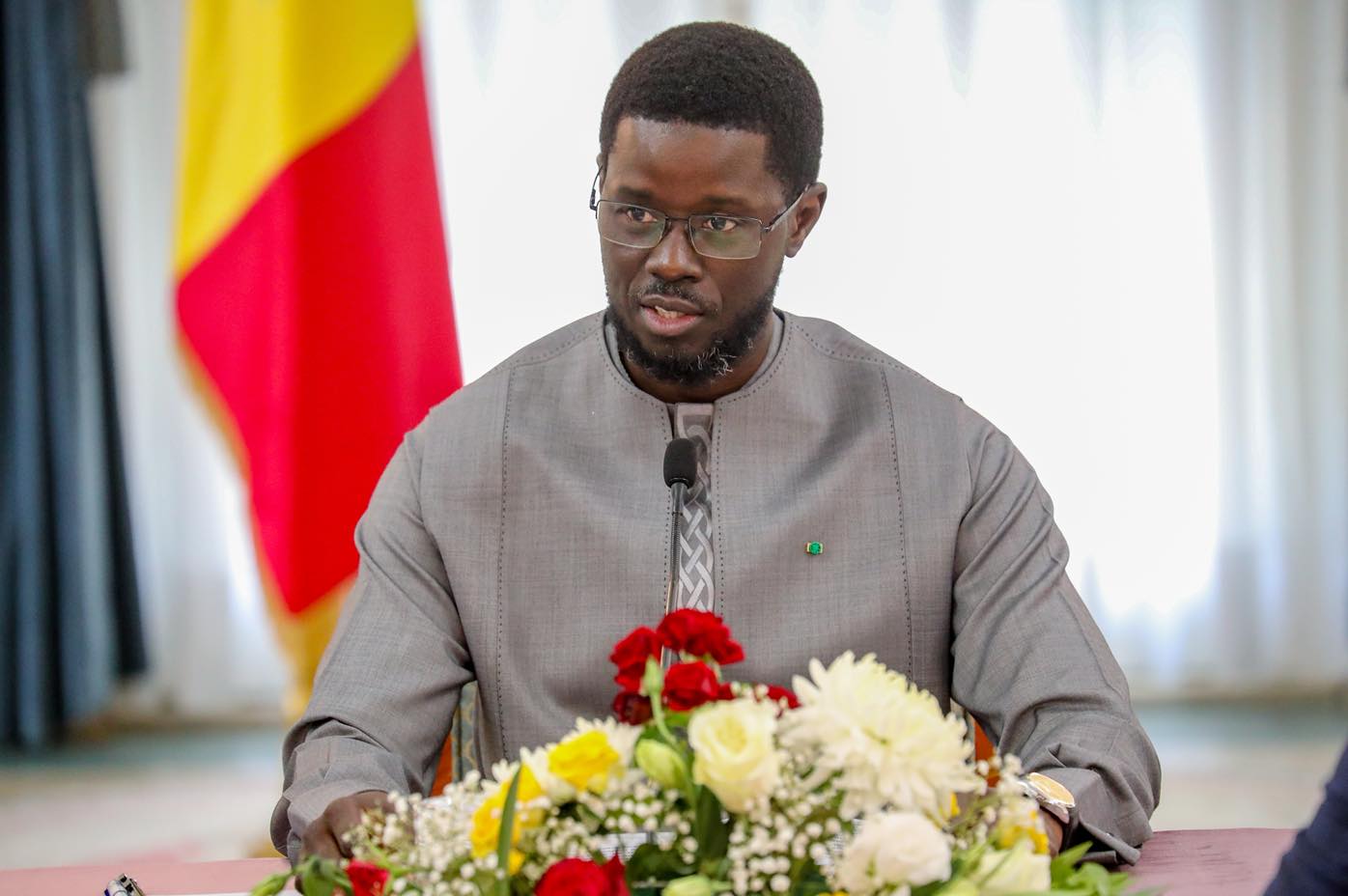
Diomaye Faye: Report Élections Locales Possible, Seeks Consensus
Summary
- President Bassirou Diomaye Faye is open to postponing local elections, provided there is a consensus.
- The Supreme Court ruled that local elections could be held until the end of 2027, rejecting calls for an immediate fixed date.
- The electoral calendar remains uncertain due to unfulfilled preparatory acts for municipal and departmental polls.
- President Faye has consulted the Constitutional Council for an opinion on combining legislative and local elections.
- Faye's immediate priority is securing an IMF agreement to restore investor confidence.
President Faye's Stance on Local Elections
President Bassirou Diomaye Faye has indicated a willingness to consider postponing local elections in Senegal, emphasizing that any such decision would require broad consensus.
President Bassirou Diomaye Faye has indicated a willingness to consider postponing local elections in Senegal, emphasizing that any such decision would require broad consensus. Speaking in an interview with France 24 and RFI, President Faye articulated his desire to avoid a state of "permanent electoral obsession" within the nation. He clarified that, at this juncture, no legal obligation compels him to set a specific date for these polls. This position aligns with his stated commitment to fostering dialogue and concertation across public affairs, suggesting a preference for a negotiated approach to the electoral calendar. The potential for a Diomaye Faye report élections locales decision underscores the fluid political landscape.
Uncertainty and Legal Challenges
The timeline for Senegal's local elections remains notably uncertain, a situation exacerbated by the absence of several key preparatory actions necessary for organizing departmental and municipal elections. This ongoing uncertainty persists despite a significant ruling from the Supreme Court (Cour Suprême), which determined that these elections could legitimately be held anytime up to the close of 2027. The Supreme Court's assessment followed two distinct legal procedures—a référé-liberté and a référé "mesure utile"—initiated by various stakeholders seeking a prompt election date. Notably, the court dismissed a specific request from the Noo Lank movement, which had petitioned for a fixed electoral schedule, thereby leaving the exact date open. Furthermore, the Front pour la Défense de la République also filed a référé "mesure utile" concerning the matter, underscoring the widespread interest in the electoral calendar. In a move to explore potential efficiencies and streamline the electoral process, President Faye has also sought an advisory opinion from the Constitutional Council (Conseil Constitutionnel) regarding the feasibility of combining legislative and local elections. This consultation further contributes to the evolving nature of the Sénégal élections locales report and the overall uncertainty surrounding the Calendrier électoral Sénégal incertain.
Broader Implications for Governance
The ongoing deliberations surrounding the electoral calendar unfold against a backdrop of significant political shifts within Senegal. President Bassirou Diomaye Faye's administration has faced a change in its parliamentary dynamics, having lost its legislative majority on May 22, 2026, following a separation from Ousmane Sonko's Pastef party. This political realignment adds another layer of complexity to the discussions about the timing of the Bassirou Diomaye Faye élections. Beyond domestic electoral concerns, President Faye has highlighted his immediate priority as engaging in critical discussions with the International Monetary Fund (IMF). His stated objective is to secure an agreement and a program approved by the institution's board, a step he views as absolutely crucial for restoring confidence among international partners and investors in Senegal's economic stability and future prospects. The resolution of the electoral timeline, therefore, is deeply intertwined with broader national governance and the administration's economic recovery efforts.
Practical Implications
The article highlights significant uncertainty surrounding Senegal's local election calendar, with President Faye open to postponement by consensus and the Constitutional Council reviewing the possibility of combining legislative and local polls. Legal professionals advising political entities, businesses, or civil society organizations should closely track these developments, as changes to the electoral timeline could impact strategic planning, regulatory compliance, and local governance structures.
Source
Source: Original reporting via Xibaaru.
How does this affect you?
Get an AI analysis of this article grounded in your jurisdictions, practice areas, and any policy documents you've uploaded to Wansom.
Finish Reading the Full Story and the Expert Analysis.
Get the latest legal & regulatory intelligence in Senegal
Wansom is AI and can make mistakes.