
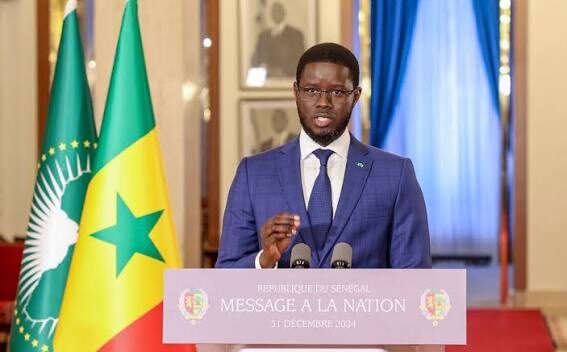
Senegal: No Diomaye Faye PASTEF Constitutional Obligation
Summary
- A PASTEF victory in legislative or local elections does not constitutionally obligate President Bassirou Diomaye Faye to govern with the party or resign.
- The Senegalese Constitution, specifically Articles 42 and 49, grants the President the sole power to determine national policy and appoint or dismiss the Prime Minister, independent of the National Assembly's composition.
- President Faye previously dismissed Ousmane Sonko as Prime Minister by decree, demonstrating the President's autonomous executive authority.
- While the National Assembly can pass a motion of censure, it does not force the President to resign, who can reappoint or name a new Prime Minister.
- The President also holds the power to dissolve the National Assembly by decree two years after its installation, further solidifying presidential influence.
Clarifying Constitutional Obligations
These extensive Bassirou Diomaye Faye presidential powers are explicitly not contingent upon the composition or political alignment of the National Assembly.
Recent public discourse, particularly a video disseminated by the A.G DOMOU NDAR account, suggested that a victory for the PASTEF party in legislative or local elections would constitutionally compel President Bassirou Diomaye Faye to govern with the party or even resign from his presidential post. The video's narrator contended that such electoral successes would unequivocally signal the Senegalese populace's desire for PASTEF to also lead the government, implying that the president should then invite the party to propose a cabinet, failing which a political crisis would ensue.
However, an independent verification conducted by Dubawa has definitively concluded that this interpretation lacks any foundation in the country's constitutional framework. The analysis underscores that no constitutional obligation exists that would force President Faye to either form a government exclusively with PASTEF or step down from the presidency based on legislative or local election outcomes.
The Scope of Presidential Powers
Constitutional law experts characterize Senegal's governmental structure as a presidential system, where the head of state wields significant authority. This framework is clearly articulated in Articles 42 and 49 of the Sénégal Constitution, which stipulate that the President, elected by direct universal suffrage for a five-year term, is responsible for determining the nation's policy direction. Crucially, these articles also grant the President the sole power to appoint the Prime Minister and, equally, to terminate their functions at will.
These extensive Bassirou Diomaye Faye presidential powers are explicitly not contingent upon the composition or political alignment of the National Assembly. This constitutional design ensures that the President maintains autonomy in forming and leading the government, irrespective of the legislative body's electoral results or its political makeup, thereby reinforcing the strong presidential nature of the Senegalese state.
Executive Autonomy in Government Formation
The robust nature of presidential authority in Senegal was recently demonstrated by a significant executive decision. Prior to a change in the Prime Minister's office on May 22, 2026, President Bassirou Diomaye Faye exercised his constitutional prerogative by dismissing Ousmane Sonko from his role as Prime Minister via decree. At the time of his dismissal, Sonko also served as the president of the PASTEF party.
This executive action, while a notable political event, did not, according to the examined constitutional provisions, alter the President's inherent power to appoint or remove the head of government. This incident serves as a clear illustration of the President's independence in PASTEF government formation Senegal, confirming that the choice of Prime Minister remains firmly within the presidential domain, unconstrained by party affiliations or legislative dynamics.
Legislative Checks and Presidential Resilience
While the Senegalese Constitution grants the President substantial powers, it also provides mechanisms for legislative oversight. The National Assembly, for instance, possesses the authority to overthrow the government through a motion of censure, as outlined in Article 86. However, this legislative action does not compel the President to resign from office. As explained by Yacine Diagne, a political scientist and lecturer at CESTI/UCAD, following a successful motion of censure, the head of state retains the option to either reappoint the same Prime Minister or designate a new one.
Conversely, the President holds a powerful counter-measure against the legislature. Article 87 of the Constitution empowers the President to dissolve the National Assembly by decree, though this action can only be taken two years after the installation of its deputies. This presidential power to dissolve Assemblée nationale Sénégal underscores the delicate balance of power, even as it ultimately reinforces the President's strategic position. Notably, at the time referenced in the verification, PASTEF held a significant majority of 130 out of 165 seats, a composition that followed an Assembly dissolution enacted on September 12, 2024.
The Enduring Strength of the Presidency
The Senegalese constitutional framework firmly establishes a powerful presidency, where the head of state's mandate and executive functions are largely independent of legislative election outcomes or the composition of the National Assembly. The President's constitutional obligation is to determine national policy and appoint the Prime Minister, a role that remains unaffected by the political landscape of the legislature.
This robust presidential system contrasts with models like the French Constitution, where Article 20 assigns the government the responsibility for determining and conducting national policy. In Senegal, the President's direct election and constitutional prerogatives ensure a strong, stable executive, capable of independent action in forming and leading the government, regardless of whether a legislative majority aligns with the President's party or not.
Practical Implications
This article clarifies the strong presidential powers under the Senegalese Constitution, particularly regarding the appointment and dismissal of the Prime Minister and the determination of national policy, independent of legislative election results or the composition of the National Assembly. Lawyers and compliance officers should note that the President's autonomy in forming and leading the government, even in the face of legislative challenges, is constitutionally protected, which is crucial for political risk assessment and understanding governmental stability in Senegal.
Source
Source: Original reporting via Dubawa
How does this affect you?
Get an AI analysis of this article grounded in your jurisdictions, practice areas, and any policy documents you've uploaded to Wansom.
Finish Reading the Full Story and the Expert Analysis.
Get the latest legal & regulatory intelligence in Senegal
Wansom is AI and can make mistakes.