
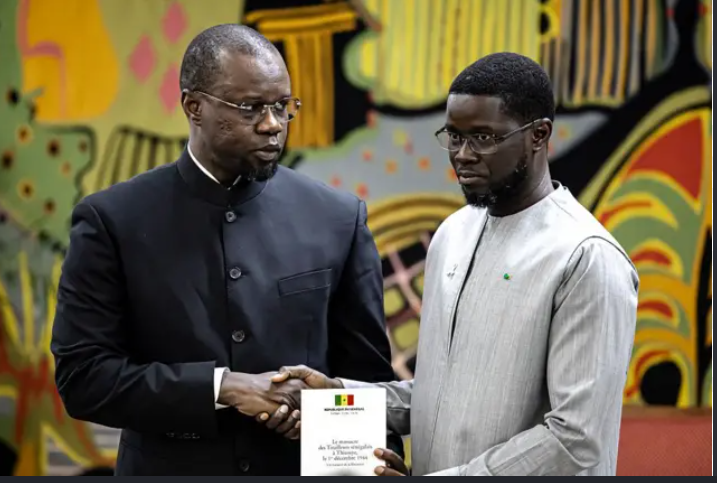
Diomaye Faye: Dissolution Assemblée Nationale Sénégal Possible
Summary
- Senegalese President Bassirou Diomaye Faye has stated he is not ruling out the dissolution of the National Assembly.
- His remarks came in response to direct questions about this potential action.
- President Faye emphasized that dissolving the legislature is a prerogative granted to him by the Constitution.
- He questioned why he would disregard a power explicitly vested in his office by the nation's foundational law.
Presidential Stance on Legislative Future
The President's contemplation of dissolving the Assemblée nationale Sénégal is rooted in a specific constitutional provision that grants the head of state this considerable power.
Senegal's President, Bassirou Diomaye Faye, has publicly addressed the potential for a significant shift in the nation's legislative landscape, confirming that he does not dismiss the option of dissolving the National Assembly. This declaration emerged during a period of public inquiry, where the head of state was directly questioned about the possibility of such a move. His response underscores a deliberate consideration of all available constitutional tools at his disposal.
The President's remarks highlight a readiness to exercise the full scope of his executive authority as defined by the Senegalese Constitution. By openly acknowledging that he would not exclude this particular course of action, President Faye signals a firm understanding of his role and the powers inherent to the presidency. This stance sets a notable precedent for his administration's approach to governance and its relationship with the legislative branch.
Constitutional Authority and Prerogative
The President's contemplation of dissolving the Assemblée nationale Sénégal is rooted in a specific constitutional provision that grants the head of state this considerable power. Bassirou Diomaye Faye explicitly referenced this constitutional prerogative, emphasizing that it is an inherent aspect of his office. He articulated his perspective by posing a rhetorical question, challenging the notion of disregarding a power explicitly vested in him by the nation's foundational legal document. This highlights a fundamental aspect of Senegal presidential powers, where the executive holds significant authority over the legislative branch under certain conditions.
This constitutional prerogative is a key element of Senegal presidential powers, allowing the executive branch a mechanism to resolve potential impasses or to seek a renewed mandate from the electorate through fresh legislative elections. The President's statement, therefore, serves as a reminder of the robust powers enshrined within the Senegalese constitutional framework, particularly those pertaining to the balance between the executive and legislative arms of government. The Bassirou Diomaye Faye constitutional prerogative in this context is not merely a theoretical power but a tangible instrument of governance, designed to ensure governmental effectiveness and responsiveness to the national will.
The President's direct acknowledgment of this power, and his refusal to rule it out, underscores the gravity with which such constitutional provisions are viewed at the highest levels of government. It signals a readiness to potentially invoke significant executive authority to shape the political direction of the country, should circumstances warrant such a measure.
Implications for Senegal's Political Landscape
The mere consideration of a dissolution parlementaire Sénégal by President Faye introduces a significant element of Senegal legislative uncertainty into the country's political environment. Such a move, if pursued, would necessitate new parliamentary elections, potentially altering the composition and political alignment of the National Assembly. This could lead to shifts in legislative priorities, delays in the passage of key bills, and a re-evaluation of the government's policy agenda, impacting the stability of the legislative process.
For stakeholders both within and outside Senegal, this development signals a period requiring close observation. The potential for a reshaped legislative body could influence the regulatory landscape, affecting various sectors and legal frameworks. The President's assertion of his constitutional right to consider this option underscores the dynamic nature of Senegalese politics and the potential for decisive executive action to reshape the national political dialogue. This open consideration of such a powerful executive tool suggests that the new administration is prepared to leverage its full constitutional mandate to achieve its objectives, potentially leading to a reordering of political forces within the country.
Practical Implications
This development signals potential political and legislative instability in Senegal. Lawyers and compliance officers advising clients operating in the region should closely monitor any moves towards dissolving the National Assembly, as it could lead to shifts in legislative priorities, delays in policy implementation, and changes in the regulatory environment affecting business and legal frameworks.
Source
How does this affect you?
Get an AI analysis of this article grounded in your jurisdictions, practice areas, and any policy documents you've uploaded to Wansom.
Finish Reading the Full Story and the Expert Analysis.
Get the latest legal & regulatory intelligence in Senegal
Wansom is AI and can make mistakes.