
Senegal: Banana Import Ban Triggers ECOWAS Complaint
Summary
- Senegal has extended its temporary banana import ban to six months this year, up from three months last year, starting June 29.
- The measure aims to protect local producers from competition, with a minister stating it retained 82 billion CFA francs domestically.
- Despite a projected record national banana production of 115,000 tonnes for 2026, this volume remains below the country's annual demand of 144,000 tonnes.
- Senegal is currently facing a formal complaint before ECOWAS regarding these import restrictions.
- Similar protectionist policies have been applied to onions, with the government also investing in cold storage and structuring cooperatives to support local agriculture.
Senegal Tightens Banana Import Restrictions Amidst ECOWAS Scrutiny
The outcome of this ECOWAS trade dispute Senegal will be closely watched, as it could establish important precedents for how member states interpret and apply regional trade agreements.
Senegal has significantly extended its temporary ban on banana imports, a move designed to bolster its domestic agricultural sector but one that has simultaneously drawn a formal complaint before the Economic Community of West African States (ECOWAS). This year, the period for which foreign bananas are prohibited from entering the country has been doubled to six months, a notable increase from the three-month restriction imposed in the previous year. The policy, which commenced on June 29, aims to shield local producers from intense competition, particularly from Ivorian imports, which officials contend have weakened the Senegalese banana market.
The government maintains that these protectionist measures are crucial for national economic stability and agricultural development. According to Serigne Gueye Diop, a key proponent of the policy, the import suspension has successfully retained an estimated 82 billion CFA francs within the national economy. The minister explicitly stated the government's priority is to foster the development of local banana producers through protectionist measures, underscoring a commitment to local industry even when faced with regional trade challenges. This aggressive stance on agricultural trade protection, particularly the Senegal banana import ban ECOWAS complaint, signals a potential flashpoint for regional trade relations.
Balancing Domestic Production with Market Needs
While the extended import ban seeks to nurture local growth, it also navigates a delicate balance between supporting producers and ensuring adequate market supply. National banana production for 2026 is projected to reach a record 115,000 tonnes. However, this volume still falls short of the country's total annual demand, which is estimated at 144,000 tonnes, or 12,000 tonnes per month. This disparity highlights the ongoing challenge of the policy's duration: it must be long enough to provide meaningful protection for domestic growers without inadvertently creating market shortages for consumers.
The decision to extend the import freeze comes despite the formal complaint lodged against Senegal with ECOWAS, indicating the government's resolve to prioritize national agricultural interests. The outcome of this ECOWAS trade dispute Senegal will be closely watched, as it could establish important precedents for how member states interpret and apply regional trade agreements. The minister's justification points to a broader strategy of agricultural self-sufficiency, even if it entails potential friction with regional trade bodies.
A Pattern of Protectionism and Strategic Planning
The banana import restrictions are not an isolated incident but rather part of a broader pattern of agricultural trade protection implemented by Senegal. Last year, for instance, the country imposed a twelve-month ban on onion imports. This onion import freeze, which began on January 16, 2026, was eventually lifted on August 31, following a significant price surge where a kilo of onions increased from 300 to 600 FCFA after the Gamou festival. These instances underscore how fluctuations in market prices and supply levels heavily influence the timing and duration of such restrictions.
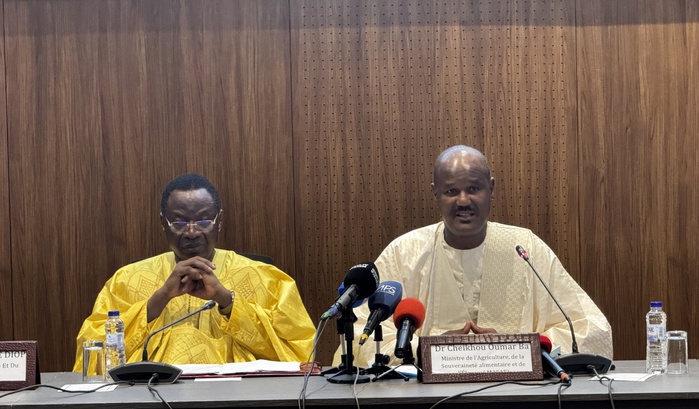
To mitigate the risk of shortages arising from these protective measures, the Senegalese government is also investing in strategic infrastructure and organizational improvements. Serigne Gueye Diop, speaking at a joint workshop with Dr. Oumar Ba, the Minister of Agriculture, Food Sovereignty, and Livestock, highlighted efforts to enhance storage capabilities, including the construction of new cold storage facilities. Furthermore, there are plans to strengthen the structure of cooperatives responsible for storage and marketing, aiming to empower producers and reduce their reliance on direct sales. The duration of these import freezes, for both bananas and onions, is determined in close coordination with the Ministry of Agriculture, based on assessments of national production levels, reflecting a calculated approach to Senegal agricultural trade protection. This comprehensive strategy aims to support local farmers while managing potential market disruptions, even as the CEDEAO plainte Sénégal banane proceeds.
Practical Implications
This development signals Senegal's willingness to implement protectionist trade measures, potentially in contravention of ECOWAS agreements, despite ongoing complaints. Lawyers advising clients on trade within the ECOWAS region, particularly in agricultural sectors, should monitor the outcome of the ECOWAS complaint as it could set a precedent for regional trade disputes and compliance risks.
Source
Source: Original reporting via Dakaractu
How does this affect you?
Get an AI analysis of this article grounded in your jurisdictions, practice areas, and any policy documents you've uploaded to Wansom.
Finish Reading the Full Story and the Expert Analysis.
Get the latest legal & regulatory intelligence in Senegal
Wansom is AI and can make mistakes.