
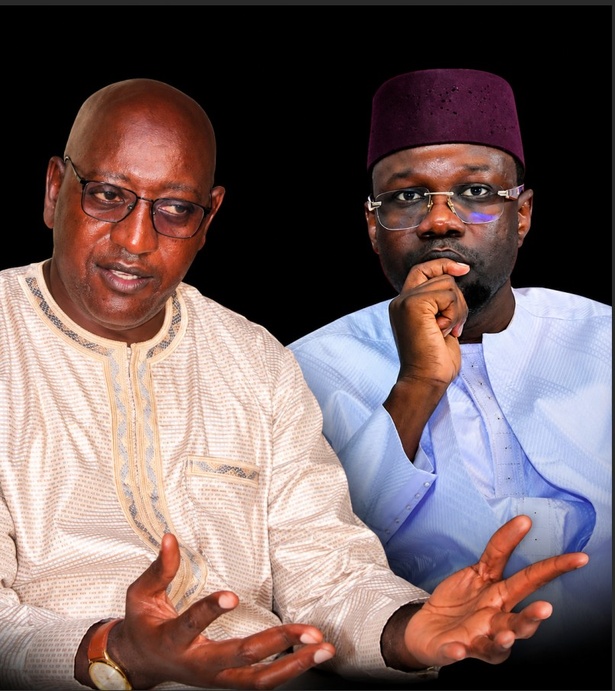
Diaydi Bâ Cissé: Sénégal Blocage Budget Assemblée Nationale Won't Halt President
Summary
- El Hadji Diaydi Bâ Cissé believes the power attributed to the National Assembly President to block the country is excessive.
- His comments follow Ousmane Sonko's threat to prevent the vote on Senegal's finance law.
- Diaydi Bâ Cissé asserts the Senegalese Constitution includes mechanisms to ensure state continuity despite executive-legislative disagreements.
- Tensions also involve Sonko's previous statements about a potential motion of censure against the government, criticized by Minister Abdourahmane Diouf.
- Cissé advocates for institutional collaboration and the territorialization of public policies to reach local communities.
Escalating Tensions Over Senegal's Budget
Diaydi Bâ Cissé firmly believes that the Constitution sénégalaise contains specific provisions designed to ensure the continuity of the State, even in situations where the executive and legislative branches find themselves in disagreement.
The political landscape in Sénégal is currently marked by significant friction between its executive and legislative branches, particularly concerning the national budget. El Hadji Diaydi Bâ Cissé, a prominent member of the Cadres patriotes républicains, has publicly addressed what he perceives as an overestimation of the National Assembly President's power to obstruct national affairs. His comments come in response to a direct threat made by Ousmane Sonko, the President of the National Assembly, who indicated a potential refusal to approve the crucial finance law, known as the loi de finances Sénégal. This development underscores existing tensions that frequently characterize the relationship between the executive and legislative arms of the government.
Despite Sonko's recent assertion during the opening of the second extraordinary session of the Assemblée nationale — a session convened at the President's request — that "no tensions" or "no disagreements" existed between the institutions, the budget issue has brought these underlying dynamics to the forefront. Sonko had previously emphasized the clarity of existing legal texts, stating they would be applied as required. However, his subsequent threat regarding the finance law has reignited discussions about the fundamental rules governing state continuity and the delicate balance of power within the Senegalese political system.
Constitutional Safeguards and Presidential Authority
Diaydi Bâ Cissé firmly believes that the Constitution sénégalaise contains specific provisions designed to ensure the continuity of the State, even in situations where the executive and legislative branches find themselves in disagreement. He contends that a potential blocage budget Assemblée nationale would not inherently paralyze the President's ability to govern or execute his mandate. According to Cissé, various alternative mechanisms are available to the President to maintain governmental operations, thereby mitigating the impact of any legislative impasse on the finance law.
Cissé's analysis highlights the hybrid nature of Senegal's political system, which he characterizes as fundamentally presidential. He argues that this structure, despite its hybrid elements, is designed with checks and balances to prevent institutional blockages. His perspective suggests that an exaggerated focus on the Assemblée nationale's pouvoir to impede the budget overlooks the broader constitutional framework intended to facilitate continuous governance. He advocates for a collaborative approach among institutions, emphasizing that the equilibrium of powers should serve to avert, rather than create, national paralysis.
Broader Institutional Frictions and Policy Agendas
The current disagreements extend beyond the immediate issue of the loi de finances Sénégal, reflecting deeper institutional frictions. Ousmane Sonko's earlier declarations regarding a potential motion de censure gouvernement Sénégal against the government drew sharp criticism from Abdourahmane Diouf, the Minister of Energy and Petroleum. Diouf accused Sonko of lacking understanding of parliamentary procedures and deviating from republican principles, further illustrating the recurring clashes over institutional norms. Diaydi Bâ Cissé stresses the importance of adhering to these rules, urging that disagreements should not be allowed to escalate into full-blown blockages that undermine state functions.
Furthermore, Diaydi Bâ Cissé offered insights into Sonko's communication strategy, describing it through the concepts of "naming," "blaming," and "claiming"—identifying a problem, assigning blame, and then articulating a demand. He cited examples such as delays in the payment of family allowances and student grants to illustrate this pattern. Beyond these institutional debates, Cissé also articulated his commitment to advancing his party's doctrine and promoting the territorialization of public policies. His aim is to ensure that government initiatives effectively reach local communities in the interior, specifically mentioning localities like Waoundé, Sonchu Bambamé, Ounaré, and Demankané, thereby addressing diverse regional concerns.
Practical Implications
Lawyers and compliance officers in Senegal should closely monitor the ongoing tensions between the executive and legislative branches regarding the national budget and financial laws. Potential blockages or delays in budget approval, as discussed by Diaydi Bâ Cissé, could impact government operations, public procurement, and the stability of the regulatory environment, necessitating a review of contractual obligations and compliance strategies in anticipation of legislative instability.
Source
Source: Original reporting via Exclusif
How does this affect you?
Get an AI analysis of this article grounded in your jurisdictions, practice areas, and any policy documents you've uploaded to Wansom.
Finish Reading the Full Story and the Expert Analysis.
Get the latest legal & regulatory intelligence in Senegal
Wansom is AI and can make mistakes.