
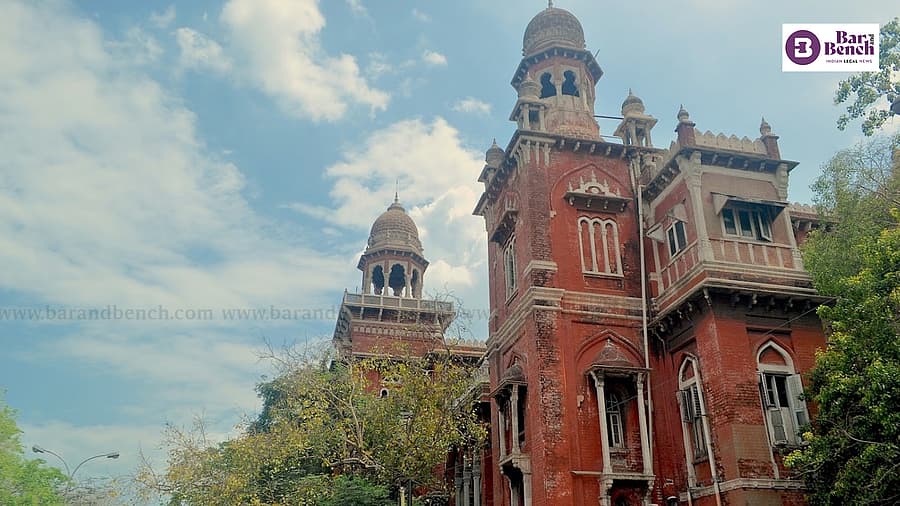
Dha Velu Challenges TN Assembly Construction in Madras High Court
Summary
- Former MLA Dha Velu has challenged the Tamil Nadu government's plan for a new Legislative Assembly and Secretariat complex in Chennai's Pattinapakkam.
- The petition seeks to quash a September 8 Government Order granting in-principle approval for the ₹1,200 crore project.
- Velu argues the approval was given without a Detailed Project Report, environmental assessment, social impact study, or comparison of alternative sites.
- The government clarified on September 20 that the Pattinapakkam site is not final and a DPR is still required before a definitive decision.
The Challenge Unfolds
This case highlights how procedural lapses, such as granting in-principle approval without prior Detailed Project Reports or essential impact studies, can become significant grounds for judicial challenge under administrative law.
Former Mylapore MLA and prominent DMK leader, Dha Velu, has initiated legal proceedings in the Madras High Court, contesting the Tamil Nadu government's proposal to construct a new Legislative Assembly and Secretariat complex. The ambitious project is slated for the Foreshore Estate area in Chennai's Pattinapakkam. Velu's petition specifically targets a Government Order issued on September 8, which granted in-principle approval for the proposed complex.
The legal challenge seeks not only the quashing of this September 8 Government Order but also requests an interim stay on any further actions stemming from it, pending the High Court's final adjudication. According to the petition, Chief Minister Vijay publicly announced the project within the Legislative Assembly on September 3. The proposed complex is envisioned to span approximately 25.55 acres, featuring a substantial built-up area of nearly 20 lakh square feet, with an estimated cost of ₹1,200 crore.
Grounds for Legal Scrutiny
The core of Dha Velu's legal argument centers on alleged procedural irregularities and a lack of comprehensive preparatory work by the state government. His plea to the Madras High Court contends that the Tamil Nadu government made crucial decisions regarding the project's site selection and its estimated financial outlay even before fundamental preparatory documents were completed. These include the preparation of a Detailed Project Report (DPR), detailed cost estimates, or even architectural designs.
Velu further asserts that the September 8 Government Order, which provided the initial approval, conspicuously omits any reference to several critical assessments. Specifically, he highlights the absence of a traffic impact study, a thorough environmental assessment, a social impact study, or any comparative analysis of alternative locations for such a significant public infrastructure project. This alleged oversight forms a central pillar of his challenge against the legality of the government's decision-making process.
Government's Position and Future Steps
In response to the developing situation, the Tamil Nadu government has provided clarification regarding the status of the proposed Foreshore Estate Pattinapakkam project. Minister Aadhav Arjuna stated on September 20 that the Pattinapakkam site has not yet received final approval for the construction of the new Legislative Assembly and Secretariat complex. He emphasized that the September 8 Government Order merely constituted an initial approval.
Minister Arjuna further clarified that a definitive decision on the project's feasibility and location would be made by Chief Minister Vijay only after a comprehensive Detailed Project Report (DPR) has been completed. This DPR is expected to thoroughly examine all aspects of the proposal, indicating that the initial in-principle approval was not the final word on the matter and that further studies are still required before proceeding.
Implications for Public Projects
The legal action initiated by Dha Velu challenging the TN Assembly construction underscores the critical importance of adhering to due process and comprehensive planning in large-scale public infrastructure projects within India. This case highlights how procedural lapses, such as granting in-principle approval without prior Detailed Project Reports or essential impact studies, can become significant grounds for judicial challenge under administrative law.
For lawyers advising clients on public infrastructure projects or those contemplating challenging government decisions in India, this situation serves as a pertinent example. It reinforces the necessity for government bodies to complete thorough environmental, social, and traffic impact assessments, alongside detailed project planning, *before* issuing initial approvals. The Madras High Court's consideration of this petition will likely set an important precedent regarding the transparency and procedural rigor expected from state administrations in undertaking major public works.
Practical Implications
Lawyers advising clients on public infrastructure projects or challenging government decisions in India should note this case highlights the critical importance of completing Detailed Project Reports and environmental/social impact studies *before* granting in-principle approval, as procedural lapses can form strong grounds for judicial challenge.
Source
How does this affect you?
Get an AI analysis of this article grounded in your jurisdictions, practice areas, and any policy documents you've uploaded to Wansom.
Finish Reading the Full Story and the Expert Analysis.
Get the latest legal & regulatory intelligence in India
Wansom is AI and can make mistakes.