
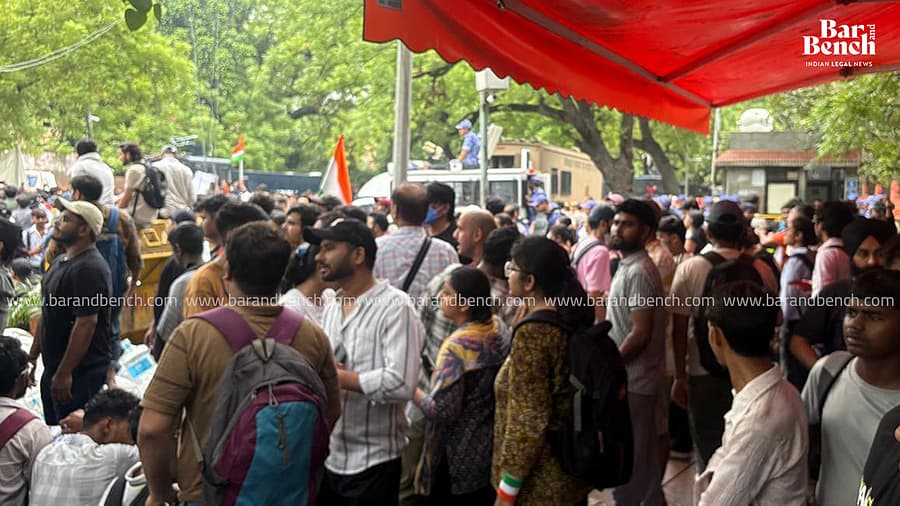
Delhi Police Maximum Restraint Under Scanner by Supreme Court
Summary
- Delhi Police submitted an affidavit to the Supreme Court regarding police excesses during Jantar Mantar protests.
- Protesters demanded resignation of Union Education Minister Dharmendra Pradhan due to alleged irregularities in NEET-UG and CBSE examinations.
- Supreme Court is considering setting up a committee to examine use of force by security personnel, which could lead to policing reforms.
- Delhi Police claimed maximum restraint but minimum required force was used against protesters.
What Happened
The Delhi Police clarified that it was not dealing with the petitions para-wise or individually on merits and that its silence should not be read as an admission.
The Delhi Police has submitted an affidavit to the Supreme Court in response to allegations of police excesses during protests at Jantar Mantar. The protests began on June 6, with demonstrators demanding the resignation of Union Education Minister Dharmendra Pradhan due to alleged irregularities in the NEET-UG and CBSE examinations. Despite being granted permission for a dharna only from 5 PM onwards on June 20, the protesters started gathering earlier that day. The Delhi Police claimed that the crowd turned violent and breached multiple layers of barricades in an attempt to march on parliament.
Legal Context
The Supreme Court had previously indicated its consideration of setting up a committee to examine the use of force by security personnel, which led to the Delhi Police's submission of their version of events. The affidavit clarified that the police were not addressing the petitions individually or on merits and instead would present their case in full before the proposed committee. This development has significant implications for policing practices in India, with potential changes arising from increased scrutiny of law enforcement actions.
Why It Matters
The Supreme Court's consideration of setting up a committee to examine police use of force could lead to reforms in policing practices. The Delhi Police's response highlights the complexities of balancing public safety with individual rights during protests. As lawyers and compliance officers, it is essential to monitor this development closely, as it may impact future law enforcement actions and potentially alter the landscape of policing in India.
Practical Implications
Lawyers and compliance officers should watch for the potential implications of the Supreme Court's consideration of setting up a committee to examine the use of force by security personnel, which could lead to changes in policing practices and increased scrutiny of law enforcement actions.
Source
Source: Original reporting via [Source]
How does this affect you?
Get an AI analysis of this article grounded in your jurisdictions, practice areas, and any policy documents you've uploaded to Wansom.
Wansom is AI and can make mistakes.