
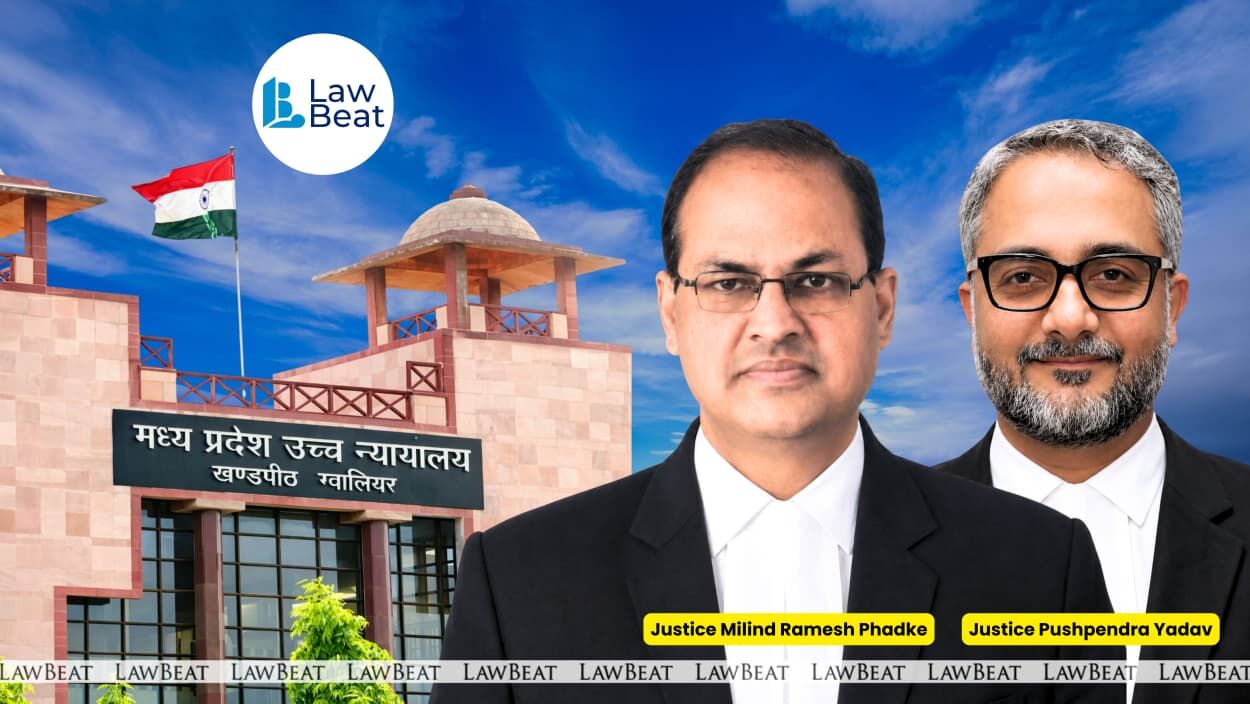
MP High Court Dismisses 28-Year-Old Claim for Compassionate Appointment
Summary
- The Madhya Pradesh High Court has dismissed Alok Sharma's plea for compassionate appointment filed nearly three decades after his father's death.
- The court held that Alok Sharma did not qualify as the 'first child' under the policy and that his claim was barred by delay and the wording of the policy.
- The ruling highlights the importance of timely filing of claims under the compassionate appointment policy, which is designed to provide relief to families of deceased government employees.
- Being a minor at the time of death is not sufficient to qualify for an exception under the policy, according to the court's decision.
A Decades-Long Wait for Compassionate Appointment
The policy 'does not differentiate or create a class within a class between girls and boys' and refers strictly to the first child, adding that such differentiation 'would be violative of the basic principles of the Constitution of India, which explicitly prohibits discrimination on the basis of gender.'
The Madhya Pradesh High Court has dealt a blow to Alok Sharma's hopes of securing a compassionate appointment, nearly three decades after his father's death in harness. The court's decision highlights the importance of timely filing of claims under the compassionate appointment policy, which is designed to provide relief to families of deceased government employees. In this case, the policy's strict deadlines and eligibility criteria were found to be non-negotiable, even for a minor who was barely a year old at the time of his father's death. The court's ruling underscores that being a minor at the time of death is not sufficient to qualify for an exception under the policy.
The Policy's Provisions and Their Implications
The compassionate appointment policy, issued by the General Administration Department in 2014, has specific provisions governing eligibility and timelines. The main provision requires appointment within seven years of death, while a proviso allows the 'first child' of a deceased employee to apply for compassionate appointment within one year of attaining majority, even after the ordinary period has lapsed. However, the court found that Alok Sharma's case did not fit either limb of the policy, as he was not the first child and his claim was filed long after the seven-year window had expired. The court also rejected the argument that being the 'only boy' in the family should count in his favour, holding that the policy does not differentiate between girls and boys.
The Ruling's Significance and Implications
The Madhya Pradesh High Court's decision has significant implications for families of deceased government employees who are seeking compassionate appointments. The ruling highlights the importance of timely filing of claims under the policy, which is designed to provide relief to families in need. Lawyers advising clients on similar cases should ensure that they meet the strict deadlines and eligibility criteria specified in the policy, as being a minor at the time of death is not sufficient to qualify for an exception. The ruling also underscores that compassionate appointment is not a hereditary right, but rather a privilege granted to those who meet the specific conditions set out in the policy.
Practical Implications
This ruling highlights the importance of timely filing of claims under the compassionate appointment policy, and underscores that being a minor at the time of death is not sufficient to qualify for an exception. Lawyers advising clients on similar cases should ensure they meet the strict deadlines and eligibility criteria specified in the policy.
Source
How does this affect you?
Get an AI analysis of this article grounded in your jurisdictions, practice areas, and any policy documents you've uploaded to Wansom.
Wansom is AI and can make mistakes.