
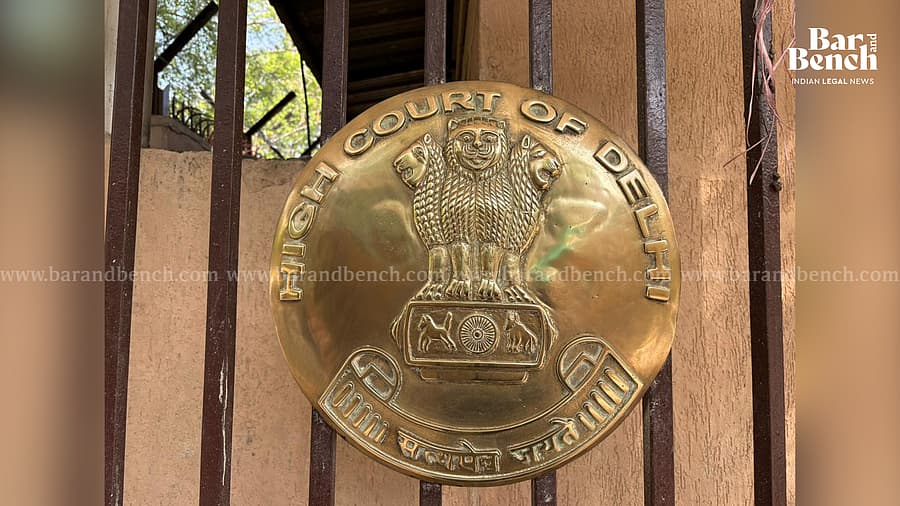
Delhi High Court: Trial Court Modified Sentence Power Legality Reserved
Summary
- The Delhi High Court has reserved judgment on a murder convict's challenge to his 35-year 'modified sentence' imposed by a trial court.
- Convict Mahender @ Dabbu argues the trial court lacked the power to set a specific period of actual incarceration within his life sentence.
- His plea relies on the 2015 `Union of India v V Sriharan @ Murugan` Supreme Court ruling, which states only constitutional courts can impose such modified sentences.
- Mahender's conviction and sentence were previously upheld by both the Delhi High Court (2013) and the Supreme Court (2014).
- The Delhi High Court's decision will clarify the scope of trial court power in imposing fixed terms for life imprisonment, impacting future sentencing and potential reviews.
Delhi High Court Reserves Judgment on Sentencing Power
The Delhi High Court's impending decision is poised to clarify the precise boundaries of trial court authority in imposing specific durations for actual incarceration within life imprisonment sentences, a matter with significant ramifications for criminal jurisprudence in India.
The Delhi High Court has reserved its decision in a significant case concerning the authority of trial courts to impose specific terms of actual imprisonment within a life sentence. The matter, heard by a Division Bench comprising Justices Navin Chawla and Arun Bhardwaj on September 24, stems from a challenge filed by murder convict Mahender alias Dabbu, whose original sentence was handed down fifteen years ago.
Mahender @ Dabbu is contesting the legality of the sentencing order issued by the trial court, which, on May 13, 2011, directed that he serve 35 years of actual imprisonment before becoming eligible for remission. This particular form of sentencing, often referred to as a 'modified sentence,' involves a court stipulating a fixed period of incarceration, such as 20, 25, 30, or 35 years, as part of a life imprisonment term, prior to any consideration for release or remission. The convict's challenge specifically targets the trial court's power to issue such a directive, rather than his underlying conviction for murder.
Legal Basis of the Challenge
The core of Mahender's argument rests on the assertion that the trial court lacked the inherent power to impose what he terms a 'modified sentence.' His conviction and the subsequent sentence were initially affirmed by the Delhi High Court in 2013, and later by the Supreme Court of India in 2014. Despite these affirmations, Mahender has now invoked a landmark 2015 judgment from a Constitution Bench of the Supreme Court in the case of `Union of India v V Sriharan @ Murugan`.
The `Sriharan` verdict established a crucial legal principle: the power to impose a modified sentence, which specifies a fixed period of actual imprisonment within a life term, is exclusively vested in constitutional courts. This means that only the Supreme Court or High Courts possess the authority to issue such directives, thereby limiting the sentencing discretion of trial courts in these specific circumstances. Mahender is not seeking to overturn his conviction but rather a directive to the trial court regarding the legality of the sentence imposed upon him, aligning his plea with the precedent set by `Union of India v V Sriharan @ Murugan`.
Implications for Sentencing Practices in India
The Delhi High Court's impending decision is poised to clarify the precise boundaries of trial court authority in imposing specific durations for actual incarceration within life imprisonment sentences, a matter with significant ramifications for criminal jurisprudence in India. The outcome will directly address the legality of modified sentence legality India, particularly concerning the life imprisonment sentencing power exercised by lower courts. Should the High Court concur with Mahender's interpretation of the `Sriharan` judgment, it could lead to a re-evaluation of similar sentences imposed by trial courts across the country.
This ruling will be critical for understanding the distinction between the sentencing powers of trial courts and constitutional courts sentencing in cases of life imprisonment. It will provide essential guidance for future sentencing practices and could potentially open avenues for review or appeal for other convicts who have received similar modified sentences from trial courts. The judgment is eagerly awaited by legal practitioners, as it will define the scope of Delhi HC trial court modified sentence power and its alignment with established Supreme Court precedents.
Practical Implications
Criminal lawyers and appellate practitioners in India should monitor the Delhi High Court's upcoming judgment, as it will clarify the scope of trial court power to impose modified sentences in life imprisonment cases, potentially impacting grounds for appeal or review for existing convicts and guiding future sentencing practices.
Source
How does this affect you?
Get an AI analysis of this article grounded in your jurisdictions, practice areas, and any policy documents you've uploaded to Wansom.
Finish Reading the Full Story and the Expert Analysis.
Get the latest legal & regulatory intelligence in India
Wansom is AI and can make mistakes.