
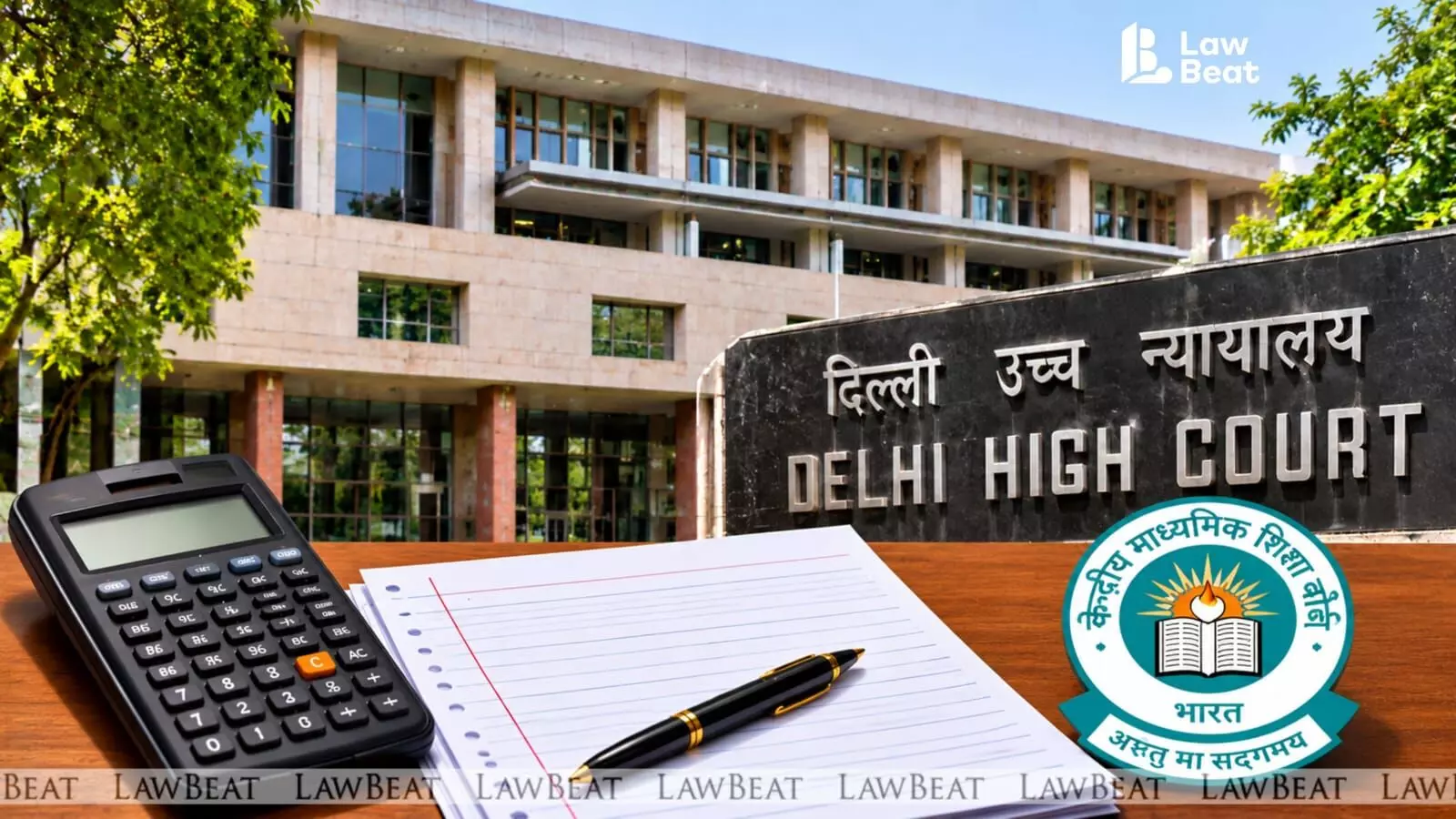
Delhi High Court: Reviews PIL for CBSE Exam Calculators in Class XII
Summary
- The Delhi High Court is hearing a Public Interest Litigation seeking permission for basic calculators in CBSE Class XII board exams.
- The petition highlights that CBSE's own Curriculum Committee approved basic calculators for Accountancy in 2024 but never implemented the decision.
- Petitioners argue that the current policy forces students to spend excessive time on manual calculations, hindering focus on conceptual understanding.
- The plea invokes Article 14, asserting that the unexplained inaction constitutes arbitrary state action by the CBSE.
- The case references national education policies and international practices that permit calculator use in examinations, advocating for assessment reform.
Judicial Challenge to CBSE Policy
The petitioners contend that this unexplained inaction on a decision already approved by the Board’s own expert body amounts to arbitrary state action, directly challenging the CBSE's governance.
The Delhi High Court is set to review a Public Interest Litigation (PIL) that seeks to compel the Central Board of Secondary Education (CBSE) to permit the use of basic, non-programmable calculators during Class XII board examinations. The petition, filed by Pitampura resident Vishal Dua on behalf of his son and ten other parents, argues that the CBSE's current policy, which prohibits even simple calculators in subjects like Mathematics and Accountancy, places an undue burden on students.
The petitioners contend that significant portions of examination time are currently consumed by manual calculations, diverting students' focus from demonstrating their understanding of core concepts. The PIL names the Union of India, CBSE, the National Council of Educational Education and Training (NCERT), and PARAKH (National Assessment Centre) as respondents in this matter, which highlights a critical issue regarding assessment methods in high-stakes examinations.
This legal challenge specifically targets the CBSE's failure to implement a decision made by its own Curriculum Committee, which had approved the use of such calculators nearly two years prior. The parents assert that this inaction is arbitrary and detrimental to students, whose performance may be affected by the time-consuming nature of manual arithmetic rather than their grasp of the subject material.
The Unfulfilled Promise of Reform
The core of the petitioners' argument rests on an internal CBSE decision that was never put into practice. Minutes from the CBSE's 70th Curriculum Committee meeting, held on November 25 and 26, 2024, reveal that under Item 4.08, the committee considered and approved the allowance of basic, non-programmable calculators for the Class XII Accountancy examination. The committee's rationale, as recorded, was to "reduce the cognitive load of lengthy calculations, allowing students to focus on critical analysis and case studies," and members reportedly hailed it as a "long-overdue initiative."
This recommendation was subsequently presented to the CBSE's Governing Body during its 140th meeting on December 26, 2024. However, despite this internal approval, the petitioners claim that no further action has been taken; the proposal has neither been officially notified nor implemented. They indicate that public domain searches yielded no information regarding the status of this crucial reform, leading them to conclude that the CBSE has simply neglected to act on its own committee's resolution for almost two years.
In an attempt to resolve the matter outside of court, a formal representation was dispatched via speed post and email on August 17, 2026. This communication sought a reasoned response within four weeks, requesting updates on the Accountancy proposal, the formation of an expert committee to extend the facility to Mathematics, and the reinstatement of calculator access for students with disabilities. To date, the petitioners report that no reply has been received from any of the named respondents.
Legal and Educational Context
Legally, the petitioners invoke Article 14 of the Indian Constitution, asserting that the unexplained inaction on a decision already approved by the Board’s own expert body amounts to arbitrary state action. They draw upon precedents such as *Jigya Yadav v. CBSE*, which established that the CBSE's bye-laws are subject to judicial review, and *Vikash Kumar v. UPSC*, concerning the principle of reasonable accommodation for individuals with disabilities. This is particularly relevant given that CBSE circulars from January 20 and February 11, 2020, already permitted basic calculators for students with disabilities.
The petition also aligns its arguments with broader national educational policies. It references Paragraph 4.34 of the National Education Policy 2020, which advocates for a shift in assessment methods away from rote memorization, and the National Curriculum Framework 2023. These policy documents underscore a modern approach to education that prioritizes conceptual understanding over mere computational speed.
Furthermore, the petitioners highlight practices in other examination systems, both domestic and international. They point out that the CISCE board permitted a specific calculator model for Class XII in 2021. Internationally, bodies like the International Baccalaureate, Cambridge IGCSE, UK GCSE boards, and the College Board (which administers the SAT and ACT) all allow the use of basic calculators in a regulated manner, demonstrating a widespread acceptance of such tools in contemporary assessments.
Implications for Assessment and Governance
This case before the Delhi High Court carries significant implications for the future of assessment practices within the CBSE and the accountability of statutory educational bodies. By challenging the arbitrary inaction on a well-considered internal recommendation, the PIL underscores the potential for judicial intervention to ensure that educational policies are not only fair but also aligned with modern pedagogical principles.
The outcome could set a precedent for how statutory bodies like the CBSE are held accountable for their internal decisions and their responsiveness to the evolving needs of students and educational reform. It emphasizes the critical balance between maintaining examination rigor and fostering an environment where students can genuinely demonstrate their knowledge without being unduly penalized by outdated procedural requirements, particularly concerning the use of CBSE Class XII board exam calculators.
Practical Implications
This case highlights the potential for judicial intervention under Article 14 against statutory bodies like CBSE for arbitrary inaction on their own committee's recommendations. Lawyers should monitor the outcome for precedents regarding the enforceability of internal policy decisions and the scope of judicial review in educational governance, particularly concerning student accommodations and assessment reforms.
Source
How does this affect you?
Get an AI analysis of this article grounded in your jurisdictions, practice areas, and any policy documents you've uploaded to Wansom.
Wansom is AI and can make mistakes.