
Delhi High Court: Kejriwal Contempt Reply Due in 3 Weeks, No More Delays
Summary
- The Delhi High Court reprimanded Arvind Kejriwal and other AAP leaders for not filing replies in a contempt case.
- The Court granted a final three-week deadline, warning that the right to reply would be closed if not met.
- The suo motu contempt case was initiated on May 14 over the leaders' social media remarks concerning Justice Swarana Kanta Sharma.
- The Court dismissed arguments about unsupplied documents, stating objections should be included in the replies.
- The next hearing for the contempt case is scheduled for January 2027.
Court's Firm Stance on Contempt Replies
This ruling underscores a critical legal principle: parties in contempt proceedings are expected to adhere strictly to court directives for filing replies, and procedural excuses for non-compliance will not be tolerated.
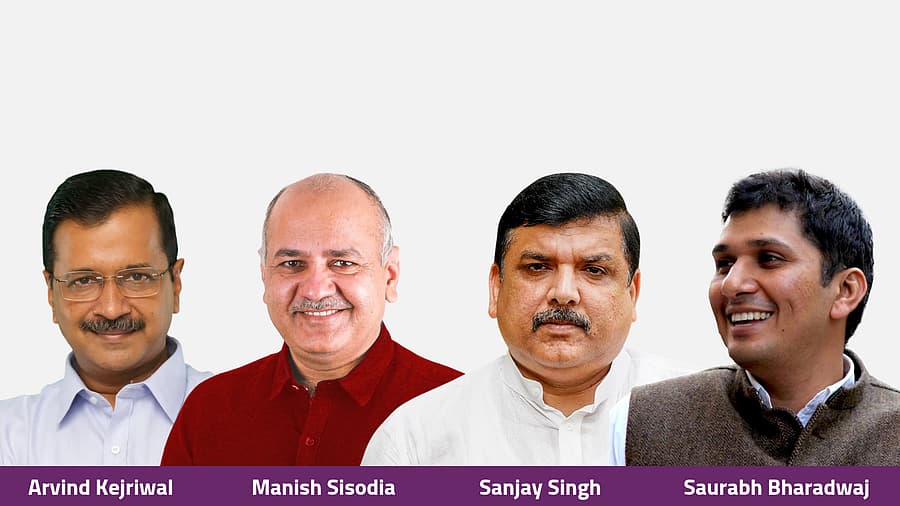
The Delhi High Court recently issued a strong rebuke to Arvind Kejriwal, Manish Sisodia, Saurabh Bharadwaj, and other prominent leaders of the Aam Aadmi Party (AAP) for their failure to submit replies in a criminal contempt of court case initiated against them. A Division Bench, comprising Justices Navin Chawla and Arun Bhardwaj, granted the leaders a final three-week window to file their responses, explicitly warning that their right to reply would be foreclosed if the deadline is not met. This directive underscores the judiciary's expectation of prompt compliance in legal proceedings, particularly in matters concerning contempt.
During the proceedings, the Court expressed its displeasure, stating that it had received a report confirming full compliance regarding the provision of necessary documents. The bench remarked, "I'm sorry, we have a report that full compliance has been done. Now we will not give you further time. This is not done. You are taking us for a ride. We have a report from the registry [that] all papers have been supplied... Now you file your replies; otherwise, we will close your right." This stern admonition highlights the Court's view that the leaders were attempting to delay the process, despite the registry confirming all required papers had been supplied. The court's firm position emphasizes the seriousness with which it views procedural adherence in the ongoing Delhi High Court Kejriwal contempt reply matter.
Origins of the Suo Motu Contempt Case
The contempt proceedings against the AAP leaders, including Arvind Kejriwal contempt of court, Manish Sisodia contempt proceedings, Sanjay Singh, and Durgesh Pathak, were initiated by the Delhi High Court on its own motion, known as suo motu. This action commenced on May 14, following Justice Swarana Kanta Sharma remarks that were made by the political figures. The High Court took cognizance of certain social media posts made by these individuals, which were deemed to constitute criminal contempt.
The decision to launch Delhi High Court suo motu contempt proceedings reflects the judiciary's prerogative to protect its dignity and the administration of justice when it perceives actions that undermine its authority. The specific remarks made by the AAP leaders concerning Justice Swarana Kanta Sharma formed the basis for this judicial intervention, leading to the current AAP leaders contempt case Delhi. The court's proactive approach in this instance signals its commitment to upholding the sanctity of judicial processes and pronouncements.
Legal Arguments and Procedural Imperatives
Counsel representing the AAP leaders attempted to justify the delay by asserting that certain documents pertinent to their defense had not yet been provided. Advocate Vivek Jain, speaking on behalf of some of the alleged contemnors, specifically noted, "I have a note for your Lordships also, but since your Lordships are saying, we will put it in the reply. In fact, your Lordships said six items, of which only three items were given. In fact, I have a list of that also." This argument suggested an impediment to filing a comprehensive response.
However, the Division Bench unequivocally rejected this as a valid reason for the delay. The Court clarified that any objections regarding the alleged non-supply of documents or other procedural grievances could and should be incorporated within the replies themselves. This ruling underscores a critical legal principle: parties in contempt proceedings are expected to adhere strictly to court directives for filing replies, and procedural excuses for non-compliance will not be tolerated. The court's insistence on timely submissions, even from high-profile political figures, reinforces the importance of meticulous procedural adherence by legal representatives.
Future Trajectory of the Case
With the Delhi High Court's clear directive for the AAP leaders to file their replies within three weeks, the focus now shifts to their compliance with this final opportunity. The court has scheduled the next hearing for this significant AAP leaders contempt case Delhi in January 2027. This extended timeline for the next substantive hearing, coupled with the immediate demand for replies, indicates the court's intent to ensure all preliminary submissions are in order before proceeding with the merits of the contempt allegations.
The outcome of the leaders' adherence to the three-week deadline will be crucial, as failure to comply could result in the closure of their right to present a defense, potentially leading to ex-parte proceedings or other adverse consequences. The court's firm stance serves as a reminder to all parties involved in legal disputes, particularly those facing Arvind Kejriwal contempt of court charges, that judicial timelines and procedural requirements are to be respected without exception.
Practical Implications
Lawyers representing parties in contempt proceedings, particularly high-profile cases, must ensure strict and timely compliance with court directives for filing replies. This ruling underscores that courts will not tolerate procedural delays or excuses, even from prominent political figures, and may close the right to reply if deadlines are not met, emphasizing the importance of meticulous procedural adherence.
Source
Source: Based on recent court reporting.
How does this affect you?
Get an AI analysis of this article grounded in your jurisdictions, practice areas, and any policy documents you've uploaded to Wansom.
Finish Reading the Full Story and the Expert Analysis.
Get the latest legal & regulatory intelligence in India
Wansom is AI and can make mistakes.