
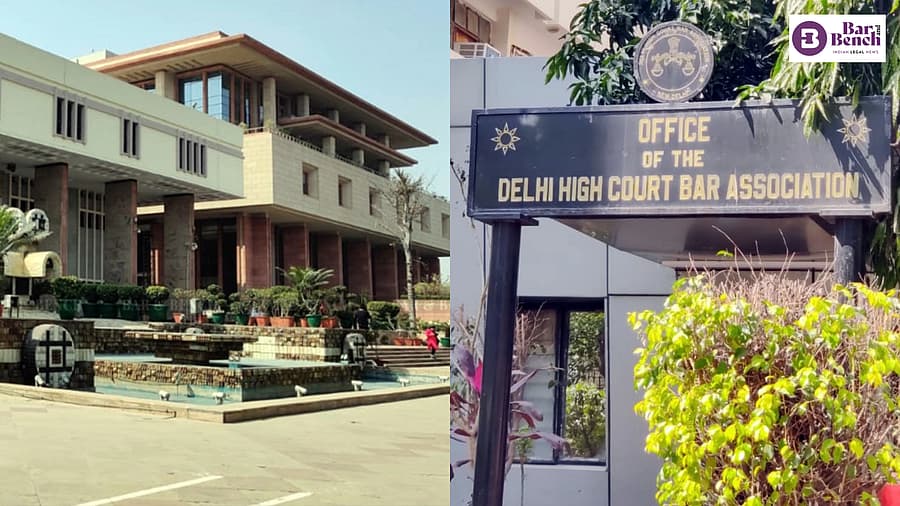
Delhi High Court: Delhi High Court Bar Association Not a Public Authority Under RTI
Summary
- The Delhi High Court ruled that the Delhi High Court Bar Association (DHCBA) is not a public authority under the Right to Information Act, 2005.
- Justice Amit Mahajan disposed of a plea by advocate Shashank Deo Sudhi seeking to declare the DHCBA a public authority and appoint a CPIO.
- The court determined the DHCBA is not amenable to writ jurisdiction, citing an earlier Division Bench ruling.
- A previous Division Bench decision from January 16, 2026, established that bar associations are private bodies primarily serving members' interests.
- This judgment means bar associations are not obligated to comply with information requests under the RTI Act.
Court Rejects RTI Plea for DHCBA
By confirming that the DHCBA is not a public authority under the Right to Information Act 2005, the court has reinforced the distinction between governmental or publicly funded entities and private professional associations.
The Delhi High Court recently issued a ruling affirming that the Delhi High Court Bar Association (DHCBA) does not fall under the purview of the Right to Information (RTI) Act, 2005. Justice Amit Mahajan presided over the case, ultimately declining to designate the DHCBA as a "public authority" as defined by the Act. This decision means the DHCBA is not obligated to respond to information requests under the RTI framework.
The proceedings stemmed from a petition filed by advocate Shashank Deo Sudhi. Mr. Sudhi had sought a judicial declaration that the DHCBA should be recognized as a public authority. Additionally, his plea requested that the court mandate the appointment of a Central Public Information Officer (CPIO) within the DHCBA, a standard requirement for entities classified under the RTI Act. Justice Mahajan's judgment resulted in the disposal of Mr. Sudhi's petition, denying the requested relief.
Legal Precedent and Rationale
Central to Justice Mahajan's determination was the finding that the Delhi High Court Bar Association is not amenable to the writ jurisdiction of the Court. This conclusion was directly informed by an earlier pronouncement from a Division Bench of the High Court. That prior ruling had established a precedent, characterizing bar associations as inherently private entities that do not typically fulfill public functions.
Justice Mahajan specifically referenced a decision from January 16, 2026, where a division bench had thoroughly examined the operational nature and roles of bar associations. This examination occurred in the context of a legal challenge concerning the New Delhi Bar Association. The division bench's observations from that case highlighted that bar associations are composed of private individual lawyers and primarily serve to safeguard the interests of their members. Their governance structures, including memorandums of association, constitutions, and internal rules, dictate their affairs, further underscoring their private character.
Why It Matters for Bar Associations Under RTI
This recent ruling by the Delhi High Court, specifically concerning the Delhi High Court Bar Association RTI status, carries significant implications for professional bodies across the legal sector. By confirming that the DHCBA is not a public authority under the Right to Information Act 2005, the court has reinforced the distinction between governmental or publicly funded entities and private professional associations. The decision clarifies that the RTI mechanism cannot be utilized to compel such private bodies to disclose information.
The judgment underscores that bar associations, including the DHCBA, are not burdened with the compliance obligations typically imposed on public authorities under the RTI Act. This means they are not required to appoint a CPIO or respond to information requests in the manner prescribed for public bodies. The consistent judicial stance, as evidenced by both Justice Mahajan's ruling and the earlier Division Bench decision, solidifies the position that bar associations, due to their private nature and function of protecting members' interests, fall outside the scope of writ jurisdiction and, consequently, the RTI Act.
Practical Implications
This ruling clarifies that bar associations, specifically the DHCBA, are not considered 'public authorities' under the RTI Act, meaning they are not subject to information requests under the Act. Lawyers and compliance officers should note that the RTI mechanism cannot be used to obtain information from such private professional bodies, and these associations are not burdened with the compliance obligations of a public authority under the Act.
Source
How does this affect you?
Get an AI analysis of this article grounded in your jurisdictions, practice areas, and any policy documents you've uploaded to Wansom.
Finish Reading the Full Story and the Expert Analysis.
Get the latest legal & regulatory intelligence in India
Wansom is AI and can make mistakes.