
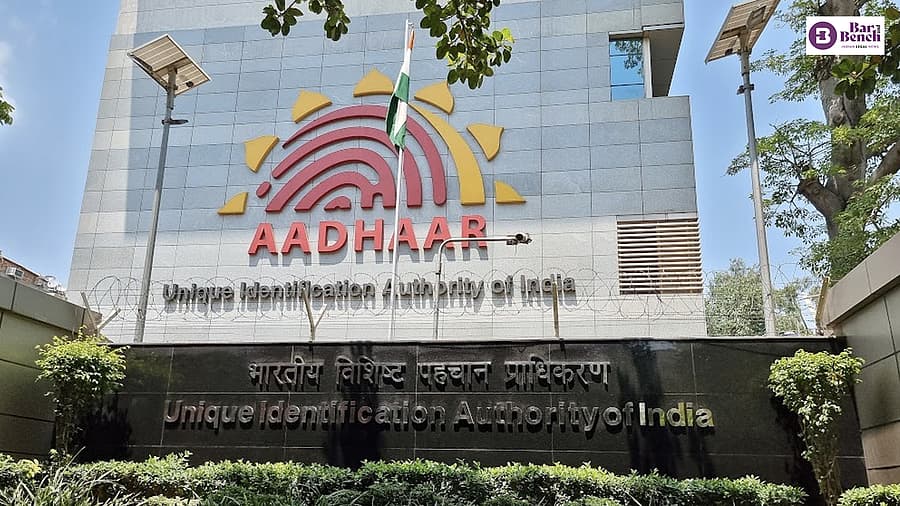
Delhi High Court: Aadhaar Biometric Attendance Stay for Prosecutors
Summary
- The Delhi High Court has stayed the mandatory Aadhaar-enabled biometric attendance system for public prosecutors.
- Justice Amit Mahajan issued the order following a petition from the Delhi Prosecutors Welfare Association.
- The challenged directive, issued October 5, required daily attendance via the Aadhaar Enabled Biometric Attendance System (AEBAS) from October 12.
- The association argued the mandate violates privacy under Article 21, is arbitrary under Article 14, and contravenes the Aadhaar Act, 2016.
- Public prosecutors' presence is already recorded in judicial order sheets, and the case will be heard again in December.
Judicial Intervention Halts Mandatory Biometric Attendance
The Delhi High Court's decision to stay the mandatory Aadhaar-enabled biometric attendance system for public prosecutors marks a significant development in the ongoing debate over privacy rights and governmental directives.
The Delhi High Court recently issued a stay order against a directive from the Delhi government that mandated Aadhaar-enabled biometric attendance for public prosecutors. This significant development, handed down by Justice Amit Mahajan, temporarily suspends the requirement for public prosecutors, additional public prosecutors, and assistant public prosecutors to use the biometric system. The decision came in response to a petition filed by the Delhi Prosecutors Welfare Association, which challenged the compulsory attendance policy.
This interim relief means that the Delhi public prosecutor biometric attendance requirement, which was set to be enforced, is currently on hold. The court has scheduled the next hearing for this matter in December, indicating that the legal challenge is ongoing and a final resolution is yet to be reached. The Delhi High Court Aadhaar biometric attendance stay provides a crucial pause for the affected legal professionals while the merits of the case are further deliberated.
The Challenged Directive and Its Legal Basis
The Delhi Prosecutors Welfare Association petition specifically targeted an order issued on October 5 by the Director of Prosecution. This directive had stipulated that all prosecuting officers must register for and mark their daily attendance using the Aadhaar Enabled Biometric Attendance System (AEBAS), with implementation slated to begin from October 12. The association contended that this mandatory system infringed upon fundamental rights and legal statutes.
Central to the association's arguments was the assertion that the directive constituted a violation of the right to privacy, a right enshrined under Article 21 of the Indian Constitution. Furthermore, the petition argued that the order was arbitrary, thereby contravening Article 14 of the Constitution, which guarantees equality before the law. Allegations were also made that the mandatory biometric attendance system was inconsistent with the provisions outlined in the Aadhaar Act, 2016, raising questions about its legality and scope.
Professional Context and Prior Grievances
The Delhi Prosecutors Welfare Association emphasized the distinct professional role of prosecuting officers within the judicial system. As "officers of the Court," appointed under Sections 18 and 19 of the Bharatiya Nagarik Suraksha Sanhita, 2023, their primary work is conducted within the courtroom. Their presence is already meticulously documented on a daily basis through judicial order sheets, suggesting that an additional biometric attendance system might be superfluous or unduly burdensome.
This is not the first instance where the association has raised concerns regarding attendance circulars. Earlier, on August 17, the High Court had instructed authorities to consider a previous petition as a formal representation and to resolve the matter within four weeks, following a personal hearing. Although a hearing did subsequently occur in September, the association remained aggrieved by the outcome, leading to the present legal challenge and the subsequent Justice Amit Mahajan order for a stay.
Practical Implications
Lawyers representing public prosecutors in Delhi should note that the mandatory Aadhaar-enabled biometric attendance requirement is currently stayed, providing a temporary reprieve. This development also signals potential legal challenges to mandatory biometric systems based on privacy and arbitrariness, which compliance officers should monitor for broader implications on data privacy policies and employee attendance systems in government or other sectors.
Source
How does this affect you?
Get an AI analysis of this article grounded in your jurisdictions, practice areas, and any policy documents you've uploaded to Wansom.
Finish Reading the Full Story and the Expert Analysis.
Get the latest legal & regulatory intelligence in India
Wansom is AI and can make mistakes.