
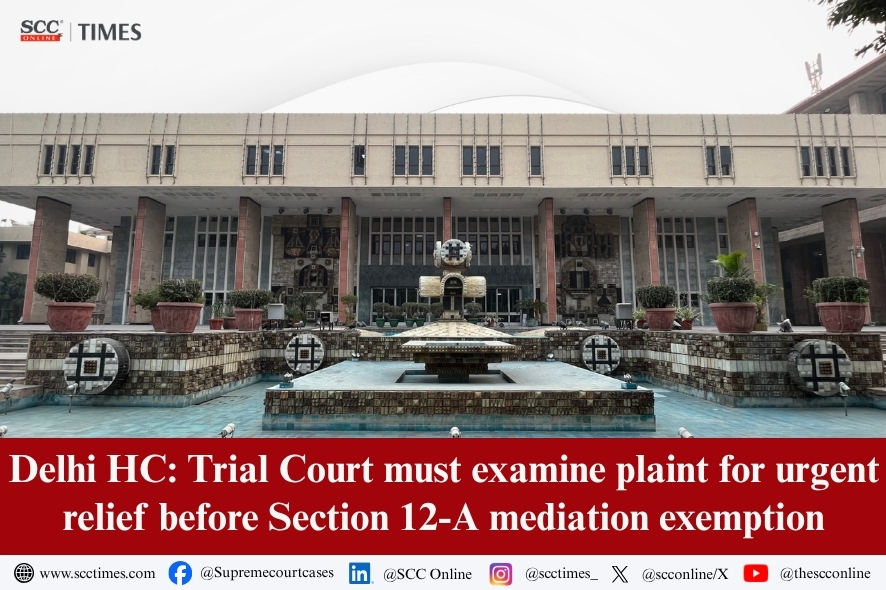
Delhi HC: Trial Court Must Examine Plaint Before Mediation Exemption
The Delhi High Court in India has set aside a Section 12-A exemption order, ruling that trial courts must hear defendants and examine the plaint to ascertain if urgent relief is genuinely sought before granting such an exemption.
This ruling carries substantial legal significance for commercial litigation across India, particularly within the jurisdiction of the Delhi High Court. It clarifies and strengthens the procedural requirements for bypassing mandatory pre-institution mediation under the Commercial Courts Act, 2015. By mandating that defendants be heard and the plaint thoroughly examined, the High Court aims to prevent the arbitrary or unjustified circumvention of mediation, thereby upholding the legislative intent behind Section 12-A to promote alternative dispute resolution (ADR). This decision reinforces principles of natural justice and ensures that the 'urgent relief' exception is applied judiciously, impacting how commercial disputes are initiated and processed.
The legal context for this decision is rooted in Section 12-A of the Commercial Courts Act, 2015, which makes pre-institution mediation mandatory for commercial disputes where no urgent interim relief is sought. The Delhi High Court's ruling provides a crucial interpretation of the conditions under which a party can claim exemption from this mandatory mediation. It emphasizes the need for a substantive assessment of the urgency claimed, rather than a mere assertion, and incorporates the fundamental principle of audi alteram partem (the right to be heard) by requiring the defendant's input. This judgment will serve as a binding precedent for all commercial courts and tribunals operating under the Delhi High Court's supervisory jurisdiction.
For practitioners, this ruling necessitates a more rigorous approach when seeking to bypass Section 12-A mediation. Commercial litigators in Delhi must now meticulously draft plaints to clearly articulate the genuine urgency of any interim relief sought and be prepared to robustly argue this point, anticipating that the defendant will have an opportunity to contest the claim of urgency. This decision underscores the judiciary's commitment to promoting mediation as a primary dispute resolution mechanism while ensuring that legitimate claims for urgent judicial intervention are not unduly delayed. Attorneys should advise their clients on the heightened scrutiny for Section 12-A exemptions and the importance of exploring mediation where urgent relief is not genuinely required.
How does this affect you?
Get an AI analysis of this article grounded in your jurisdictions, practice areas, and any policy documents you've uploaded to Wansom.
Finish Reading the Full Story and the Expert Analysis.
Get the latest legal & regulatory intelligence in India
Wansom is AI and can make mistakes.