
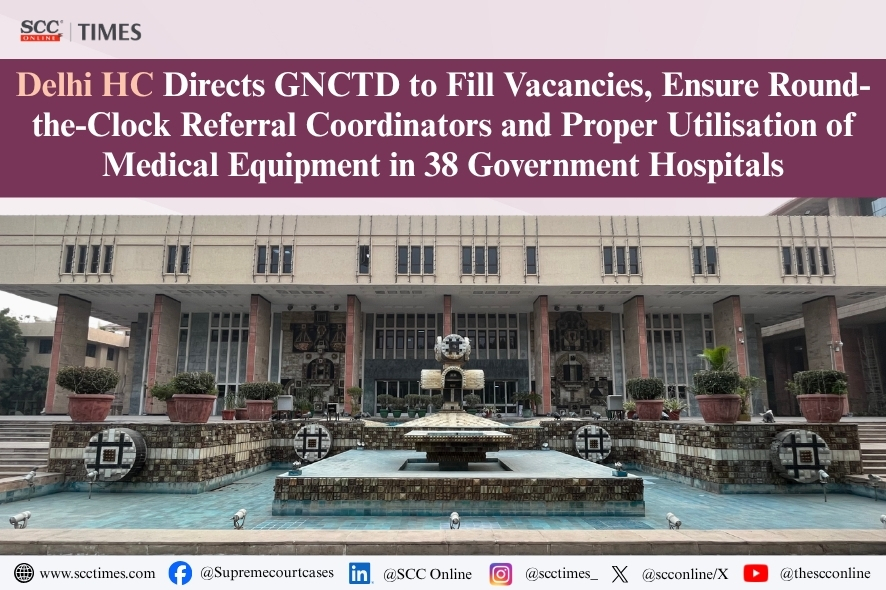
Delhi High Court: GNCTD Hospital Staffing Directive For 38 Hospitals
Summary
- The Delhi High Court has issued a directive to the Government of National Capital Territory of Delhi (GNCTD).
- The court mandated strengthening staffing across 38 government hospitals.
- The directive also requires ensuring round-the-clock referral coordinators in these facilities.
- Additionally, the court ordered proper utilization of medical equipment in the specified hospitals.
Judicial Mandate for Public Health Improvement
This directive establishes a clear legal expectation for the GNCTD regarding public hospital management, potentially creating grounds for future public interest litigation or compliance challenges for healthcare administrators and legal counsel advising public health bodies.
The Delhi High Court has issued a significant directive to the Government of National Capital Territory of Delhi (GNCTD), mandating comprehensive improvements across 38 government hospitals. This `Delhi HC GNCTD hospital staffing directive` specifically targets three critical areas: bolstering personnel, ensuring continuous referral coordination, and optimizing the use of medical equipment. The court's order underscores a judicial expectation for the executive to address deficiencies in public health infrastructure.
This judicial intervention highlights persistent challenges within the capital's public healthcare system. The directive is not merely advisory but carries the weight of a court order, requiring the GNCTD to implement concrete measures. The focus on staffing, in particular, points to concerns about the adequacy of human resources available to serve the public, a fundamental component of effective healthcare delivery.
Addressing Systemic Healthcare Gaps
The directive to strengthen staffing directly addresses the pervasive issue of `Delhi High Court hospital vacancies`, which often lead to overburdened medical professionals and and compromised patient care. Ensuring adequate `Delhi government hospitals staffing` is crucial for maintaining operational efficiency and quality of service across the 38 facilities identified in the court's order. This aspect of the mandate aims to alleviate pressure on existing staff and improve the overall capacity of the public health system.
Furthermore, the court's insistence on round-the-clock referral coordinators speaks to the need for streamlined patient pathways within the healthcare network. These coordinators play a vital role in guiding patients through complex medical systems, ensuring timely access to specialized care and reducing administrative bottlenecks. The third pillar of the directive, proper `GNCTD medical equipment utilization`, is equally critical. Unused or underutilized equipment represents a significant waste of public funds and a missed opportunity to provide essential diagnostic and therapeutic services. This aspect of the `India public health directives` aims to maximize the return on investment in healthcare technology and ensure that available resources are actively contributing to patient well-being.
Implications for Governance and Public Trust
This directive establishes a clear legal expectation for the GNCTD regarding public hospital management, potentially creating grounds for future public interest litigation or compliance challenges for healthcare administrators and legal counsel advising public health bodies. The High Court's proactive stance signals a judicial commitment to upholding the right to health for citizens, placing a direct onus on the government to ensure functional and well-resourced medical facilities. The specific mention of 38 hospitals indicates a targeted approach to systemic issues rather than isolated incidents.
The mandate for `Delhi HC referral coordinators` operating continuously is particularly significant for improving patient experience and operational flow. Effective coordination can drastically reduce wait times and improve the efficiency of patient transfers between departments or even different facilities. Ultimately, adherence to these directives is not just a matter of legal compliance but also crucial for rebuilding and maintaining public trust in the government's ability to provide essential healthcare services. The court's intervention serves as a powerful reminder of the accountability of public bodies in delivering on their mandate to protect public health.
Practical Implications
This Delhi High Court directive establishes a clear legal expectation for the GNCTD regarding public hospital management, potentially creating grounds for future public interest litigation or compliance challenges for healthcare administrators and legal counsel advising public health bodies.
Source
How does this affect you?
Get an AI analysis of this article grounded in your jurisdictions, practice areas, and any policy documents you've uploaded to Wansom.
Finish Reading the Full Story and the Expert Analysis.
Get the latest legal & regulatory intelligence in India
Wansom is AI and can make mistakes.