
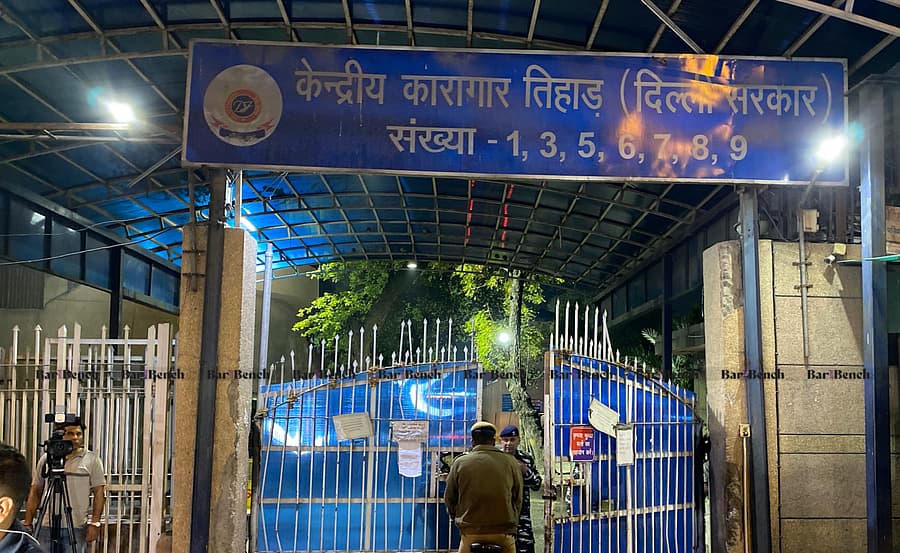
Delhi High Court: Tihar Superintendent in Contempt for Parole Order
Summary
- The Delhi High Court initiated contempt proceedings against a Tihar jail superintendent for failing to release undertrial Anwar Hussain on parole.
- Hussain, in jail for over five years, was granted parole by the court on July 30, with terms to be fixed by jail authorities, but no conditions were set.
- After Hussain approached the court again, the High Court itself fixed the parole terms on August 11, yet his release remained unexecuted.
- The court found the superintendent's actions to be a 'blatant abuse of power' and a violation of Hussain's constitutional right to personal liberty.
- This ruling emphasizes the judiciary's resolve against administrative obstruction of judicial orders concerning personal liberty.
What Prompted Contempt Proceedings
This ruling by the Delhi High Court signals that the judiciary will not tolerate administrative obstruction of its orders, particularly concerning personal liberty.
The Delhi High Court has initiated contempt of court proceedings against a superintendent at Tihar jail, citing a failure to release an undertrial prisoner despite explicit judicial directives for parole. This action stems from a petition filed by Anwar Hussain, an undertrial accused who has been incarcerated for over five years, challenging the jail superintendent's persistent refusal to grant him temporary liberty.
Justice Purushaindra Kumar Kaurav noted the serious lapse after Hussain brought the matter to the court's attention. The High Court had initially sanctioned Hussain's release on parole, stipulating that the specific terms and conditions for his temporary release were to be determined by the jail authorities. However, instead of establishing these conditions, the jail superintendent allegedly presented what the court described as inadequate and baseless justifications, effectively prolonging Hussain's detention.
This obstruction led Hussain to approach the court again. Following the superintendent's inaction on the initial order dated July 30, which had granted four weeks of parole and allowed jail authorities to set conditions, the Delhi High Court itself intervened. On August 11, the court issued a subsequent order, directly outlining the terms for Hussain's parole, yet his release remained unexecuted, leading to the current contempt action against the Tihar jail superintendent.
Court's Strong Condemnation
The High Court's findings were unequivocal, characterizing the superintendent's conduct as a severe overreach of official duties and a direct violation of Anwar Hussain's fundamental constitutional right to personal liberty. The court explicitly stated that the superintendent's actions constituted a deliberate attempt to frustrate a judicial order, thereby undermining the integrity of the legal system in India.
Justice Kaurav's observations highlighted that the superintendent's excuses for non-compliance were not only flimsy but also untenable, serving only to prolong the undertrial's incarceration. This stance underscores the judiciary's commitment to upholding its directives and ensuring that administrative bodies do not impede the execution of court orders, particularly those concerning the personal freedom of individuals.
By initiating these Delhi High Court contempt proceedings, the court sends a clear message regarding the accountability of jail authorities. The case, titled Anwar Hussain Vs State NCT of Delhi, serves as a critical reminder that administrative convenience or discretion cannot supersede judicial pronouncements, especially when they pertain to the liberty of a prisoner.
Significance for Judicial Authority
This ruling by the Delhi High Court signals that the judiciary will not tolerate administrative obstruction of its orders, particularly concerning personal liberty. The initiation of contempt proceedings against a Tihar jail superintendent for frustrating a judicial order in India sets a significant precedent, reinforcing the supremacy of court directives over bureaucratic delays or willful non-compliance. It underscores the judiciary's role as a guardian of fundamental rights, ensuring that even undertrials, like Anwar Hussain, are afforded the protections guaranteed by law.
For lawyers representing undertrials or prisoners, this development offers a crucial legal avenue. It demonstrates that the courts are prepared to take stringent action against jail authorities who fail to comply with parole or other release orders, thereby strengthening prisoner rights in India. The case highlights that administrative bodies cannot make a mockery of the legal system by disregarding judicial mandates, especially in matters pertaining to criminal law India parole.
The Delhi High Court's firm stance is a vital affirmation of the principle that judicial orders must be respected and executed without undue delay or arbitrary obstruction. This decision is expected to have a deterrent effect on similar instances of non-compliance, ensuring greater adherence to court directives by correctional facilities and safeguarding the rights of individuals awaiting justice.
Practical Implications
This ruling signals that the Delhi High Court will not tolerate administrative obstruction of judicial orders, particularly concerning personal liberty. Lawyers representing undertrials or prisoners should note this precedent for challenging non-compliance by jail authorities regarding parole or other release orders.
Source
Source: Original reporting via Live Law
How does this affect you?
Get an AI analysis of this article grounded in your jurisdictions, practice areas, and any policy documents you've uploaded to Wansom.
Finish Reading the Full Story and the Expert Analysis.
Get the latest legal & regulatory intelligence in India
Wansom is AI and can make mistakes.