
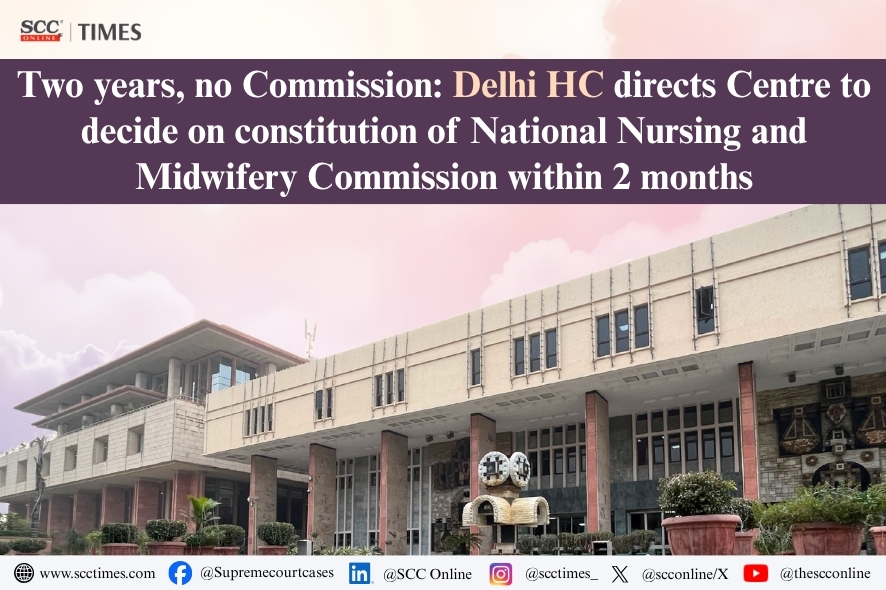
Delhi HC: Centre Must Make National Nursing Commission Decision in 2 Months
Summary
- The Delhi High Court has directed the central government to decide on the constitution of the National Nursing and Midwifery Commission.
- This decision must be made within a strict two-month timeframe.
- The directive addresses a two-year delay in establishing the crucial regulatory body.
- The court's order stems from a representation concerning the commission's formation.
- The Centre's decision will introduce new regulatory frameworks and compliance obligations for the nursing sector.
Judicial Mandate on Nursing Regulation
Lawyers advising healthcare clients, including hospitals, clinics, and nursing institutions, should closely monitor the Centre's impending decision.
The Delhi High Court has issued a significant directive, compelling the central government to make a definitive decision regarding the establishment of the National Nursing and Midwifery Commission. This judicial intervention stems from a representation concerning the constitution of this crucial regulatory body. The court has set a strict two-month deadline for the respondents, which refers to the relevant government authorities, to act upon this matter. This ruling underscores the judiciary's role in ensuring timely governmental action on legislative and regulatory frameworks essential for public services.
The directive specifically addresses the long-standing issue of the commission's formation, which has been pending for an extended period. The court's order mandates that the Centre decision National Nursing Commission must be finalized within the stipulated timeframe, indicating a clear intent to resolve the regulatory uncertainty surrounding India's nursing sector. This development is particularly relevant for healthcare legal compliance India, as the absence of a fully operational commission leaves a gap in the oversight of nursing education and practice.
Prolonged Delay and Regulatory Gaps
For two years, the National Nursing and Midwifery Commission has remained unconstituted, despite the apparent need for its establishment. This prolonged delay has created a significant void in the regulatory landscape governing nursing and midwifery professions across the country. The representation brought before the Delhi High Court highlighted this inaction, prompting the judicial body to intervene and demand a resolution. The absence of this commission impacts the India nursing regulation timeline, hindering the modernization and standardization of professional practices.
The delay in forming the commission has broader implications for the healthcare sector, particularly concerning the consistent application of standards and the effective management of nursing education and practice. The directive from the Delhi High Court National Nursing Midwifery Commission case serves as a critical push to address this regulatory lacuna. It emphasizes the importance of having a robust and active regulatory body to ensure quality and accountability within the nursing profession, which is a cornerstone of public health services.
Implications for Healthcare Stakeholders
The Delhi HC National Nursing Commission decision carries substantial weight for various stakeholders within the Indian healthcare ecosystem. Lawyers advising healthcare clients, including hospitals, clinics, and nursing institutions, should closely monitor the Centre's impending decision. The constitution of the National Nursing and Midwifery Commission is expected to introduce new regulatory frameworks and compliance obligations that will directly impact these entities. This will necessitate a thorough review of existing practices and policies to align with the forthcoming national standards.
The establishment of the commission is poised to redefine standards for nursing education, practice, and ethics, thereby influencing operational aspects and legal responsibilities across the sector. Compliance with these new regulations will become paramount, making it crucial for legal professionals to guide their clients through the transition. The court's clear two-month deadline for the government to act means that these changes could materialize relatively quickly, requiring proactive engagement from all parties involved in healthcare legal compliance India. This development, stemming from a public interest litigation nursing concern, aims to strengthen the foundational elements of nursing care nationwide.
Practical Implications
Lawyers advising healthcare clients or nursing institutions in India should monitor the Centre's decision regarding the National Nursing and Midwifery Commission's constitution, as its formation will introduce new regulatory frameworks and compliance obligations for the sector. This directive sets a clear two-month deadline for the government to act.
Source
Source: Original reporting via SCC Times
How does this affect you?
Get an AI analysis of this article grounded in your jurisdictions, practice areas, and any policy documents you've uploaded to Wansom.
Finish Reading the Full Expert Analysis.
Wansom is AI and can make mistakes.