
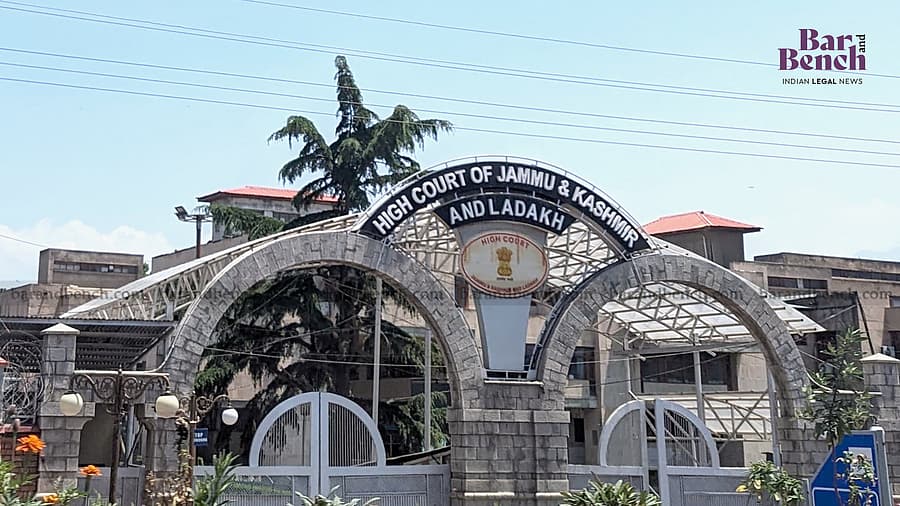
J&K High Court: Orders New Religious Encroachment Report on Public Spaces
Summary
- The Jammu & Kashmir and Ladakh High Court has ordered the Divisional Commissioner of Kashmir to provide a new report on religious institutions encroaching on public land.
- This directive is part of an ongoing suo motu case concerning general land encroachments in the region.
- The Court noted that a previous report identified religious structures on State, Kahcharai, and Shamilat Deh land, but lacked specifics on encroachments on public streets and parks.
- The new affidavit must clearly detail any encroachments by mosques, temples, churches, or gurdwaras on public streets, public parks, and other public places.
- Acting Chief Justice Sanjeev Kumar and Justice Mohd Yousuf Wani issued the order, emphasizing the need for precise information.
Court Demands Fresh Report on Religious Encroachments
The Court's renewed focus underscores its commitment to addressing unauthorized constructions on public land, particularly those associated with religious entities.
The Jammu & Kashmir and Ladakh High Court has issued a directive to the Divisional Commissioner of Kashmir, mandating the submission of a new affidavit. This order specifically requires a comprehensive account of any encroachments made by religious institutions on public streets, public parks, and other designated public areas within the region. The directive was issued during ongoing proceedings in a suo motu case, titled `In Re Suo motu Proceedings V/s State of J&K`, which focuses broadly on land encroachments. Acting Chief Justice Sanjeev Kumar and Justice Mohd Yousuf Wani presided over the bench that delivered this instruction. The Court's renewed focus underscores its commitment to addressing unauthorized constructions on public land, particularly those associated with religious entities. This latest order signals an intensified scrutiny of how public spaces are utilized and whether religious structures are adhering to land use regulations in Kashmir.
Previous Findings and Unanswered Questions
The High Court's call for a fresh report stems from perceived deficiencies in a prior status report submitted by the Divisional Commissioner. That earlier report had indeed identified encroachments on various categories of land, including State land, Kahcharai land, and Shamilat Deh land. These identified encroachments were specifically linked to the construction of places of worship, encompassing mosques, temples, churches, and gurdwaras across the Kashmir Division. However, the Court observed that the previous submission lacked clarity regarding encroachments specifically on public streets, public parks, or other public places. While the report acknowledged religious structures on State, Kahcharai, and Shamilat Deh land, it did not distinctly detail whether temples, churches, mosques, or gurdwaras had also encroached upon the more sensitive categories of public thoroughfares and recreational spaces. This gap prompted the judiciary to demand a more precise and detailed accounting, building upon earlier orders dated November 4, 2025, and July 8, 2026.
Legal Context and Significance of the Directive
This ongoing suo motu case highlights the Jammu & Kashmir and Ladakh High Court's proactive stance in safeguarding public land from unauthorized occupation. The specific demand for a `J&K High Court religious encroachment report` underscores the judiciary's concern about the proliferation of structures, even those with religious purposes, on land designated for public use. The inclusion of `Kahcharai land religious structures` and `Shamilat Deh land encroachment Kashmir` in the previous report indicates a broad scope of inquiry into various types of community and state-owned lands. The directive for a detailed affidavit on `Kashmir High Court public land encroachment` by religious institutions is significant. It suggests that the Court is not merely interested in the fact of encroachment but also in the specific nature and location of such encroachments, particularly those impacting public access and civic infrastructure. This sustained judicial oversight, under the umbrella of `Jammu & Kashmir and Ladakh High Court encroachments` proceedings, reinforces the principle that no entity, regardless of its nature, is exempt from land use laws and regulations.
Practical Implications
Lawyers advising religious institutions or entities involved in land use and development in Jammu & Kashmir should note the High Court's active and ongoing scrutiny of public land encroachments. This signals a heightened risk of enforcement actions, including potential demolition orders, and necessitates thorough due diligence on land titles and compliance with land use regulations for any structures on public or community lands.
Source
How does this affect you?
Get an AI analysis of this article grounded in your jurisdictions, practice areas, and any policy documents you've uploaded to Wansom.
Finish Reading the Full Expert Analysis.
Wansom is AI and can make mistakes.