
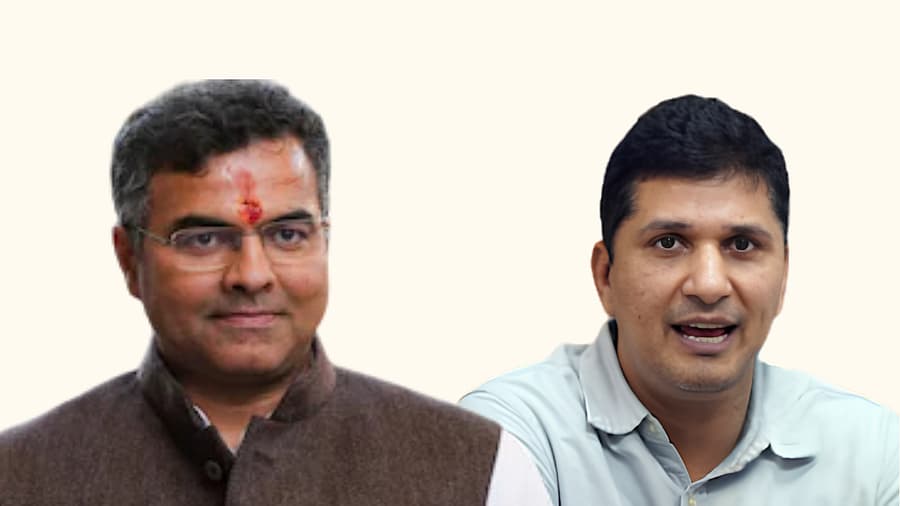
Delhi Court Rejects Parvesh Verma Criminal Defamation Complaint
Summary
- A Delhi court rejected a criminal defamation case filed by Deputy Chief Minister Parvesh Sahib Singh Verma against AAP leader Saurabh Bharadwaj.
- Additional Chief Judicial Magistrate Neha Mittal of the Rouse Avenue Courts declined to take cognizance, stating Bharadwaj's imputations were questions, not defamation.
- Verma had accused Bharadwaj of posting "false, malicious and highly defamatory" tweets and videos on May 15 and 16.
- The posts allegedly insinuated Verma misused his position regarding a ₹500 crore school trust and influenced a POCSO case.
- A separate civil defamation case for ₹5 crore filed by Verma against Bharadwaj is still pending in the Delhi High Court.
Delhi Court Rejects Criminal Defamation Plea
The ruling by ACJM Neha Mittal at the Rouse Avenue Courts establishes that critical inquiries, even those with an underlying insinuation, might not satisfy the stringent requirements for criminal defamation.
A Delhi court recently dismissed a criminal defamation complaint initiated by Delhi Deputy Chief Minister Parvesh Sahib Singh Verma against Aam Aadmi Party (AAP) leader Saurabh Bharadwaj. The ruling, delivered by Additional Chief Judicial Magistrate (ACJM) Neha Mittal at the Rouse Avenue Courts, found that the allegations made by Bharadwaj did not meet the legal threshold for defamation, specifically noting their interrogative nature. This decision means the court declined to take cognizance of the case, effectively halting the criminal proceedings.
The court's pronouncement on Saturday underscored a crucial distinction in defamation law, emphasizing that statements framed as questions, even if critical or insinating, may not constitute defamation. ACJM Mittal explicitly stated that the imputations by Bharadwaj were "in the nature of asking questions" and therefore did not amount to criminal defamation. This stance provides a significant precedent for future cases involving public discourse and political commentary on digital platforms.
The Core of the Dispute
The criminal defamation case stemmed from social media posts made by Saurabh Bharadwaj on May 15 and May 16. Parvesh Sahib Singh Verma contended that these tweets and videos, published on Bharadwaj's X handle, were "false, malicious and highly defamatory." Verma alleged that Bharadwaj's posts insinuated that he had misused his official position as a minister.
Specifically, Verma claimed that Bharadwaj's content suggested he had appointed an alleged associate as a trustee in a private school trust, valued at approximately ₹500 crores, and further implied that this trust was, in fact, owned by Verma himself. Additionally, the complaint highlighted Bharadwaj's alleged insinuation that Verma had exerted influence to benefit employees of the school, who were implicated in a case under the Protection of Children from Sexual Offences (POCSO) Act. These accusations formed the basis of Verma's pursuit of criminal charges.
Legal Context and Implications
The Delhi court's decision to reject Parvesh Verma's criminal defamation case against Saurabh Bharadwaj offers important clarity on the application of defamation laws, particularly in the context of social media interactions. The ruling by ACJM Neha Mittal at the Rouse Avenue Courts establishes that critical inquiries, even those with an underlying insinuation, might not satisfy the stringent requirements for criminal defamation.
This judicial perspective is vital for understanding the boundaries of free speech and accountability for public figures in India. This outcome suggests that the judiciary is carefully scrutinizing the intent and phrasing of public statements before deeming them criminally defamatory. For legal practitioners, this ruling indicates that advising clients on potential defamation claims or defenses should consider whether the alleged defamatory content is presented as a direct assertion or as a question. It underscores that merely posing a question, even if it implies wrongdoing, may not be sufficient to trigger criminal proceedings.
It is also noteworthy that while this criminal defamation case has been dismissed, Parvesh Verma has concurrently pursued a separate civil defamation case against Saurabh Bharadwaj. This civil suit, seeking ₹5 crore in damages, is currently pending before the Delhi High Court. The existence of both criminal and civil actions highlights the different legal avenues available for addressing alleged reputational harm, with the criminal path requiring a higher bar for proof and intent, as demonstrated by this recent Rouse Avenue Courts defamation ruling.
Practical Implications
This ruling clarifies the Delhi courts' stance on what constitutes criminal defamation, particularly when statements are framed as questions on social media. Lawyers should advise clients that critical inquiries, even if insinuating, may not meet the threshold for criminal defamation, providing a precedent for defending against such claims or assessing the viability of initiating them.
Source
How does this affect you?
Get an AI analysis of this article grounded in your jurisdictions, practice areas, and any policy documents you've uploaded to Wansom.
Finish Reading the Full Story and the Expert Analysis.
Get the latest legal & regulatory intelligence in India
Wansom is AI and can make mistakes.