
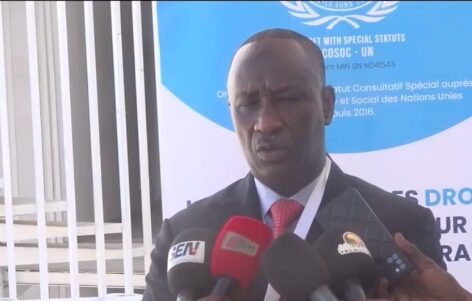
Djiby Diallo: Cybersecurity Recommendations for Senegal's Public Sector
Summary
- Senegalese public institutions, including the Public Treasury, have been targeted by cyberattacks, with one incident exposing 70 GB of data in May 2026.
- Criminologist Djiby Diallo warned at a Dakar colloquium that no country is fully immune to the constantly evolving cyber threat landscape.
- Diallo recommended integrating cybersecurity education from childhood and within professional training for security forces.
- He proposed establishing a national agency to centralize responsibilities for cybersecurity, cybercriminality, digital investigation, and AI to pool resources.
- Investment in local research, cryptology, and AI skills is crucial to develop tailored solutions and reduce dependence on foreign technologies.
Senegal's Escalating Cyber Threat Landscape
A key proposal from Djiby Diallo involves centralizing cybersecurity, cybercriminality, digital investigation, and artificial intelligence responsibilities into a single national agency, aiming to pool resources and enhance efficiency.
Senegal's public institutions have already fallen victim to cyberattacks, highlighting that digital protection extends beyond traditional security services. This critical assessment was delivered by criminologist Djiby Diallo during an international colloquium held in Dakar on October 16 and 17, 2026. The event, commemorating the fiftieth anniversary of the Army Transmissions, brought together a diverse group including military personnel, civilians, academics, diplomats, and private sector representatives to discuss pressing issues such as cybercriminality, artificial intelligence, and digital sovereignty.
The discussions at the Dakar international cybersecurity colloquium were particularly pertinent given recent incidents. Djiby Diallo's address on cybersecurity in Senegal took place against a backdrop of targeted attacks on key government bodies, including the Directorate General of Taxes and Domains (DGID), the Directorate of Administrative and Financial Affairs (DAF), and the Public Treasury. A notable incident occurred on May 11, 2026, when an attack on the Public Treasury resulted in the exposure of approximately 70 gigabytes of sensitive data on the dark web. Diallo emphasized that these evolving risks pose threats not only to governmental administrations and private enterprises but also to individual citizens.
Strategic Recommendations for National Cyber Defense
Recognizing the inadequacy of existing measures against constantly evolving threats, Djiby Diallo presented a comprehensive set of cybersecurity recommendations for Senegal. He advocated for the early introduction of cybersecurity education, suggesting its integration into curricula from childhood. Furthermore, he proposed embedding cybersecurity training within the professional development programs of police, gendarmerie, customs, and armed forces schools, thereby strengthening the nation's cyber defense strategy from foundational levels.
A cornerstone of Djiby Diallo's recommendations involves fostering local capabilities. He urged significant investment in research and cryptology, alongside the development of solutions specifically tailored to Senegal's unique requirements. This includes cultivating local expertise in artificial intelligence, acknowledging that while AI can aid in threat detection and data processing, it also raises concerns about over-reliance on foreign-developed technologies. Crucially, Diallo proposed consolidating the currently dispersed responsibilities for cybersecurity, cybercriminality, digital investigation, and AI into a single, unified national agency. This structure, he argued, would enable the pooling of resources and enhance the overall effectiveness of the national response to cyber threats. He also encouraged researchers and students to innovate in areas like drones and anti-drone systems.
Fostering Digital Sovereignty Through Collaboration
The colloquium also underscored the broader implications of digital transformation for national sovereignty. Hortence Samb-Mayeres, founder of Africa Cyber Network, a co-organizer of the Dakar international cybersecurity colloquium, highlighted the imperative to safeguard critical infrastructure, data, and digital sovereignty in the face of rapid technological advancements. She strongly advocated for robust partnerships between the public and private sectors, asserting that no single entity possesses the capacity to tackle these multifaceted challenges in isolation.
Africa Cyber Network, which jointly hosted the event with the Direction des Transmissions et de l’Informatique des Armées, has committed to ongoing initiatives focused on training, prevention, and skill enhancement within the cybersecurity domain. The urgency of these efforts is further underscored by regional and international warnings; Interpol has identified Senegal among the most targeted African nations for cybercriminality, and Kaspersky reported 92 million cyber threats across West Africa in January 2026, illustrating the pervasive nature of the cybercriminality AI digital sovereignty Senegal challenge.
Anticipating Regulatory Shifts and Compliance Needs
The insights and Djiby Diallo cybersecurity recommendations Senegal presented at the Dakar colloquium signal a potential shift in the nation's approach to digital security, with significant implications for legal and compliance professionals. Diallo's call for a consolidated national agency overseeing cybersecurity, cybercriminality, digital investigation, and AI suggests a future landscape with increased regulatory focus and potentially new legislative frameworks. This proposed structure aims to streamline efforts and pool resources, which could lead to more stringent national standards and enforcement mechanisms.
Lawyers and compliance officers in Senegal should therefore anticipate a heightened regulatory environment. It is crucial for them to advise clients, particularly those managing sensitive data or engaging with public institutions, to proactively review and fortify their existing cybersecurity frameworks. Strengthening these defenses will be essential not only to mitigate the escalating risks of cyberattacks, as demonstrated by the vulnerability of public sector data, but also to ensure adherence to evolving national cybersecurity policies and potential new legislation stemming from these expert recommendations.
Practical Implications
Lawyers and compliance officers in Senegal should anticipate increased regulatory focus and potential new legislation or the establishment of a national cybersecurity agency, as recommended by Djiby Diallo. They should advise clients, especially those handling sensitive data or interacting with public institutions, to review and strengthen their cybersecurity frameworks to mitigate risks and ensure compliance with evolving national standards, given the demonstrated vulnerability of public sector data.
Source
How does this affect you?
Get an AI analysis of this article grounded in your jurisdictions, practice areas, and any policy documents you've uploaded to Wansom.
Wansom is AI and can make mistakes.