
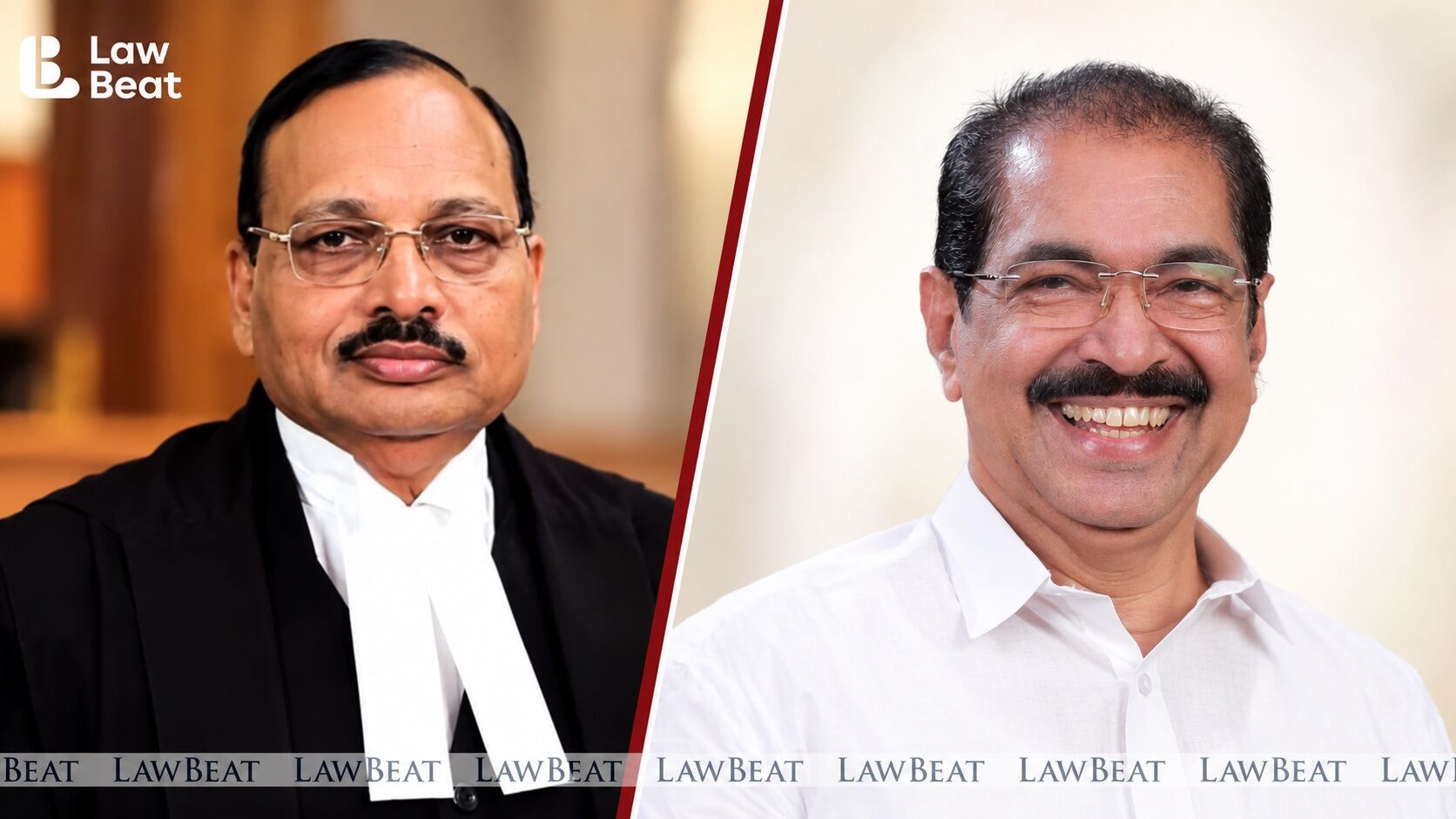
Criminal Contempt Sought for Kerala Congress Chief Over CJI X Post
Summary
- A Supreme Court AOR has sought the Attorney General's consent to initiate criminal contempt proceedings against KPCC President Sunny Joseph.
- The action targets a deleted X post from Congress Kerala's verified handle that asked CJI Surya Kant to "resign now."
- The AOR alleges the post was derogatory, intimidating, and undermined public confidence in the judiciary.
- The post was made after CJI Surya Kant declined to meet opposition leaders regarding ongoing protests, citing judicial propriety.
- KPCC President Sunny Joseph stated the post was unauthorized, and the responsible individual was removed.
Seeking Contempt Action Against Kerala Congress Chief
This move to pursue criminal contempt against the Kerala Congress Chief highlights the serious view taken regarding public commentary on judicial figures, particularly when such statements appear on platforms like X.
A Supreme Court Advocate-on-Record (AOR), Savita Singh, has formally requested the Attorney General's consent to initiate criminal contempt proceedings against Kerala Pradesh Congress Committee (KPCC) President Sunny Joseph and those responsible for managing the party's social media presence. This action stems from a now-deleted X post that directly targeted Chief Justice of India (CJI) Surya Kant, demanding his resignation. The post, published on October 12 by the Congress Kerala's verified X handle, explicitly stated: "Dear Surya Kant, If law and order is not your domain, resign now. We will find your replacement who can handle it." Singh's application, dated October 16, asserts that this particular X post was not only derogatory and intimidating towards the CJI but also carried the potential to erode public trust in the judiciary.
Legal Framework for Criminal Contempt
For criminal contempt proceedings to be initiated before the Supreme Court, the written consent of the Attorney General R Venkataramani is a prerequisite, as stipulated under Section 15(1)(b) of the Contempt of Courts Act, 1971, read in conjunction with Rule 3(c) of the Rules to Regulate Proceedings for Contempt of the Supreme Court, 1975. Advocate Savita Singh's application precisely follows this legal pathway, seeking the necessary approval to proceed with her complaint against KPCC President Sunny Joseph. The core of her argument rests on the premise that the X post CJI resign message constituted an act of contempt by scandalizing and lowering the authority of the Supreme Court.
The legal framework for contempt of court aims to safeguard the dignity and impartiality of the judicial system, preventing actions that could undermine public confidence in its ability to administer justice. Singh's contention is that the direct and forceful language used in the X post against CJI Surya Kant falls squarely within the definition of criminal contempt, which includes any publication that "scandalises or tends to scandalise, or lowers or tends to lower the authority of, any court." The deletion of the post, while noted, does not negate the initial act of publication and its alleged impact on judicial standing.
Broader Political and Judicial Context
The controversial X post by Congress Kerala, which led to the criminal contempt request against KPCC President Sunny Joseph, emerged in a specific political climate. It was published following a Press Trust of India report detailing CJI Surya Kant's remarks concerning protests in Delhi against Chief Election Commissioner Gyanesh Kumar and the associated restrictions. These judicial comments coincided with an opposition march towards the Supreme Court, where demands for the CEC's resignation and a halt to the Special Intensive Revision (SIR) of electoral rolls were being voiced.
Prior to the post, Leader of the Opposition (LOP) in the Lok Sabha, Rahul Gandhi, and LOP in the Rajya Sabha, Mallikarjun Kharge, had sought an appointment with the CJI to present a memorandum. However, CJI Surya Kant declined this request, explaining that the issues were already sub judice before the Supreme Court and that a meeting to discuss them would be inconsistent with the principles of separation of powers and judicial propriety. Following widespread criticism, the post demanding the CJI's resignation was subsequently removed.
Media reports indicate that KPCC President Sunny Joseph publicly stated that the post was published without the knowledge, consent, or consultation of the state party leadership, adding that the individual responsible for the post had been removed and the party would investigate the circumstances of its publication. This incident is part of a larger series of legal challenges and demands for action, including a legal notice issued by SCBA Joint Secretary Meenesh Dubey to Joseph on October 17, seeking an explanation for the absence of a public apology. Additionally, four advocates have approached the Supreme Court, advocating for a party-neutral framework to prevent political demonstrations near constitutional courts and requesting the initiation of suo motu criminal contempt proceedings against several opposition leaders in connection with the events of October 12.
Practical Implications
Lawyers and compliance officers must advise political clients and organizations on the severe risks associated with social media posts that could be construed as contempt of court, even if deleted. This case highlights the judiciary's proactive stance against perceived attempts to undermine its authority, requiring careful review of public statements targeting judicial officers to avoid potential criminal proceedings.
Source
How does this affect you?
Get an AI analysis of this article grounded in your jurisdictions, practice areas, and any policy documents you've uploaded to Wansom.
Finish Reading the Full Story and the Expert Analysis.
Get the latest legal & regulatory intelligence in India
Wansom is AI and can make mistakes.