
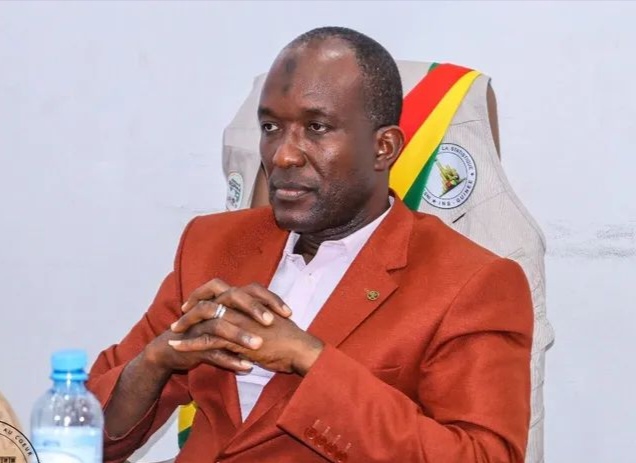
CRIEF: Ahmed Sékou Traoré Trial Postponed to 2026 Over Absent Lawyers
Summary
- The trial for alleged public funds embezzlement involving Ahmed Sékou Traoré and Mohamed Camara has been postponed.
- The Cour de répression des infractions économiques et financières (CRIEF) made the decision to adjourn the proceedings.
- The new trial date for the case is set for December 9, 2026.
- The postponement was primarily caused by the absence of state lawyers.
- Ahmed Sékou Traoré previously served as the president of the special delegation of Ratoma.
What Happened
The primary reason cited for this postponement was the absence of state lawyers, a critical procedural requirement for the continuation of such a high-profile case.
The trial concerning allegations of public funds embezzlement at the Ratoma municipality, involving Ahmed Sékou Traoré, the former president of the special delegation (PDS) of Ratoma, and his co-defendant Mohamed Camara, has been postponed. The Chambre de jugement of the Cour de répression des infractions économiques et financières (CRIEF) announced that the proceedings would be adjourned until December 9, 2026. This significant delay means that the case, which has drawn attention to financial oversight within local governance, will not resume for an extended period.
The primary reason cited for this postponement was the absence of state lawyers, a critical procedural requirement for the continuation of such a high-profile case. Without the presence of these legal representatives, the court was unable to proceed with the scheduled hearing. This decision underscores the procedural hurdles that can arise in complex legal battles, particularly those handled by specialized courts like the CRIEF, which are tasked with addressing economic and financial offenses. The renvoi of the Ahmed Sékou Traoré CRIEF case highlights the meticulous adherence to legal protocols, even if it results in substantial delays.
The CRIEF's Mandate
The Cour de répression des infractions économiques et financières (CRIEF) is a specialized judicial body in Guinea, specifically established to combat corruption and financial misconduct within the public sector. Its creation reflects a national commitment to addressing economic crimes that undermine public trust and resource management. The institution is empowered to investigate, prosecute, and adjudicate cases involving the misuse of public funds, illicit enrichment, and other financial irregularities.
The current case, which alleges the détournement deniers publics Ratoma, falls directly within the CRIEF's jurisdiction. Ahmed Sékou Traoré, as the former head of the special delegation for Ratoma, held a position of public trust, making the allegations of embezzlement particularly sensitive. The involvement of Mohamed Camara further broadens the scope of the investigation into the financial practices of the municipal administration. The CRIEF's handling of such cases is vital for demonstrating accountability and deterring future instances of financial malfeasance in Guinea.
Implications of Procedural Delays
The decision to postpone the Ahmed Sékou Traoré trial until late 2026 due to the absence of state lawyers illustrates a recurring challenge within the Guinean judicial system, particularly for complex economic and financial crime cases. Such procedural delays can have multifaceted implications, affecting not only the parties involved but also the broader public perception of justice. For the accused, a prolonged trial period can mean extended uncertainty and potential reputational damage, regardless of the eventual outcome.
Moreover, the extended timeline for the CRIEF Ahmed Sékou Traoré trial postponement can strain judicial resources and potentially impact the efficiency of the court in addressing other pressing cases. The need for state lawyers to be present emphasizes the government's direct stake in prosecuting alleged financial crimes, yet their absence can inadvertently contribute to a backlog. This situation highlights the importance of robust administrative and legal support mechanisms to ensure that trials, especially those concerning public funds, proceed in a timely and effective manner, maintaining public confidence in Guinée CRIEF actualité.
Practical Implications
Lawyers and compliance officers involved in cases before Guinea's CRIEF should note that procedural delays, such as the absence of state lawyers, can significantly impact trial timelines. This necessitates careful management of client expectations, resource allocation, and strategic planning for potential adjournments in economic and financial crime proceedings.
Source
How does this affect you?
Get an AI analysis of this article grounded in your jurisdictions, practice areas, and any policy documents you've uploaded to Wansom.
Finish Reading the Full Story and the Expert Analysis.
Get the latest legal & regulatory intelligence in Guinea
Wansom is AI and can make mistakes.