
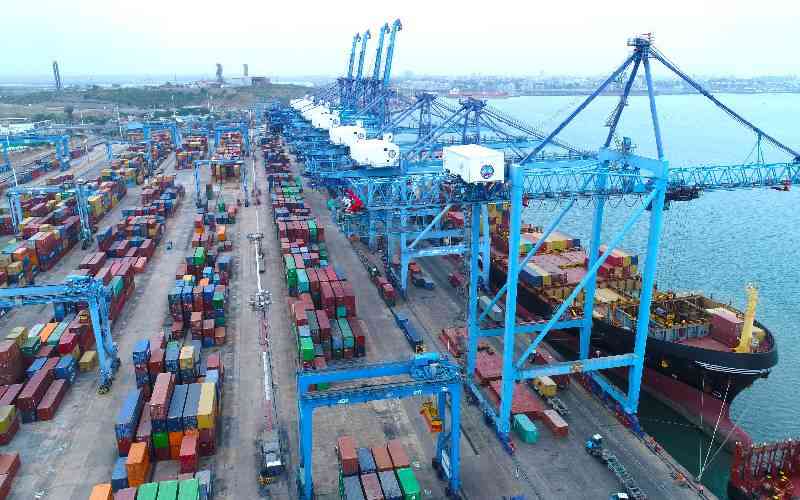
Court okays KPA's restricted tendering of heavy machinery amidst protests
Abstract
The High Court in Mombasa recently upheld the Kenya Ports Authority's (KPA) decision to procure multi-million-dollar heavy port-operation machinery through restricted tendering, dismissing a petition that challenged the process. The court found the petition, filed by Busia Senator Okiya Omtatah and others, to be misconceived and an abuse of court process, primarily because the petitioners failed to utilise the established dispute resolution mechanisms under the Public Procurement and Asset Disposal Act (PPADA) 2015 before resorting to a constitutional petition. KPA justified its use of restricted tendering by citing an unprecedented increase in vessel traffic at Mombasa and Lamu ports, necessitating urgent capital investments to enhance operational efficiency and cargo handling capabilities. This ruling underscores the judiciary's emphasis on adherence to statutory dispute resolution frameworks in public procurement matters.
Introduction
The landscape of public procurement in Kenya is often fraught with legal challenges, particularly concerning transparency and adherence to statutory procedures. A recent High Court decision in Mombasa has once again brought these issues to the fore, allowing the Kenya Ports Authority (KPA) to proceed with the procurement of multi-million-dollar heavy port-operation machinery through restricted tendering. This ruling came amidst protests from human rights groups and a legal challenge by Busia Senator Okiya Omtatah and other activists, who argued that the procurement method violated constitutional principles and procurement laws.
The High Court's decision to strike out the petition, citing it as an abuse of court process, carries significant implications for public entities and practitioners alike. It reinforces the importance of exhausting statutory dispute resolution mechanisms before escalating procurement grievances to constitutional petitions. This article delves into the legal framework governing public procurement in Kenya, the specific arguments raised in the KPA case, the court's rationale, and the broader implications for future procurement practices and legal challenges within the jurisdiction.
The core of the dispute revolved around KPA's deviation from an open tendering process, as allegedly stipulated in its approved procurement plan, to a restricted tendering method for critical port equipment. The court's pronouncement, while seemingly validating KPA's approach in this instance, also highlights the ongoing tension between operational exigencies of public entities and the constitutional demands for transparency, accountability, and fair competition in the use of public funds.
Background
Public procurement in Kenya is primarily governed by the Public Procurement and Asset Disposal Act, 2015 (PPADA), which came into force on January 7, 2016. This Act was enacted to give effect to Article 227 of the Constitution, which mandates a framework for efficient public procurement and asset disposal by state organs and public entities. The PPADA 2015 repealed the previous Public Procurement and Disposal Act, 2005, and applies to all state organs and public entities, including state corporations like KPA, in their procurement planning, processing, and contract management.
The Act outlines various procurement methods, with open tendering generally being the default and preferred method to ensure maximum competition and transparency. However, the PPADA 2015 also provides for alternative methods, such as restricted tendering, under specific conditions. Section 102 of the PPADA 2015 (and its revised editions) permits an accounting officer of a procuring entity to use restricted tendering if: (a) competition is restricted due to the complex or specialised nature of the goods, works, or services; (b) the time and cost to examine and evaluate a large number of tenders would be disproportionate to the value of the procurement; or (c) there are only a few known suppliers in the market. These provisions aim to balance the principles of competition and efficiency with the practical realities of certain procurements.
Furthermore, the PPADA 2015 establishes a robust dispute resolution framework, including the Public Procurement Administrative Review Board (PPARB) and the Public Procurement Regulatory Authority (PPRA), to handle complaints arising from procurement processes. This framework is designed to provide an accessible and timely avenue for aggrieved parties to challenge procurement decisions, thereby ensuring accountability and adherence to the law. The emphasis on exhausting these statutory mechanisms before seeking judicial review or filing constitutional petitions is a recurring theme in Kenyan jurisprudence, as demonstrated by the High Court's recent stance in the KPA matter.
Analysis
The recent High Court decision involved a challenge to KPA's procurement of 48 terminal tractors (Tender No. KPA/036/2025-26 ES), 14 new reachstackers (Tender No. KPA/039/2025-26/ES), and 15 new forklift trucks (Tender No. KPA/053/2025-26/CCE) through restricted tendering. The petitioners, led by Senator Okiya Omtatah, contended that KPA unlawfully deviated from its approved procurement plan, which allegedly designated open tendering for these items, and that the equipment did not meet the specialized nature threshold required for restricted tendering under Section 102 of the PPADA 2015. They further argued that this contravened constitutional principles enshrined in Articles 10 (national values), 47 (fair administrative action), 201 (principles of public finance), and 227 (fair competition and transparency in procurement).
KPA, in its defense, asserted that the decision to use restricted tendering was necessitated by an unprecedented surge in vessel traffic at the ports of Mombasa and Lamu. This increase, KPA argued, demanded urgent capital investments in equipment to enhance operational efficiency, increase container throughput, and reduce ship turnaround times, thereby positioning Kenyan ports as world-class facilities. This justification aligns with the PPADA's allowance for restricted tendering where the time and cost of open tendering would be disproportionate to the value or urgency of the procurement, or where the nature of the goods is specialized.
The High Court ultimately struck out the petition, not on the merits of KPA's justification for restricted tendering, but on procedural grounds. The court held that the petition was "misconceived and an abuse of the court process" because the petitioners had waited until the tenders were awarded before lodging a constitutional petition. The court emphasized that the PPADA 2015 provides specific dispute resolution mechanisms, such as the Public Procurement Administrative Review Board (PPARB), which should have been utilized at the earliest opportunity. This highlights a critical aspect of procurement litigation in Kenya: the judiciary's insistence on adherence to the statutory framework for dispute resolution, discouraging direct constitutional challenges when alternative remedies are available and not exhausted.
This case stands in contrast to other instances where KPA's procurement practices have been successfully challenged. For example, the Supreme Court previously declared KPA's award of a license for a grain bulk handling facility using a "Specially Permitted Procurement Procedure" unconstitutional, citing a lack of transparency, fairness, and accountability in violation of Articles 10(2)(c), 201(a), and 227(1) of the Constitution. Similarly, another High Court decision nullified a single-source contract for a bulk grain handling facility due to the absence of competitive procedures. These prior rulings underscore the judiciary's commitment to upholding constitutional principles in procurement when procedural irregularities are clearly demonstrated and the appropriate legal avenues are pursued. The distinction in the current case lies in the court's focus on the timing and choice of legal recourse by the petitioners.
Conclusion
The High Court's decision to allow KPA to proceed with restricted tendering for heavy machinery, primarily on procedural grounds, serves as a crucial reminder for legal practitioners involved in public procurement disputes in Kenya. The ruling underscores the imperative of exhausting statutory dispute resolution mechanisms, such as those provided by the Public Procurement Administrative Review Board (PPARB), before resorting to constitutional petitions. Failure to do so may lead to petitions being dismissed as an abuse of court process, irrespective of the substantive merits of the procurement challenge.
Practitioners advising public entities should ensure meticulous adherence to the PPADA 2015, particularly when opting for alternative procurement methods like restricted tendering. Robust documentation of the justifications, such as the specialized nature of goods, disproportionate costs of open tendering, or limited supplier base, as stipulated in Section 102 of the Act, is paramount. For those challenging procurement decisions, the lesson is clear: engage the established administrative review processes promptly. This case, while seemingly a win for KPA, ultimately reinforces the judiciary's role in ensuring procedural integrity within Kenya's public procurement framework, urging all stakeholders to navigate the legal landscape with precision and strategic foresight.
Citations
- 1.Public Procurement and Asset Disposal Act, 2015
- 2.High Court rejects Omtatah case on KPA over alleged restricted tendering - AVDelta News
- 3.Omtatah Seeks To Block KPA Equipment Tenders - The County Digest
- 4.KPA seeks dismissal of petition challenging restricted tender for port equipment
- 5.THE PUBLIC PROCUREMENT AND ASSET DISPOSAL ACT - FAOLEX
- 6.Frequently Asked Legal Questions (FALQs) – Public Procurement & Asset Disposal
- 7.CSO GUIDE TO PUBLIC PROCUREMENT IN KENYA.
- 8.USER GUIDE - Public Procurement Regulatory Authority
- 9.The Public Procurement and Asset Disposal Act, 2015 (Revised Edition 2022)
- 10."Bidding" system changes ahead - the new Public Procurement and Disposal Act, 2015
- 11.High Court invalidates single-source contract for bulk grain handling facilities at Mombasa port. - Katiba Institute
- 12.KPA grain bulk license issued unconstitutionally, Supreme Court declares - Citizen Digital
- 13.Restricted Tendering in Public and Project Procurement
- 14.Here's what you need to do to access Restricted Tenders - Scale Blog
How does this affect your business?
Get an AI analysis of this article grounded in your jurisdictions, practice areas, and any policy documents you've uploaded to Wansom.
Wansom is AI and can make mistakes.