
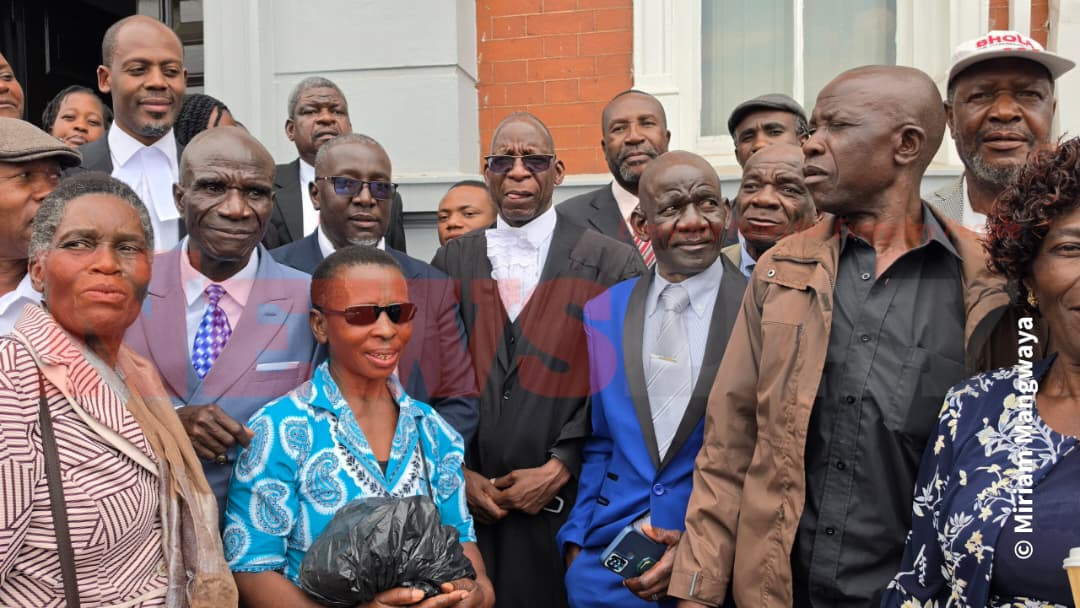
Court battle over CAA3 begins
Summary
- Zimbabwe's Constitutional Court is hearing legal challenges against the Constitution of Zimbabwe Amendment (No. 3) Act, 2026 (CAA3), which was signed into law on July 7, 2026.
- An application for direct access in a case filed by six liberation war veterans, CCZ 273/26, challenging the removal of direct presidential elections, was heard by the Constitutional Court on September 22, 2026, with judgment reserved.
- This lawsuit is one of a series of challenges brought before the nation's apex court, with its initial hearing for direct access already concluded.
- The outcome of these proceedings could significantly impact Zimbabwe's electoral framework and constitutional law.
Constitutional Challenge Commences
Lawyers practicing constitutional or electoral law in Zimbabwe should closely monitor these Constitutional Court proceedings, as the outcome could significantly alter the legal framework for presidential elections and set important precedents regarding constitutional amendments.
The Constitutional Court of Zimbabwe is hearing a series of legal challenges directed against the Constitution of Zimbabwe Amendment (No. 3) Act, 2026 (CAA3), which was signed into law on July 7, 2026. This significant development marks the continuation of what is anticipated to be a pivotal legal battle concerning the nation's foundational legal framework. The apex court's engagement with these petitions underscores the profound implications of the amendments for Zimbabwe's governance and electoral processes.
Among the initial cases brought before the court, a specific challenge lodged by six liberation war veterans, identified under the case number CCZ 273/26, had its application for direct access heard by the Constitutional Court on September 22, 2026, with judgment reserved. This lawsuit directly contests provisions within the Constitution of Zimbabwe Amendment (No. 3) Act, 2026, that pertain to the removal of direct presidential elections. The veterans' petition highlights concerns over alterations to the fundamental mechanism by which the nation's highest office is filled, setting the stage for a critical examination of the legislative changes.
Legal Context of CAA3
The Constitution of Zimbabwe Amendment (No. 3) Act, 2026, the subject of these legal disputes, represents an enacted legislative modification to Zimbabwe's constitution. Challenges to such an act before the Constitutional Court are inherently significant, as they question the legality or appropriateness of changes to the supreme law of the land. The court's role in these proceedings is to interpret the constitution and determine whether the amendments align with its overarching principles and established legal norms.
The core contention in the liberation war veterans' lawsuit revolves around the alleged removal of direct presidential elections. This aspect of the challenge is particularly weighty, as direct elections are a cornerstone of democratic governance, ensuring that citizens directly choose their head of state. Any alteration to this system could have far-reaching consequences for political participation, representation, and the legitimacy of future electoral outcomes in Zimbabwe. The Constitutional Court's deliberations on this matter will therefore be closely scrutinized for their impact on the country's constitutional law updates.
Why This Challenge Matters
The commencement of the Zimbabwe CAA3 Constitutional Court challenge holds substantial importance for the nation's legal and political landscape. As one in a series of anticipated challenges against the Constitution of Zimbabwe Amendment (No. 3) Act, 2026, the outcome of the liberation war veterans' lawsuit (CCZ 273/26 Constitutional Court), for which judgment on direct access is reserved, could establish crucial precedents for subsequent cases. The court's interpretation of the amendments, particularly those concerning the Zimbabwe direct presidential elections challenge, will shape the future trajectory of electoral law and constitutional governance.
This legal confrontation is not merely about specific legislative clauses; it delves into the fundamental principles of democracy and the balance of power within the Zimbabwean state. The rulings from the Constitutional Court will offer vital clarity on the scope of constitutional amendment powers and the protection of citizens' electoral rights. Lawyers practicing constitutional or electoral law in Zimbabwe should closely monitor these Constitutional Court proceedings, as the outcome could significantly alter the legal framework for presidential elections and set important precedents regarding constitutional amendments, influencing future legal interpretations and political stability.
Practical Implications
Lawyers practicing constitutional or electoral law in Zimbabwe should closely monitor these Constitutional Court proceedings, as the outcome could significantly alter the legal framework for presidential elections and set important precedents regarding constitutional amendments.
Source
Source: Original reporting via Newsday
How does this affect you?
Get an AI analysis of this article grounded in your jurisdictions, practice areas, and any policy documents you've uploaded to Wansom.
Finish Reading the Full Story and the Expert Analysis.
Get the latest legal & regulatory intelligence in Zimbabwe
Wansom is AI and can make mistakes.