
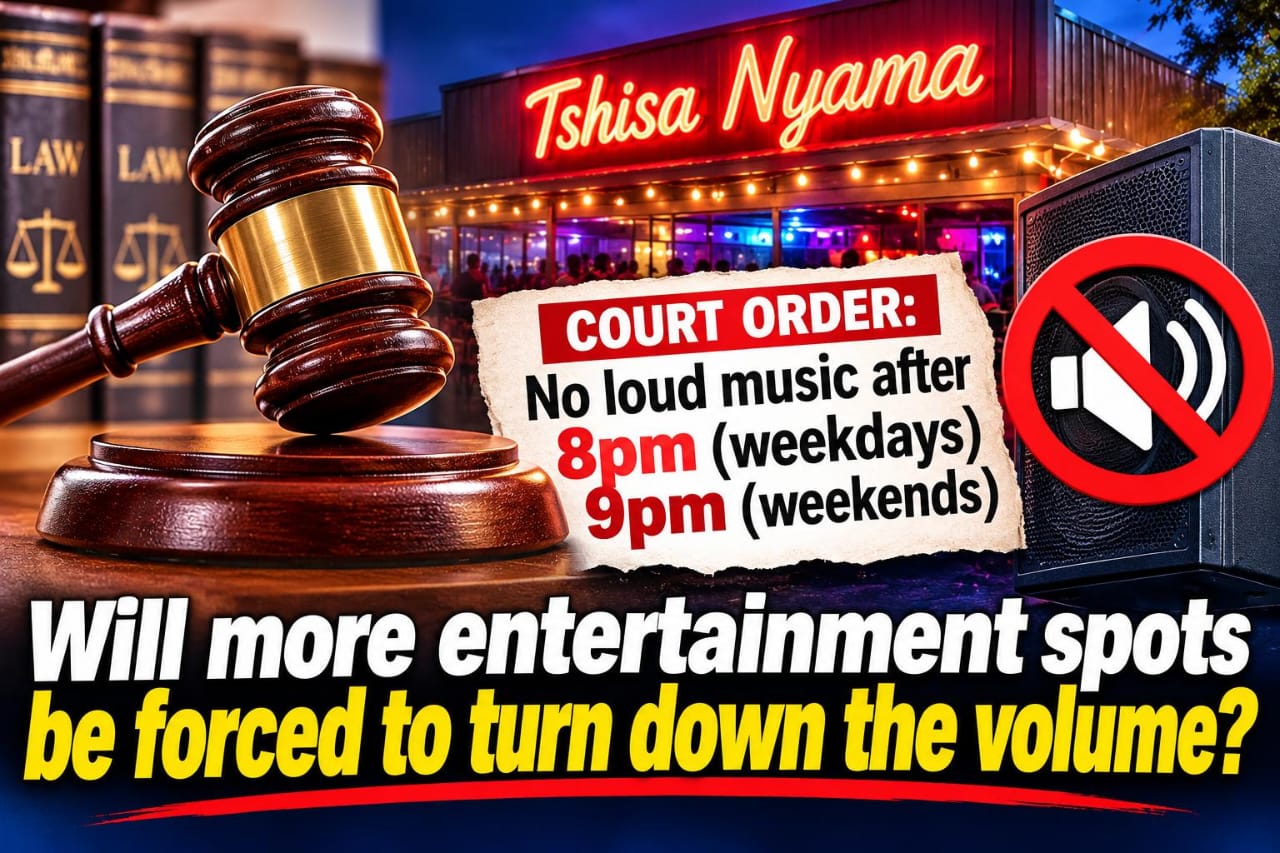
Zimbabwe High Court: Tshisa Nyama Noise Pollution Limited in Victoria Falls
Summary
- The Bulawayo High Court ordered Tshisa Nyama in Victoria Falls to stop playing loud music after 8 pm on weekdays and 9 pm on weekends.
- This ruling followed a complaint from local hospitality operator Mosskatte Investments (Pvt) Ltd regarding noise pollution.
- Justice Nokuthula Moyo issued the injunction, setting a precedent for noise abatement in entertainment venues.
- The decision raises questions about potential similar restrictions for other entertainment spots in Zimbabwe.
Court Mandates Noise Reduction for Victoria Falls Venue
The High Court's decision against Tshisa Nyama in Victoria Falls prompts a wider discussion about noise management practices across Zimbabwe's entertainment sector.
A recent determination by the Bulawayo High Court has imposed significant operational changes on Tshisa Nyama, a prominent entertainment establishment situated along Livingstone Way in Victoria Falls. The judicial order specifically mandates that the venue must cease playing loud music after 8 pm on weekdays and after 9 pm on weekends, directly addressing concerns regarding excessive noise levels emanating from its premises. This ruling stems from a successful legal challenge initiated by Mosskatte Investments (Pvt) Ltd, a local hospitality operator.
Mosskatte Investments brought the complaint before the High Court, alleging that the noise generated by Tshisa Nyama was disruptive to its operations and the surrounding environment. The court's decision, delivered by Justice Nokuthula Moyo, represents a direct response to these grievances, establishing clear boundaries for the entertainment spot's operating hours concerning amplified sound. The injunction highlights the judiciary's willingness to intervene in disputes where business operations negatively impact neighboring entities, particularly in sensitive areas like a major tourist destination.
Legal Precedent Set by High Court Injunction
The High Court's intervention in the Tshisa Nyama case establishes a notable precedent for noise abatement in Zimbabwe. Justice Nokuthula Moyo's order, issued from the Bulawayo High Court, underscores the legal avenues available to businesses and individuals seeking relief from noise pollution. By compelling Tshisa Nyama to adhere to specific quiet hours, the court has affirmed the principle that entertainment venues, even popular ones, are not exempt from managing their environmental impact.
This ruling serves as a clear indication that complaints from affected parties, particularly other businesses in the hospitality sector, can lead to judicial mandates that restrict operational aspects. The specific times set for the cessation of loud music—8 pm on weekdays and 9 pm on weekends—are precise and enforceable, providing a tangible outcome for the complainant, Mosskatte Investments. The case demonstrates the judiciary's capacity to balance commercial interests with the right to a peaceful environment, especially in a locale like Victoria Falls where tranquility is often a selling point for hospitality.
Broader Implications for Zimbabwean Entertainment Venues
The High Court's decision against Tshisa Nyama in Victoria Falls prompts a wider discussion about noise management practices across Zimbabwe's entertainment sector. The outcome of this case suggests that other bars, nightclubs, and similar entertainment establishments, particularly those operating in close proximity to residential areas or other hospitality businesses, could face similar legal challenges if their noise output is deemed excessive. The ruling effectively raises questions about the sustainability of current operating models for venues that rely heavily on amplified music into late hours.
This development could encourage a re-evaluation of noise control measures and operating policies within the industry. Operators might need to consider investments in soundproofing, adjust their programming schedules, or implement stricter internal guidelines to prevent potential legal action. The precedent set by Justice Moyo's order indicates that courts are prepared to enforce noise regulations, potentially leading to a shift in how entertainment businesses manage their impact on surrounding communities and other commercial entities. The case of Tshisa Nyama serves as a significant indicator for the future of noise regulation in Zimbabwean tourist hubs and urban centers.
Practical Implications
Lawyers representing entertainment venues in Zimbabwe, especially those in tourist areas, should advise clients to review their noise management policies and operating hours to mitigate the risk of similar High Court injunctions. Conversely, lawyers representing hospitality operators or residents affected by noise can cite this ruling as a precedent for seeking judicial intervention against excessive noise pollution.
Source
Source: Original reporting via NewsDay
How does this affect you?
Get an AI analysis of this article grounded in your jurisdictions, practice areas, and any policy documents you've uploaded to Wansom.
Wansom is AI and can make mistakes.