
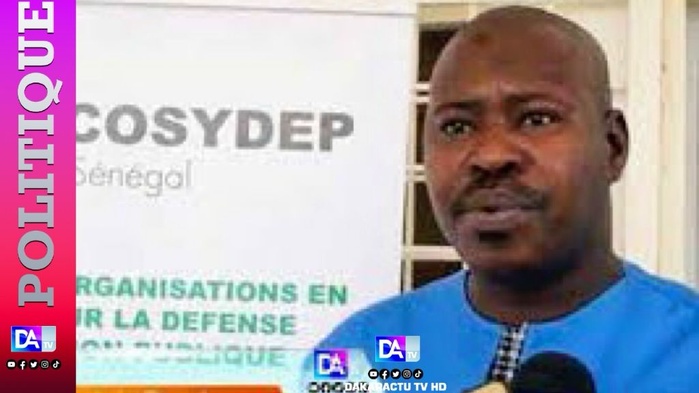
COSYDEP Sénégal: Proposition Code de l'Enfant for Education Reform
Summary
- COSYDEP is advocating for a comprehensive overhaul of Senegal's educational and child protection legal framework under the DPG 2026 initiative.
- Key proposals include a new Education Orientation Law to replace outdated legislation and a dedicated Children's Code to enhance student protection.
- The coalition emphasizes clarifying responsibilities for school infrastructure, staffing, and support services to ensure effective compulsory schooling for all children.
- Proposed reforms aim to protect vulnerable children from various forms of harm, including exploitation, violence, early marriage, and digital risks.
- The current legal framework, last updated in 2004, is deemed insufficient to address modern challenges like digital transformation, climate change, and inclusion.
Call for a New Educational Framework in Senegal
The coalition's proposals aim to ensure effective schooling and significantly enhance the protection of students across the nation.
The Coalition des Organisations en Synergie pour la Défense de l’Education Publique (COSYDEP) has issued a significant call for the renovation of Senegal's normative framework for education. This initiative is presented within the context of the Déclaration de Politique Générale 2026 (DPG 2026), signaling a strategic push for comprehensive reforms.
COSYDEP's recommendations are concentrated on three pivotal areas: reinforcing compulsory schooling, establishing a new Education Orientation Law, and adopting a dedicated Children's Code. The overarching goal articulated by the coalition is to guarantee effective schooling for all children while simultaneously bolstering student protection nationwide.
These proposals underscore a belief that the current legal and regulatory landscape is insufficient to meet contemporary challenges and adequately safeguard the rights and well-being of Senegalese students. The coalition's vision extends beyond mere policy adjustments, advocating for fundamental legislative changes to create a more robust and responsive educational system.
Proposed Legislative Reforms and Modernization
A central pillar of COSYDEP's advocacy concerns the existing Education Orientation Law, which was originally adopted in 1991 and subsequently modified in 2004. The coalition argues that this legislation is now outdated, failing to account for significant societal shifts such as demographic growth, the pervasive influence of digital technology, the emergence of artificial intelligence, the impacts of climate change, evolving labor market demands, and critical issues of inclusion.
Consequently, COSYDEP is urging for the creation of an entirely new legal text. This updated law would serve to redefine and modernize the objectives of national education, ensuring greater coherence and continuity in educational policies, and establishing clear mechanisms for the evaluation of reforms. This forward-looking approach aims to align Senegal's educational system with global advancements and future societal needs.
Furthermore, the coalition emphasizes the need to clarify responsibilities associated with compulsory schooling. This includes defining obligations related to the provision of adequate infrastructure, the recruitment of qualified teachers, the supply of essential equipment and pedagogical materials, and the organization of school transport and meals. COSYDEP contends that simply declaring schooling compulsory is not enough; concrete measures are required to ensure children's entry, retention, successful learning, and completion of their educational journey.
Strengthening Child Protection through a Dedicated Code
A critical component of COSYDEP's reform agenda is the proposition for a new `COSYDEP Sénégal proposition Code de l'enfant`. This proposed code is designed to significantly enhance the protection of students against a wide array of harms. These include physical and psychological violence, neglect, exploitation, discrimination, sexual abuse, harassment, early marriages, and the emerging risks associated with the digital environment.
The coalition envisions this Children's Code as a foundational legal instrument that would explicitly enshrine the principle of the child's best interest. It would also serve to delineate and clarify the specific responsibilities of various stakeholders, including the State, local territorial authorities, families, educational institutions, and broader communities, in safeguarding children's rights and welfare.
Beyond general protections, COSYDEP specifically calls for adapted measures to support particularly vulnerable groups. This includes children with disabilities, those from impoverished households, child laborers, children living on the streets, girls at risk of early marriage or premature pregnancies, displaced children, children affected by crises, and those residing in isolated or hard-to-reach areas. The comprehensive nature of these proposed protections underscores a commitment to ensuring that no child is left behind or exposed to undue harm within the educational system.
Broader Implications for Senegal's Educational Landscape
The comprehensive nature of COSYDEP's proposals, particularly the `COSYDEP Sénégal réforme loi éducation` and the `Protection de l'enfance Sénégal législation`, signals a pivotal moment for the nation's educational and child protection sectors. By addressing both the structural framework of education and the specific vulnerabilities of children, the coalition aims to foster an environment where learning is not only accessible but also safe and equitable for all.
The emphasis on updating legislation to reflect modern challenges, from digital transformation to climate change, highlights a proactive approach to future-proofing Senegal's educational system. These reforms, if adopted, would establish a more robust `Obligation scolaire Sénégal cadre normatif`, ensuring that the right to education is effectively realized and protected.
In a related development, the reform of the Certificat de fin d’études élémentaires was officially adopted by the Council of Ministers on May 6, 2026. This action, while separate from COSYDEP's ongoing advocacy, illustrates a broader governmental focus on educational reform and modernization within the country.
Practical Implications
This article signals potential significant legislative changes in Senegal concerning child protection and education. Lawyers and compliance officers should monitor the progress of COSYDEP's proposals for a new Education Orientation Law and a Children's Code, as their adoption would introduce new legal obligations for institutions, businesses, and individuals interacting with children or operating in the education sector, potentially impacting areas like child labor, school safety, and corporate social responsibility.
Source
Source: Original reporting via dakaractu
How does this affect you?
Get an AI analysis of this article grounded in your jurisdictions, practice areas, and any policy documents you've uploaded to Wansom.
Finish Reading the Full Story and the Expert Analysis.
Wansom is AI and can make mistakes.