
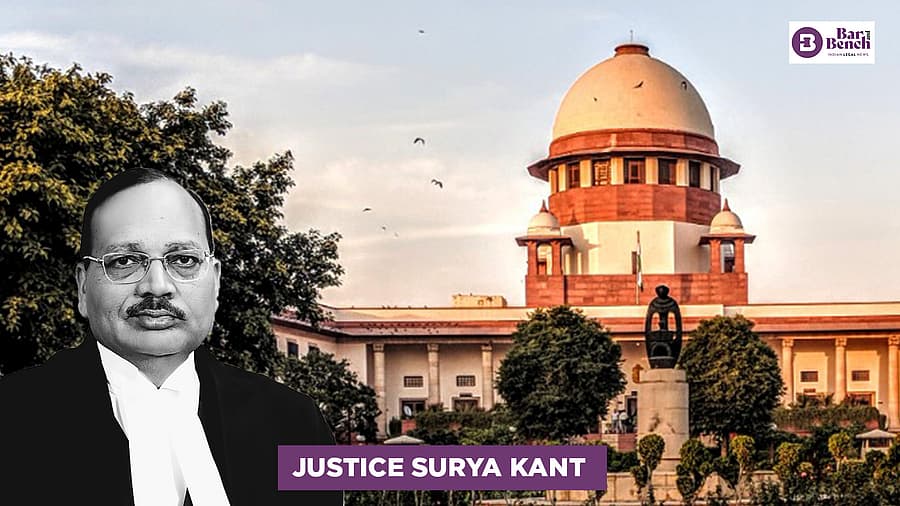
AG Consent: Contempt Against Pravin Singhal for CJI Surya Kant Remarks
Summary
- Attorney General R Venkataramani granted consent for criminal contempt proceedings against advocate Pravin Singhal.
- The action stems from Singhal's alleged "scandalous remarks" against Chief Justice of India Surya Kant in open court on November 16.
- Singhal reportedly questioned CJI Kant's suitability for office after being asked to wait for an urgent hearing on a corruption-related matter.
- The Supreme Court Bar Association requested the contempt proceedings, which the AG deemed "extremely scandalous and unpardonable."
- A Bench including CJI Kant, Justice Joymalya Bagchi, and Justice V Mohana was informed of the AG's consent.
Judicial Authority Challenged
This case serves as a stark reminder of the strict boundaries governing courtroom conduct and the severe repercussions that can arise from making scandalous or unparliamentary remarks against judicial officers, particularly the Chief Justice of India.
Attorney General R Venkataramani has authorized the initiation of criminal contempt of court proceedings against advocate Pravin Singhal. This decision follows allegations that Singhal made deeply inappropriate remarks directed at Chief Justice of India (CJI) Surya Kant during an open court session. The Attorney General's consent, conveyed in a letter dated November 17 to Supreme Court Bar Association (SCBA) Secretary Pragya Baghel, underscores the gravity of the situation, labeling Singhal's conduct as "extremely scandalous and unpardonable."
The incident unfolded on November 16, a Monday, when advocate Singhal appeared before a Bench that included CJI Kant. Singhal was seeking an urgent hearing for a case reportedly concerning allegations of corruption within the judiciary. He informed the court that he had submitted relevant documents to the CJI's office on November 2 but had not yet received any response. When CJI Kant instructed him to wait, Singhal allegedly refused to comply and proceeded to question the Chief Justice's fitness to hold his esteemed office, leading to the contentious remarks.
The Path to Contempt Proceedings
The Attorney General's decision to grant consent for criminal contempt of court proceedings was prompted by a formal request from the Supreme Court Bar Association. This request highlighted the serious nature of advocate Pravin Singhal's comments, which were deemed to undermine the dignity and authority of the court, specifically targeting CJI Surya Kant. The AG's assessment concluded that the matter indeed warranted action under the provisions for criminal contempt of court in India, emphasizing the need to uphold courtroom decorum.
Following the Attorney General's approval, SCBA office-bearers promptly informed a judicial Bench about the development. This Bench, which convened on the morning of the announcement, included Chief Justice of India Surya Kant himself, alongside Justice Joymalya Bagchi and Justice V Mohana. The notification of the Attorney General's consent sets the stage for a formal legal process to address the advocate's alleged misconduct.
Upholding Courtroom Decorum
This case serves as a stark reminder of the strict boundaries governing courtroom conduct and the severe repercussions that can arise from making scandalous or unparliamentary remarks against judicial officers, particularly the Chief Justice of India. The Attorney General's swift action, in response to the Supreme Court Bar Association's complaint, signals a firm stance against any behavior that could erode public confidence in the judiciary or disrespect its highest office.
The alleged remarks by advocate Pravin Singhal against CJI Surya Kant, questioning his suitability for office, represent a significant breach of professional ethics and the expected standards of an advocate. Such incidents underscore the critical importance of maintaining the sanctity of judicial proceedings and ensuring that legal professionals adhere to the highest standards of respect and decorum. The initiation of criminal contempt proceedings in India highlights the professional risks associated with such conduct and the Attorney General's willingness to act decisively on complaints from bar associations to protect the integrity of the judicial system.
Practical Implications
Lawyers should be acutely aware of the strict boundaries of courtroom conduct and the severe repercussions, including criminal contempt proceedings, for making scandalous or unparliamentary remarks against judicial officers, particularly the Chief Justice of India. This case serves as a stark reminder of the professional risks associated with such conduct and the Attorney General's willingness to act on complaints from bar associations.
Source
How does this affect you?
Get an AI analysis of this article grounded in your jurisdictions, practice areas, and any policy documents you've uploaded to Wansom.
Finish Reading the Full Story and the Expert Analysis.
Get the latest legal & regulatory intelligence in India
Wansom is AI and can make mistakes.