
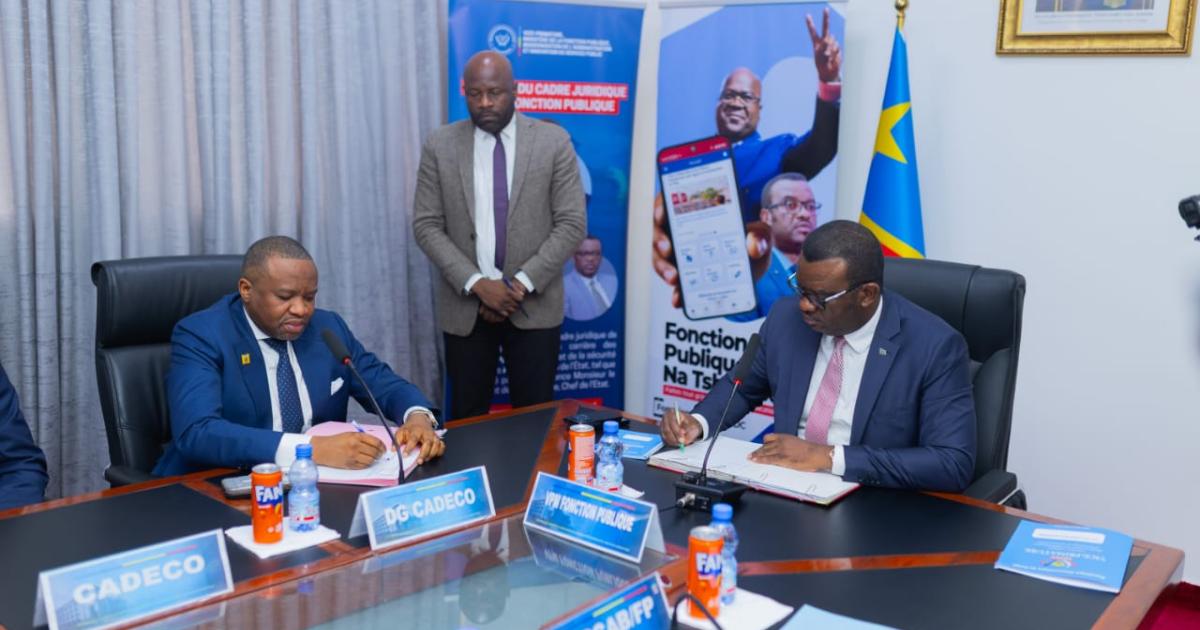
CD Government: Cadeco SA Congo Public Pay Reform Law Introduced
Summary
- The Congolese government has introduced a major public pay reform, dubbed the 'salary revolution' by President Félix Tshisekedi.
- The reform aims to revamp the country's public sector salary structure, which has been criticized for being outdated and inefficient, with a new policy expected to be fully implemented in 2027.
- Details of the reform are emerging, including a single salary grid, the decentralization of public pay, and an increased daily minimum wage to CDF 21,500 (approx. $7.00 USD) effective January 2026.
What Happened
The public pay reform is part of a broader effort by the Congolese government to modernize its administrative systems and improve governance.
The government of Congo has introduced a major public pay reform, dubbed the 'salary revolution' by President Félix Tshisekedi. According to reports, the reform aims to revamp the country's public sector salary structure, which has been criticized for being outdated and inefficient. While the full implementation of the new salary policy for public agents is expected in 2027, significant details have emerged, including the goal of a single, transparent salary grid and the decentralization of public pay. For instance, the daily minimum wage was raised to CDF 21,500 (approximately $7.00 USD) per day, effective January 2026. These developments are expected to have a significant impact on the salaries of government employees across various sectors.
Legal Context
The public pay reform is part of a broader effort by the Congolese government to modernize its administrative systems and improve governance. While the exact legal framework governing the reform was initially unclear, it is now being established, with the new salary structure expected to be enshrined in law or regulation. A major structural reform, the decentralization of public pay, saw a protocol agreement for its operational deployment signed on August 14, 2026. This could have significant implications for existing contracts and agreements related to public sector employment, including those between the government and private sector companies providing services to the public sector.
Why It Matters
The public pay reform has far-reaching implications for the Congolese economy and society. On one hand, it could help to reduce corruption and improve governance by making salaries more transparent and accountable. On the other hand, it could also lead to significant costs for the government and private sector companies that provide services to the public sector. Lawyers and compliance officers should be paying close attention to this development, as it is likely to have a major impact on existing contracts and agreements related to public sector employment.
Practical Implications
Lawyers and compliance officers should watch for the potential impact of this reform on existing contracts and agreements, particularly those related to public sector employment.
Source
How does this affect you?
Get an AI analysis of this article grounded in your jurisdictions, practice areas, and any policy documents you've uploaded to Wansom.
Wansom is AI and can make mistakes.