
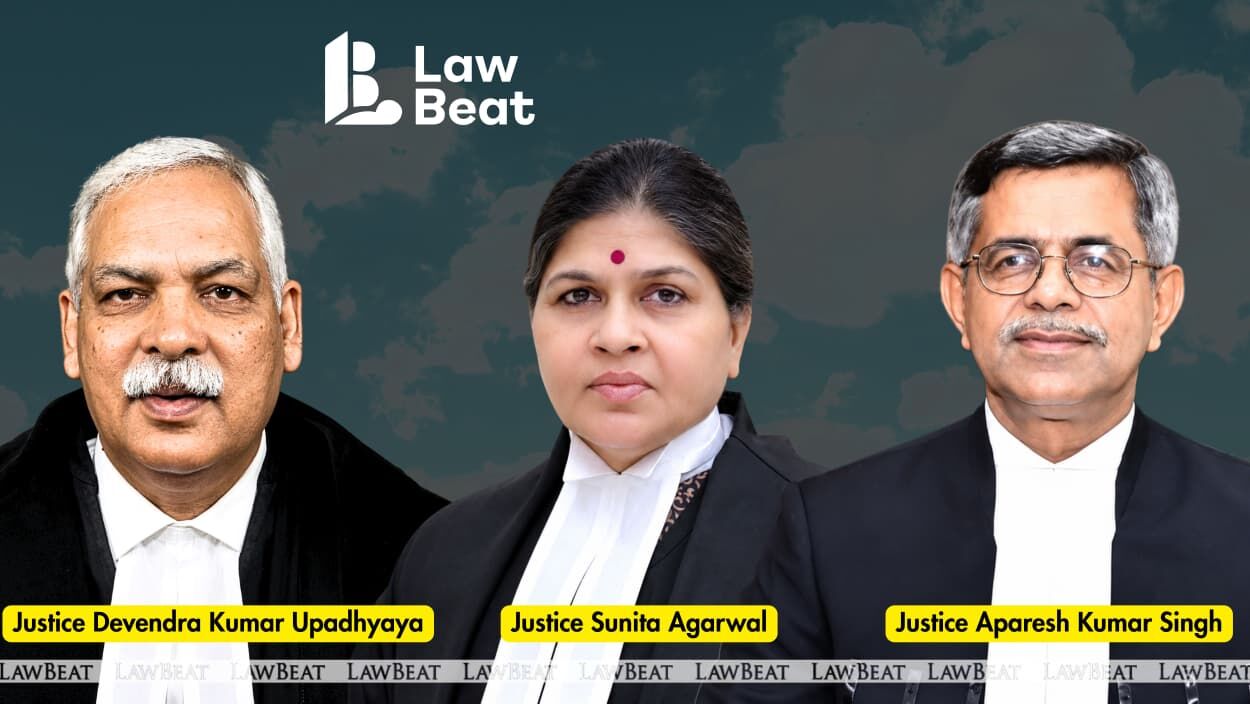
Supreme Court Collegium: Recommends Justices Agarwal Upadhyaya Singh
Summary
- The Supreme Court Collegium has recommended three High Court Chief Justices for elevation to the Supreme Court.
- Justice Sunita Agarwal, Justice D.K. Upadhyaya, and Justice Aparesh Kumar Singh are the recommended judges.
- The recommendations were made on Monday, following a Collegium meeting held on September 28.
- The Supreme Court currently has 34 judges against an approved strength of 38, making these appointments crucial.
- The nominees bring extensive judicial experience from various High Courts, including Allahabad, Jharkhand, Bombay, Tripura, Gujarat, Delhi, and Telangana.
Key Recommendations Made
The diverse backgrounds and extensive judicial experience of Justices Agarwal, Upadhyaya, and Singh are expected to significantly contribute to the Supreme Court's jurisprudence.
The Supreme Court Collegium has put forward the names of three High Court Chief Justices for elevation to the nation's apex court. Following a meeting held on September 28, the Collegium formally recommended Justice Sunita Agarwal, Justice D.K. Upadhyaya, and Justice Aparesh Kumar Singh for appointment as Supreme Court judges. These recommendations were subsequently forwarded to the Centre for final approval.
Justice Sunita Agarwal currently serves as the Chief Justice of the Gujarat High Court, while Justice Devendra Kumar Upadhyaya holds the position of Chief Justice of the Delhi High Court. Justice Aparesh Kumar Singh is the Chief Justice of the Telangana High Court. The Collegium's decision, made on a Monday, signals a significant step towards strengthening the Supreme Court bench.
Filling Critical Vacancies
These proposed appointments are crucial for addressing the current judicial strength of the Supreme Court. The apex court presently operates with 34 judges, falling short of its approved strength of 38. The elevation of these three High Court Chief Justices would bring the Supreme Court closer to its full operational capacity.
Filling these vacancies is vital for the efficient functioning of the Supreme Court, potentially impacting the speed at which cases are heard and judgments are delivered. Such Supreme Court judge appointments in India are closely watched, as they influence the court's ability to manage its extensive caseload and maintain judicial efficacy.
Profiles of the Nominees
The recommended judges bring extensive experience from various High Courts. Justice Sunita Agarwal, appointed Chief Justice of the Gujarat High Court on July 23, 2023, previously served for 12 years as a Judge in the Allahabad High Court. Her legal career began with 21 years of practice before her elevation as an Additional Judge of the Allahabad High Court on November 21, 2011, becoming a Permanent Judge on August 6, 2013. Justice Agarwal has presided over a wide array of jurisdictions, including Civil and Criminal Appeals, Service, Land Acquisition, Intra-Court Appeals, and Constitutional matters, and was part of a seven-judge bench of the Allahabad High Court addressing issues related to Subordinate Courts and infrastructure.
Justice Devendra Kumar Upadhyaya was appointed and took oath as Chief Justice of the High Court of Bombay on July 29, 2023, before being transferred to the Delhi High Court, where he took oath as Chief Justice on January 21, 2025. He was initially appointed as a Puisne Judge of the High Court of Judicature at Allahabad on November 21, 2011, and became a Permanent Judge on August 6, 2013. Prior to his Chief Justice roles, he served as the Senior Judge of the Lucknow Bench from March 28, 2023.
Justice Aparesh Kumar Singh's journey includes his appointment as an Additional Judge of the High Court of Jharkhand on January 24, 2012, and confirmation as a Permanent Judge on January 16, 2014. He also held the position of Executive Chairman of the Jharkhand State Legal Services Authority and served as the Acting Chief Justice of the High Court of Jharkhand from December 20, 2022, to February 19, 2023. He took oath as Chief Justice of the High Court of Tripura on April 17, 2023, and subsequently, on transfer, assumed the role of Chief Justice of the High Court for the State of Telangana on July 19, 2025. These High Court Chief Justices' elevation to the Supreme Court highlights their distinguished careers.
Broader Implications
The diverse backgrounds and extensive judicial experience of Justices Agarwal, Upadhyaya, and Singh are expected to significantly contribute to the Supreme Court's jurisprudence. Their collective expertise across various legal domains, from constitutional matters to civil and criminal appeals, could influence the court's approach to specific legal issues and precedents. This development signals the imminent strengthening of the Supreme Court bench, potentially impacting the speed and direction of future judgments.
Lawyers should particularly note the varied experience of these recommended judges, as their backgrounds in different High Courts and practice areas could shape the court's evolving legal landscape. The SC Collegium recommendations are a crucial mechanism for maintaining the strength and intellectual diversity of the nation's highest court.
Practical Implications
This development signals the imminent strengthening of the Supreme Court bench, potentially impacting the speed and direction of future judgments. Lawyers should note the diverse experience of the recommended judges, particularly their backgrounds in various High Courts and practice areas, as this could influence the court's approach to specific legal matters and precedents.
Source
Source: Original reporting via Live Law
How does this affect you?
Get an AI analysis of this article grounded in your jurisdictions, practice areas, and any policy documents you've uploaded to Wansom.
Finish Reading the Full Story and the Expert Analysis.
Get the latest legal & regulatory intelligence in India
Wansom is AI and can make mistakes.