
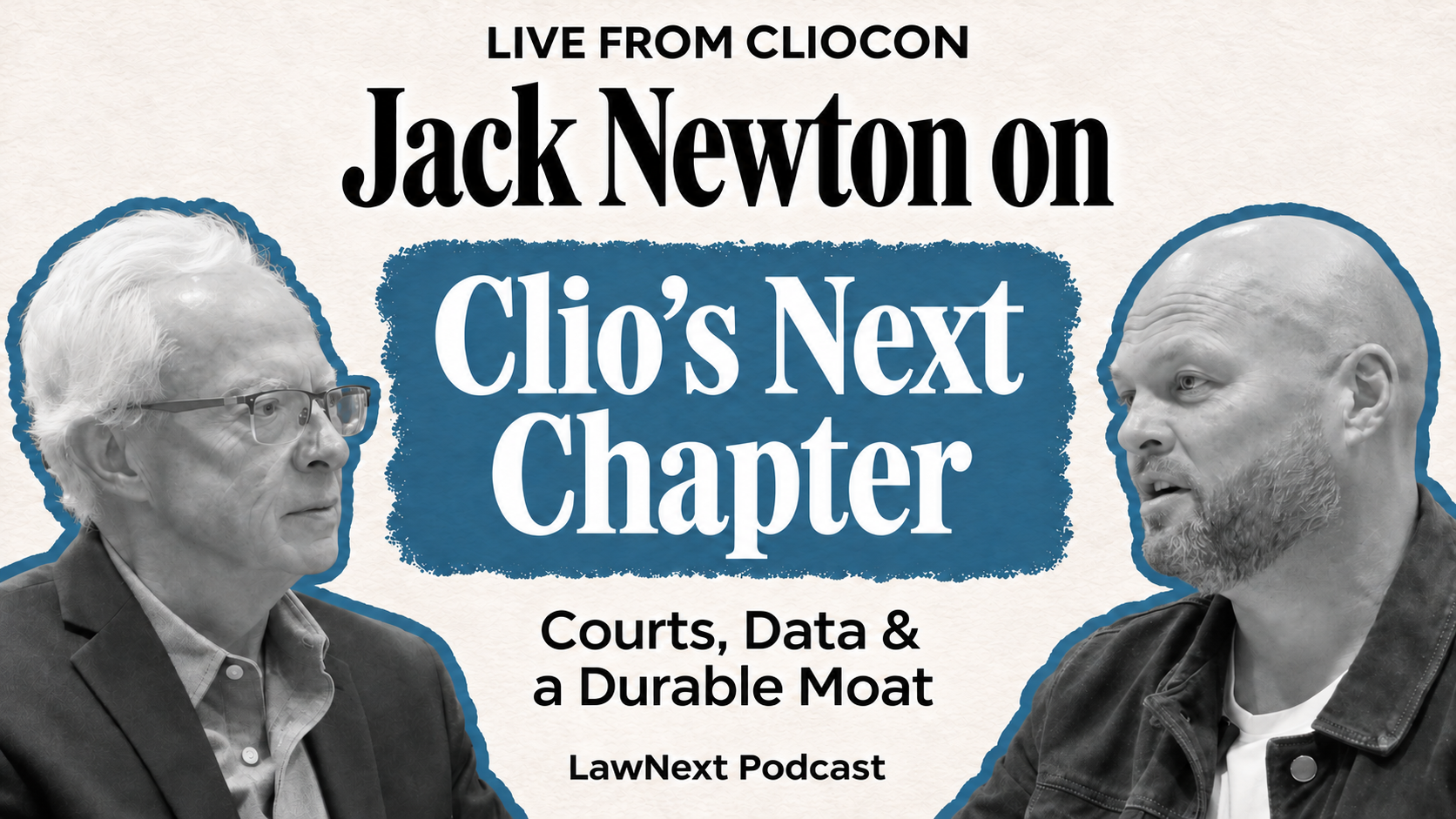
Clio Jack Newton: Unveils Vertical Integration, New Court Strategy
Summary
- Clio's CEO, Jack Newton, outlined a strategy of vertical integration for legal technology at ClioCon.
- This strategy, likened to Apple's approach, combines the business of law, the practice of law, and AI.
- A key component of Clio's future direction includes a significant push into court systems.
- Newton emphasized that proprietary data serves as the sole enduring competitive advantage in the legal tech sector.
- The ultimate goal of this integrated approach is to create unique products that competitors cannot replicate.
Strategic Refounding and Vertical Integration
Clio's strategic vision involves a deep vertical integration across the business of law, the practice of law, and artificial intelligence, aiming to develop unparalleled products in the legal technology landscape.
Jack Newton, CEO of Clio, recently unveiled a significant strategic direction for the company during ClioCon, characterizing it as a "refounding." This new vision centers on a comprehensive vertical integration model, drawing parallels to the successful strategy employed by technology giant Apple. The core objective is to intertwine various facets of the legal industry to foster the creation of distinct and superior products.
This ambitious legal AI vertical integration strategy encompasses three critical domains: the business of law, the practice of law, and artificial intelligence. By bringing these elements under a unified framework, Clio aims to streamline operations and enhance functionality across the entire legal workflow. This holistic approach is designed to ensure that the technological solutions developed are deeply embedded in the realities of legal work, from administrative tasks to core legal procedures.
The underlying rationale for this vertical integration is to cultivate a unique ecosystem that is difficult for competitors to replicate. By controlling and optimizing the interplay between these three areas, Clio seeks to develop innovative offerings that leverage proprietary insights and capabilities. This strategic pivot underscores a commitment to building a robust platform that addresses the evolving needs of legal professionals through a cohesive and integrated technological stack.
Clio's Court Integration Strategy
A pivotal element of Clio Jack Newton court strategy involves a pronounced push into the court systems. This initiative represents a direct effort to integrate Clio's platform more deeply with the judicial process, suggesting a future where legal technology solutions are seamlessly connected to the operational mechanisms of courts. This move could significantly alter how legal professionals interact with court dockets, filings, and case management, potentially streamlining these critical functions.
This strategic expansion into the courts is a natural extension of the broader vertical integration model. By connecting the practice of law directly with the judicial infrastructure, Clio aims to enhance efficiency and reduce friction points for legal practitioners. Such an integration could provide a more unified experience for lawyers, allowing them to manage cases from inception through resolution within a single, interconnected technological environment.
The implications of this Clio court integration strategy are substantial for legal firms and compliance officers. It signals a shift towards a more interconnected legal ecosystem, where data flows more directly between legal practice management systems and court administration. This could lead to new standards for data exchange, security, and operational protocols within law firms, necessitating a re-evaluation of current technology adoption and data management practices.
Data as the Enduring Moat
Central to Clio's long-term competitive advantage, as articulated by Jack Newton, is the concept of data serving as the "only durable moat." This perspective highlights the critical role of proprietary data in establishing and maintaining market leadership within the legal technology sector. In an increasingly competitive landscape, the unique insights and capabilities derived from extensive and well-managed data are seen as the ultimate differentiator.
This emphasis on a Clio legal tech data moat underscores the value of accumulated information regarding legal processes, client interactions, and case outcomes. Such a vast repository of data, when leveraged effectively with artificial intelligence, enables the development of highly sophisticated and predictive tools that are difficult for new entrants or less integrated platforms to match. It creates a barrier to entry by making the cost and effort of replicating such a data asset prohibitive.
For legal professionals, this focus on data means that the selection of legal tech solutions will increasingly hinge on how platforms manage, secure, and utilize client data. Firms must consider the implications for data privacy, compliance, and the strategic advantages that can be gained from a system that effectively harnesses legal data. Clio's strategy suggests a future where data-driven insights will be paramount for operational efficiency and competitive edge.
Practical Implications
Lawyers and compliance officers should monitor Clio's vertical integration strategy, particularly its push into court systems and emphasis on data as a competitive advantage. This signals a shift in how legal technology will interact with the judicial process and manage client data, potentially impacting firm operations, data security protocols, and the selection of future legal tech solutions.
Source
How does this affect you?
Get an AI analysis of this article grounded in your jurisdictions, practice areas, and any policy documents you've uploaded to Wansom.
Finish Reading the Full Story and the Expert Analysis.
Get the latest legal & regulatory intelligence in United States
Wansom is AI and can make mistakes.