
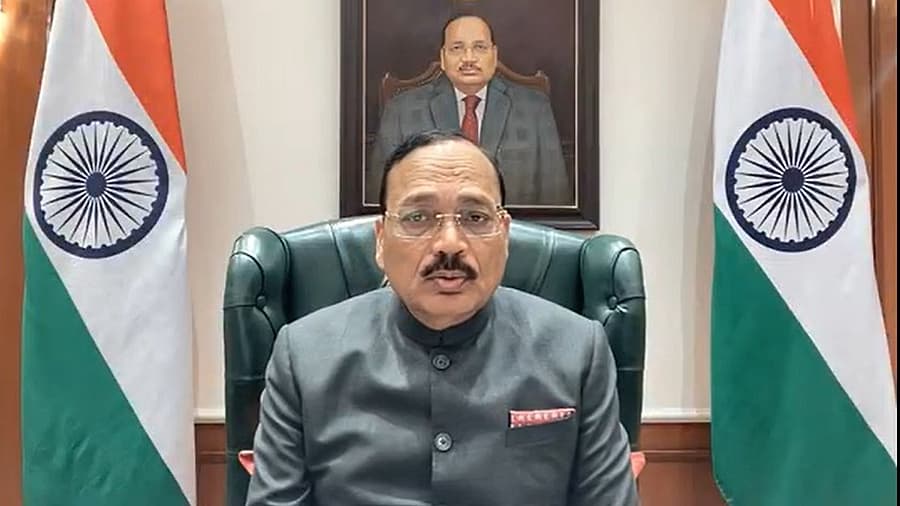
CJI Surya Kant: India Singapore Legal Corridor to Enhance Cooperation
Summary
- CJI Surya Kant advocated for greater reciprocity in legal cooperation and dispute resolution between India and Singapore.
- He emphasized that the India-Singapore legal corridor should facilitate professional opportunities and expertise exchange for both nations.
- The CJI noted India's large market and growing ADR ecosystem, while Singapore offers an established international dispute resolution framework.
- He stressed that predictability in dispute resolution is crucial for sustaining commercial relationships and investor confidence.
- His address was delivered at an Indian Council of Arbitration symposium marking Singapore's Second Charter of Justice 200th anniversary.
Fostering a Reciprocal Legal Corridor
He envisioned this legal corridor as a reciprocal conduit for expertise, professional avenues, and institutional insights, with its efficacy ultimately gauged by the level of trust it cultivates across both jurisdictions.
Chief Justice of India (CJI) Surya Kant recently advocated for enhanced mutual cooperation in legal matters between India and Singapore. Speaking at a symposium hosted by the Indian Council of Arbitration (ICA) in Singapore, the CJI underscored the necessity for the dispute resolution pathway connecting the two nations to generate professional opportunities and facilitate the exchange of specialized knowledge for both parties. His remarks were delivered remotely via a video message to the attendees.
The CJI articulated that neither country should feel compelled to adopt the institutional frameworks of the other. Instead, he highlighted that the true value lies in the opportunity for mutual learning. He envisioned this legal corridor as a reciprocal conduit for expertise, professional avenues, and institutional insights, with its efficacy ultimately gauged by the level of trust it cultivates across both jurisdictions. This vision emphasizes a collaborative approach rather than a uniform one, leveraging distinct strengths.
Unique Strengths and Shared Foundations
The symposium, aptly titled "India-Singapore: From Shared Legal Foundations to the Future," commemorated a significant historical milestone: the 200th anniversary of Singapore's Second Charter of Justice, dating back to 1826. This historical context provided a backdrop for discussions on contemporary legal collaboration.
Justice Surya Kant elaborated on the distinct contributions each nation brings to this partnership. He pointed out that India presents a vast market, a considerable pool of legal professionals, and a rapidly expanding ecosystem for alternative dispute resolution (ADR). Conversely, Singapore offers a well-established framework for international commercial and dispute resolution practices, recognized globally for its efficiency and reliability. These complementary strengths form a robust basis for a synergistic legal relationship.
The Cornerstone of Commercial Confidence
A central theme of the CJI's address was the critical role of predictability in resolving disputes. He asserted that a clear and consistent dispute resolution process is fundamental to sustaining commercial relationships and bolstering investor confidence. This predictability ensures that businesses can operate with greater certainty, reducing risks associated with cross-border transactions.
Justice Surya Kant further illustrated this point by noting that while a dispute resolution clause might occupy only a few lines within a contract, its significance becomes paramount when a commercial relationship encounters difficulties. Its presence can prove decisive in navigating complex challenges, thereby safeguarding investments and fostering a stable environment for international trade and collaboration.
Implications for Cross-Border Legal Practice
The CJI's call for a reciprocal India-Singapore legal corridor signals a growing landscape of opportunities for legal professionals in both countries. This initiative encourages a deeper understanding of each jurisdiction's legal frameworks, fostering an environment ripe for cross-border legal practice, particularly in arbitration and other forms of dispute resolution. The emphasis on mutual learning and exchange of expertise suggests that lawyers and firms engaging with international commercial relationships will increasingly benefit from a dual-jurisdictional perspective.
This development underscores the evolving nature of international legal services, where cooperation and shared knowledge are becoming as crucial as individual national expertise. The vision articulated by CJI Surya Kant promotes a dynamic legal environment where the strengths of India's large market and ADR growth, combined with Singapore's established international dispute resolution mechanisms, create a powerful synergy for global commerce and legal innovation.
Practical Implications
Lawyers should note the Chief Justice of India's emphasis on a reciprocal India-Singapore legal corridor, indicating growing opportunities for cross-border legal practice, arbitration, and dispute resolution. This development highlights the increasing importance of understanding both jurisdictions' legal frameworks for international commercial relationships and dispute resolution.
Source
How does this affect you?
Get an AI analysis of this article grounded in your jurisdictions, practice areas, and any policy documents you've uploaded to Wansom.
Finish Reading the Full Story and the Expert Analysis.
Get the latest legal & regulatory intelligence in India
Wansom is AI and can make mistakes.