
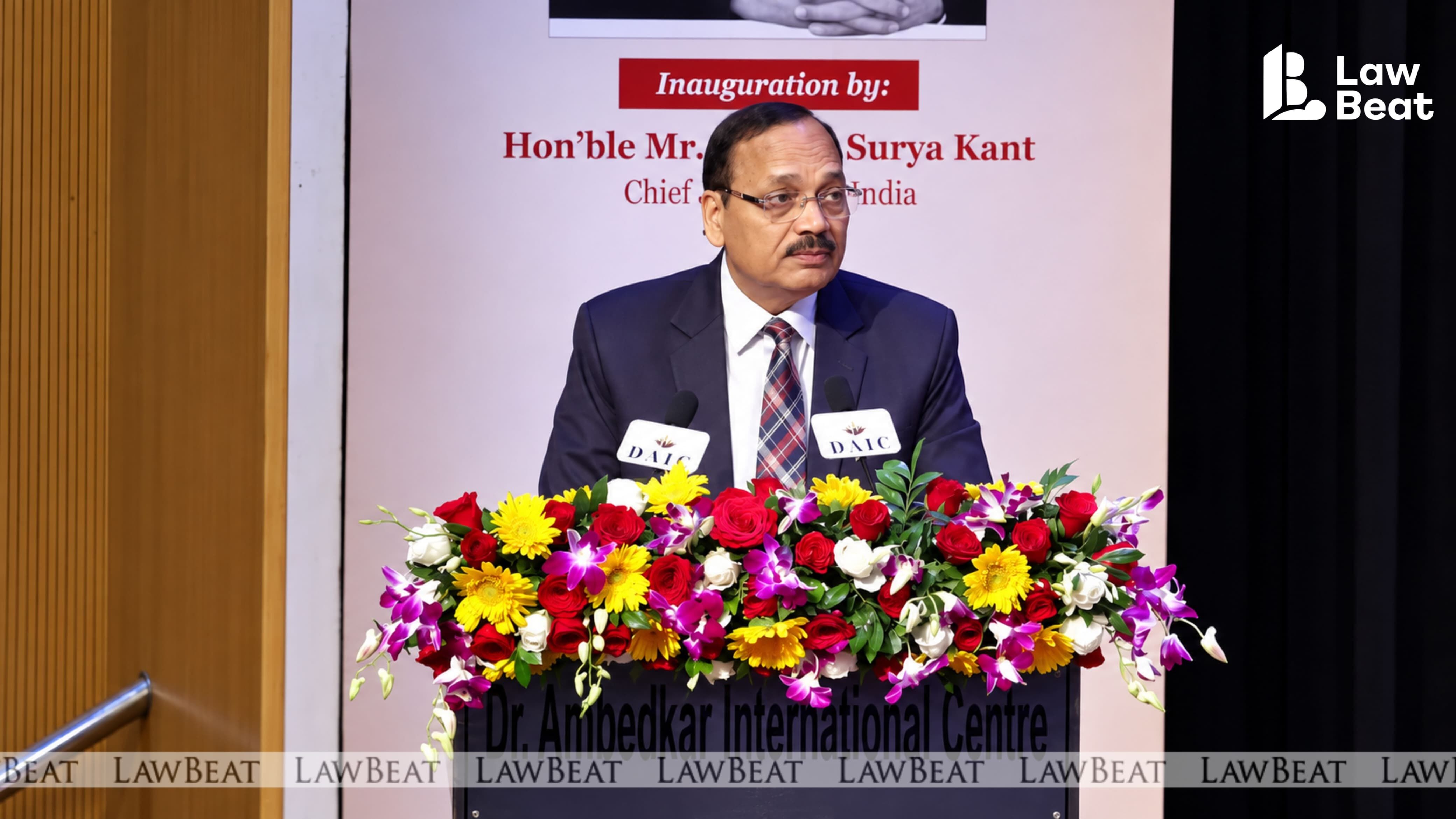
CJI Surya Kant: Compassion in Judging Essential for Justice
Summary
- Chief Justice of India Surya Kant advocated for compassion to govern judicial proceedings, even as algorithms handle scheduling.
- He stressed that judicial decision-making must consider human realities alongside legal issues.
- The CJI highlighted Professor Dr. Madhava Menon's legacy of compassion, particularly his work on legal aid and victim compensation.
- He emphasized the crucial role of academic research in assessing the real-world impact of judicial orders, especially for crime victims.
- CJI Surya Kant called for greater engagement between the judiciary and academia to ensure justice is both wise and correct.
What Happened
The courtroom sees the case while academia sees the pattern and justice if it is to be wise as well as correct must see both.
Chief Justice of India Surya Kant recently delivered a significant address at the second Professor Dr. Madhava Menon Memorial Lecture, underscoring the critical need for compassion within the nation's justice system. During his remarks, the CJI articulated a vision where judicial processes are deeply rooted in human understanding, moving beyond mere legal abstractions. He stressed that judicial decision-making must encompass not only the specific legal questions presented to the court but also the profound human realities that surround these proceedings.
The Chief Justice reiterated a powerful sentiment he had first shared at the previous year's lecture, stating, "let algorithms schedule hearings but let compassion govern proceedings." He expressed satisfaction that the latter part of this statement had become the central theme for the entire evening's discourse. This emphasis highlights a philosophical stance advocating for a judiciary that, while embracing technological efficiency for administrative tasks, remains fundamentally guided by empathy and a consideration for the lived experiences of individuals.
The Legacy of Compassion
CJI Surya Kant dedicated a portion of his lecture to reflecting on the enduring legacy of Professor Dr. Madhava Menon, the visionary founder of the National Law School of India University, Bengaluru. The Chief Justice observed that compassion served as a consistent guiding principle throughout Menon's diverse career as an educator, a proponent of legal reform, and an architect of institutions. This commitment to human-centered law was evident even in the title of Menon's autobiography, "the story of a law teacher," a choice that, according to the CJI, revealed much about a man whose primary characteristic was profound care for others.
Menon's practical application of compassion was highlighted through his pioneering work with legal clinics established for indigent individuals at Aligarh Muslim University. His dedication to accessible justice was further demonstrated by his collaboration with Justice V R Krishna Iyer on the Expert Committee on Legal Aid in 1973, which produced a seminal report titled “Processual Justice to the People.” Furthermore, in establishing the new law school in Bengaluru in 1986, Menon was credited with creating not merely an academic curriculum but a vibrant community. His influence extended to the Committee on Reforms of the Criminal Justice System, where he notably advocated for the recognition of crime victims as individuals deserving both a voice and appropriate compensation. The Chief Justice concluded that a singular conviction permeated Menon's entire life: that the true understanding of law is achieved only through engagement with the very people it is designed to serve, making compassion an intrinsic element rather than a superficial addition to his work.
The Role of Academia
Beyond the immediate courtroom proceedings, Chief Justice Surya Kant underscored the vital role of academic research in evaluating the actual impact and effectiveness of judicial orders. He explained that while a single court order might grant compensation to an individual crime victim, a comprehensive study of thousands of such orders—for instance, 10,000 cases—is necessary to ascertain whether the justice system is genuinely fulfilling its commitments to victims on a broader scale. This larger perspective, he noted, cannot be gleaned from isolated cases, making scholarly inquiry absolutely essential.
The CJI further elaborated that researchers possess a unique capacity to track the post-courtroom experiences of victims, investigating whether awarded compensation has been disbursed, if bereaved families have received the necessary support, and whether victims' voices have truly been heard. This kind of empirical follow-up, he argued, is crucial for understanding the real-world consequences of legal decisions. Consequently, Chief Justice Surya Kant advocated for a more robust and integrated engagement between the judiciary and academic institutions, articulating that "The courtroom sees the case while academia sees the pattern and justice if it is to be wise as well as correct must see both." To foster this collaboration, he highlighted the Supreme Court's recent initiative to launch a monthly lecture series, specifically designed to bring together members of the Bench, the Bar, and the academic community.
Why It Matters
The pronouncements by Chief Justice Surya Kant signify a profound emphasis on integrating human realities and compassion into the core of judicial decision-making, a philosophical stance that holds significant implications for the future direction of India's legal system. His call for proceedings to be governed by compassion, even as algorithms manage scheduling, suggests a judiciary increasingly focused on the qualitative impact of its rulings on individuals, rather than solely on procedural or abstract legal correctness. This perspective is particularly relevant for cases involving vulnerable parties and the equitable treatment of victims within the criminal justice system, where the Chief Justice specifically highlighted the importance of their right to be heard and compensated.
This judicial philosophy, rooted in the legacy of figures like Professor Dr. Madhava Menon, also champions a more evidence-based approach to justice through enhanced engagement with academia. By advocating for scholarly research to assess the real-world efficacy of judicial outcomes, particularly concerning victim compensation and support, the CJI is signaling a desire for the judiciary to understand and adapt based on empirical data. This integration of academic insight with judicial practice could lead to more nuanced and effective legal frameworks, ensuring that justice is not only correctly administered but also wisely applied, ultimately fostering a system that is more responsive to the societal impact of its decisions.
Practical Implications
Lawyers should be aware of the Chief Justice of India's emphasis on integrating 'human realities' and compassion into judicial decision-making, as this philosophical stance may influence future rulings and interpretations, particularly in cases involving vulnerable parties or victim compensation. It also signals a growing judicial interest in academic research to assess the real-world impact of legal outcomes.
Source
How does this affect you?
Get an AI analysis of this article grounded in your jurisdictions, practice areas, and any policy documents you've uploaded to Wansom.
Finish Reading the Full Story and the Expert Analysis.
Get the latest legal & regulatory intelligence in India
Wansom is AI and can make mistakes.