
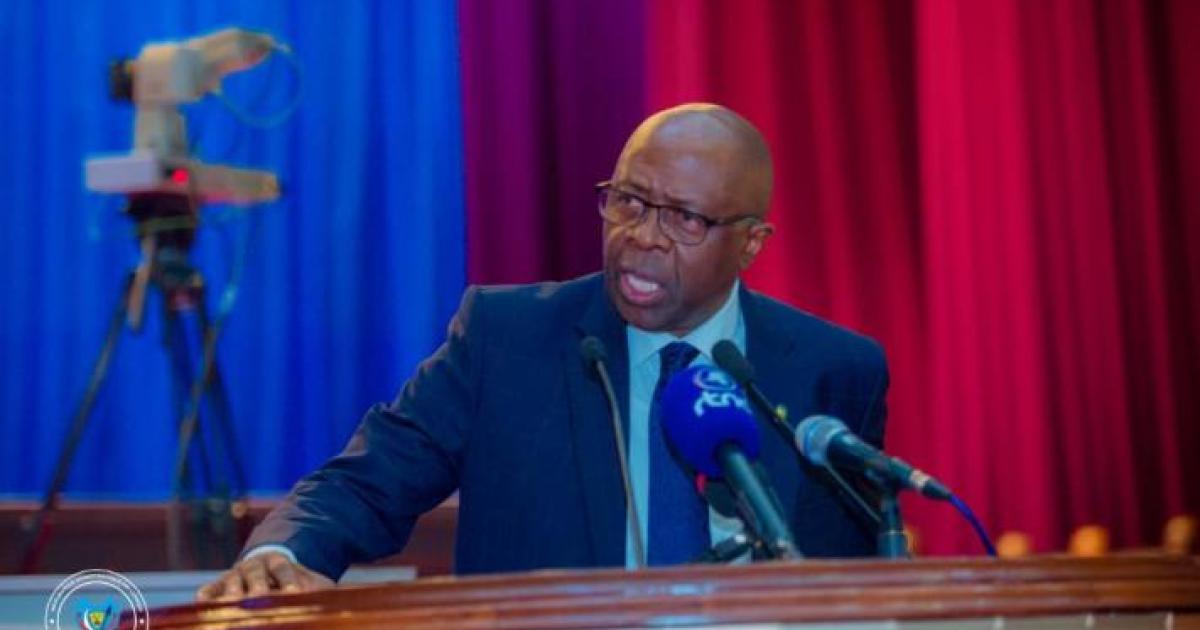
Christian Mwando: Blocage Contrôle Parlementaire RDC sur Bemba Interpellation
Summary
- National Deputy Christian Mwando initiated an interpellation against Minister Jean-Pierre Bemba.
- The interpellation targeted the Minister of Transport, Communication Routes, and Opening Up.
- The National Assembly's plenary session did not approve the interpellation.
- Deputy Mwando publicly denounced this blocking of parliamentary oversight.
- The event occurred on Thursday, November 26, 2026.
What Transpired
The reported blocage contrôle parlementaire by the Assemblée nationale RDC in the case of Deputy Christian Mwando's interpellation raises significant concerns regarding the robustness of accountability mechanisms for government officials in the country.
National Deputy Christian Mwando Nsimba Kabulo, representing the constituency of Moba in Tanganyika, recently initiated a parliamentary interpellation targeting Jean-Pierre Bemba, who serves as the Minister of Transport, Communication Routes, and Opening Up. This procedural move, designed to scrutinize the actions of a government official, was ultimately not approved during a plenary session of the National Assembly. The rejection of this interpellation has prompted strong criticism from Deputy Mwando, who publicly condemned the perceived obstruction of parliamentary oversight.
The proposed interpellation, a key mechanism for legislative scrutiny, sought to bring the Minister of Transport before the national representatives to answer questions regarding his portfolio. However, the legislative body decided against proceeding with the inquiry. This decision was made following a plenary session held on Thursday, November 26, 2026, where the proposal failed to gain the necessary support for its advancement.
The Role of Parliamentary Oversight
In the Democratic Republic of Congo, the Assemblée nationale RDC is vested with significant powers of contrôle parlementaire, or parliamentary oversight, over the executive branch. One of the primary tools for exercising this oversight is the interpellation, which allows députés nationaux like Christian Mwando to summon ministers to explain their policies, decisions, or performance. This process is fundamental to ensuring accountability and transparency within the government, providing a forum for public scrutiny of ministerial actions.
The purpose of an interpellation extends beyond mere questioning; it serves as a critical check on executive power, compelling ministers to justify their conduct before the elected representatives of the people. When such an initiative, like the Jean-Pierre Bemba interpellation, is brought forward, it signals a legislative intent to delve into specific aspects of governance. The ability of deputies to effectively utilize these mechanisms is crucial for maintaining the democratic balance and upholding the principles of good governance.
Implications for Accountability
The reported blocage contrôle parlementaire by the Assemblée nationale RDC in the case of Deputy Christian Mwando's interpellation raises significant concerns regarding the robustness of accountability mechanisms for government officials in the country. When attempts to exercise legislative oversight are thwarted, it can undermine the capacity of the parliament to hold the executive accountable for its actions. This situation could potentially signal a weakening of the checks and balances essential for a functioning democracy.
The denunciation by Christian Mwando député national highlights the importance of preserving the integrity of parliamentary procedures. The effective functioning of contrôle parlementaire RDC is vital for ensuring that ministers, including the Ministre Transports RDC, are subject to thorough scrutiny and are responsive to the concerns of the populace as represented by their elected officials. The inability to proceed with a ministerial interpellation could set a precedent that impacts future efforts to ensure governmental transparency and responsibility. The ongoing ability of the National Assembly to conduct robust oversight is paramount for public trust and the democratic process.
Practical Implications
The reported blocking of parliamentary oversight in the DRC's National Assembly could indicate a weakening of accountability mechanisms for government officials. Lawyers should monitor such developments as they may impact the transparency of executive actions and the avenues available for challenging governmental decisions or enforcing compliance standards.
Source
How does this affect you?
Get an AI analysis of this article grounded in your jurisdictions, practice areas, and any policy documents you've uploaded to Wansom.
Finish Reading the Full Story and the Expert Analysis.
Get the latest legal & regulatory intelligence in DR Congo
Wansom is AI and can make mistakes.