
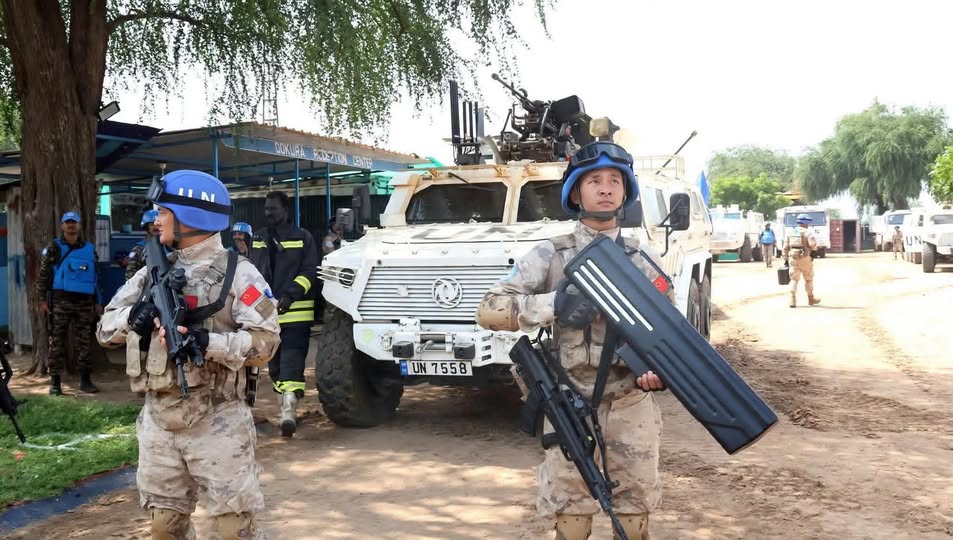
China Deploys Anti-Drone Systems in Abyei After Deadly Attack
Following a drone attack on a market in Abyei on October 19, 2026, that killed members of a United Nations peacekeeping force (UNISFA), China's Ministry of National Defence deployed anti-drone detection and jamming equipment and strengthened security measures in the disputed region.
This deployment signifies a critical evolution in peacekeeping operations, highlighting the increasing sophistication of threats faced by UN personnel and the necessity for advanced defensive capabilities against asymmetric warfare, particularly from drone technology. For practitioners, this incident underscores the severe legal implications of attacks on peacekeepers, who are protected persons under international law, and the proactive measures troop-contributing countries are taking to mitigate risks. The killing of UNISFA members in a market attack constitutes a grave violation of international law, potentially a war crime, and demands robust investigation and accountability.
The legal framework governing this situation involves the Status of Forces Agreement (SOFA) for UNISFA, the UN Charter (specifically Chapter VII mandates for peacekeeping operations), and international humanitarian law (IHL). Attacks against UN peacekeepers are considered attacks against protected persons and can constitute war crimes under the Rome Statute of the International Criminal Court. The deployment of anti-drone technology falls within the self-defense mandate of peacekeeping forces and the broader responsibility of troop-contributing countries to protect their personnel. The disputed status of Abyei, a region whose final status is yet to be determined between Sudan and South Sudan, adds layers of complexity regarding sovereignty, security, and the application of international law.
Key parties involved include China, through its Ministry of National Defence and its peacekeeping rapid-response force, the United Nations Interim Security Force for Abyei (UNISFA), and the unspecified perpetrators of the drone attack. The incident also impacts the local Sudanese and South Sudanese civilians in Abyei, whose security is a primary concern for UNISFA. The excerpt does not report the outcome of any investigation into the drone attack or the identification of the perpetrators.
Attorneys advising governments, military forces, or international organizations involved in peacekeeping operations should note the escalating threat posed by drones and the imperative for robust counter-drone capabilities and clear legal frameworks for their deployment and use. This incident reinforces the critical importance of protecting peacekeepers and civilians in conflict zones and the potential for accountability for attacks against them. It also highlights the complex legal and operational challenges inherent in disputed territories like Abyei, where the lines of authority and responsibility can be blurred, necessitating careful adherence to international mandates and legal principles.
How does this affect you?
Get an AI analysis of this article grounded in your jurisdictions, practice areas, and any policy documents you've uploaded to Wansom.
Finish Reading the Full Story and the Expert Analysis.
Wansom is AI and can make mistakes.