
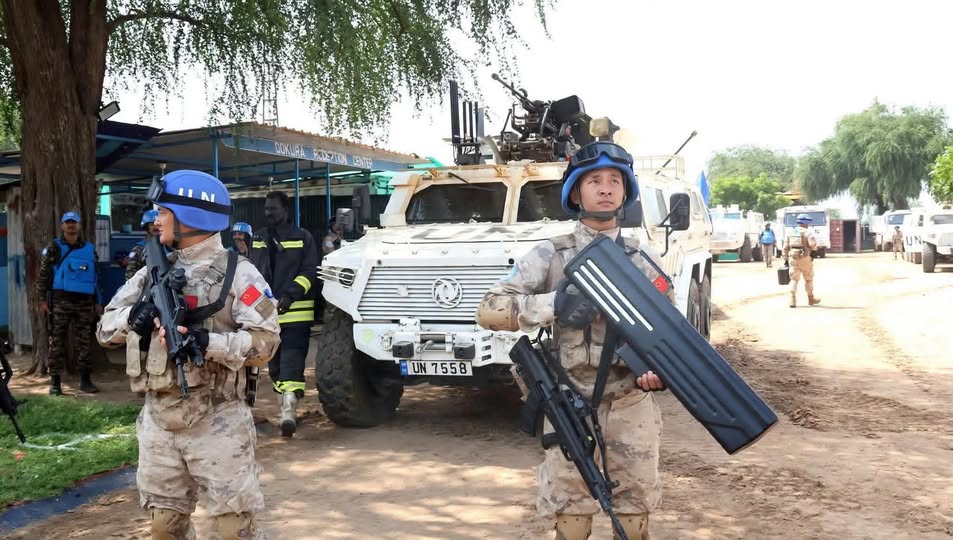
China Ministry National Defence: Anti-Drone Abyei UNISFA Deployment Secures Region
Summary
- A drone attack on October 19 in Abyei killed members of a UN peacekeeping force.
- China's Ministry of National Defence deployed anti-drone detection and jamming equipment to the disputed Abyei region.
- Chinese peacekeepers reinforced a Pakistani battalion and strengthened security measures, including surveillance drones and a 24/7 armed presence.
- The mission concluded after the security situation stabilized, and UNISFA praised the Chinese contingent's swift response.
- The intervention protected lives and property, contributing to regional stability in the Sudan-South Sudan border area.
Initial Attack and Urgent Request
Leadership within UNISFA publicly commended the Chinese peacekeepers for their prompt and professional intervention.
A drone assault on October 19 in a market within the Abyei region, a contested territory situated between Sudan and South Sudan, resulted in fatalities among personnel of the United Nations peacekeeping mission. This grave incident prompted the United Nations Interim Security Force for Abyei (UNISFA) to seek immediate support from Chinese peacekeepers stationed in the area.
UNISFA specifically requested the Chinese contingent to bolster a Pakistani infantry battalion following the deadly strike. The attack underscored the volatile security landscape in the region, highlighting the persistent challenges to Sudan South Sudan border security and the safety of international peacekeepers operating there.
Chinese Anti-Drone Deployment and Enhanced Security
In response to the UNISFA appeal, a rapid-response force from China's peacekeeping contingent was dispatched to the affected zone. Upon their arrival, these UNISFA Chinese peacekeepers swiftly implemented advanced anti-drone systems designed for both detecting and neutralizing unmanned aerial vehicles. This specialized equipment was crucial for mitigating the threat of further aerial attacks.
The deployment, confirmed by China's Ministry of National Defence, also involved a comprehensive enhancement of security protocols. The Chinese force utilized surveillance drones to maintain continuous oversight of the market area, ensuring the safety of civilians and security personnel. They established a round-the-clock armed presence, actively monitored the airspace, secured the perimeter, and fortified defensive positions to prevent any recurrence of the Abyei drone attack October 2023.
Mission Conclusion and Regional Stability
The reinforcement mission concluded once the security situation in the area was deemed stable, allowing the Chinese rapid-response force to return to its base camp. The China Ministry National Defence Sudan confirmed the successful completion of the security operation, which focused on protecting lives and property.
Leadership within UNISFA publicly commended the Chinese peacekeepers for their prompt and professional intervention. Their actions were credited with safeguarding lives, protecting assets, and significantly contributing to the overall stability of the Abyei region, demonstrating the critical role of the China anti-drone Abyei UNISFA deployment in maintaining peace.
Practical Implications
This news primarily concerns international security and peacekeeping operations in a disputed region. It does not present a direct legal or compliance implication for lawyers or compliance officers, but rather provides context on regional stability and the involvement of international actors.
Source
How does this affect you?
Get an AI analysis of this article grounded in your jurisdictions, practice areas, and any policy documents you've uploaded to Wansom.
Finish Reading the Full Story and the Expert Analysis.
Wansom is AI and can make mistakes.