
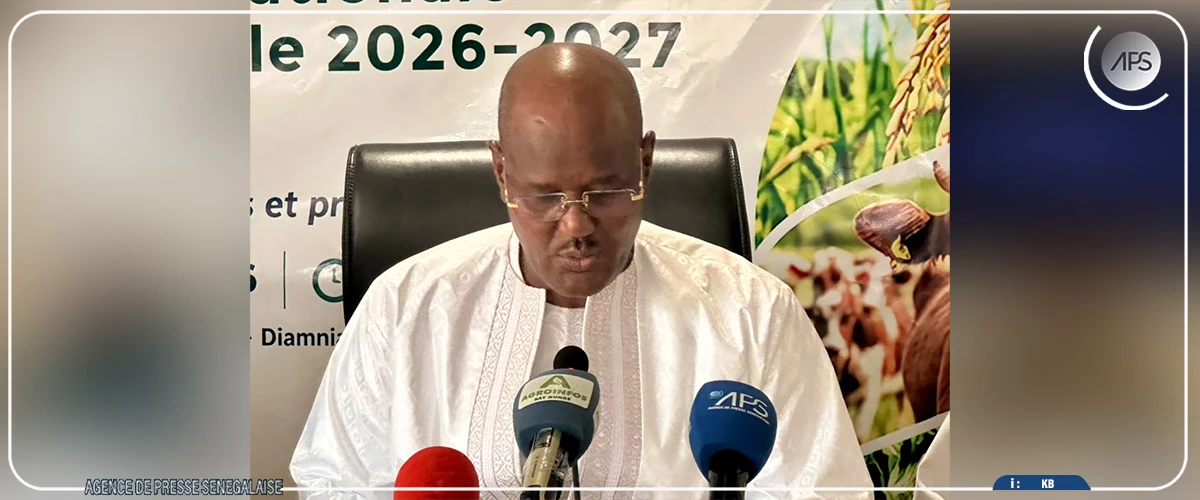
Cheikhou Oumar Ba: Bilan Campagne Agricole 2026-2027 Sénégal Satisfaisant
Summary
- Cheikhou Oumar Ba, Senegal's Minister of Agriculture, Food Sovereignty, and Livestock, presented an assessment of the 2026-2027 agricultural campaign on October 9 in Diamniadio.
- The minister described the campaign as "globally satisfactory" but also "relatively satisfactory," acknowledging significant underlying issues.
- Key challenges identified for the upcoming campaign include strong rainfall disparities, localized losses, and persistent difficulties in water management, mechanization, and commercialization.
- These persistent challenges are expected to influence future agricultural policy and may lead to new government initiatives or regulatory changes.
Assessment of the 2026-2027 Agricultural Campaign
The identified issues in water, mechanization, and commercialization are not merely operational concerns but represent areas where governmental intervention and regulatory adjustments are highly probable.
On October 9, in Diamniadio, Cheikhou Oumar Ba, who serves as the Minister of Agriculture, Food Sovereignty, and Livestock, provided an assessment of the upcoming 2026-2027 agricultural campaign in Senegal. The minister characterized the overall performance as "globally satisfactory," while also noting that the campaign's outlook was "relatively satisfactory" when considering specific areas of concern. This initial evaluation sets the stage for understanding the future trajectory of the nation's farming sector.
Despite the generally positive outlook for the Cheikhou Oumar Ba bilan campagne agricole 2026-2027 Sénégal, the minister highlighted several significant issues that are expected to impact outcomes. These include pronounced disparities in rainfall across different regions, leading to localized crop failures and reduced yields in certain areas. Such variations underscore the vulnerability of agricultural production to climatic factors, even as the broader picture remains encouraging for the performance agricole Sénégal 2026-2027.
Persistent Challenges Facing the Sector
Beyond the immediate climatic variations, Minister Ba identified several deep-seated and persistent challenges that continue to confront Senegal's agricultural landscape. These critical areas demand sustained attention and strategic intervention to ensure long-term stability and growth. Specifically, the minister pointed to ongoing difficulties related to water management, which is fundamental for irrigation and overall crop health, particularly in regions experiencing rainfall deficits.
Furthermore, the mechanization of farming processes remains a significant hurdle for the sector. Insufficient access to modern agricultural machinery and technology impedes efficiency and productivity, limiting the potential for expansion and modernization. The commercialization aspect also presents considerable défis agricoles Sénégal, with issues likely pertaining to market access, value chain development, and fair pricing for agricultural products, all of which are crucial for farmer livelihoods and the broader goal of souveraineté alimentaire Sénégal.
Implications for Policy and Regulatory Landscape
The challenges outlined by the ministre agriculture Sénégal, Cheikhou Oumar Ba, carry substantial implications for the future direction of agricultural policy in the nation. The identified issues in water, mechanization, and commercialization are not merely operational concerns but represent areas where governmental intervention and regulatory adjustments are highly probable. Stakeholders in the agricultural sector, including those in related industries like food processing, logistics, and equipment supply, should anticipate potential shifts in the legal and regulatory environment.
These persistent issues could prompt the Senegalese government to introduce new initiatives, allocate additional subsidies, or implement revised compliance requirements aimed at bolstering the sector's resilience and efficiency. For instance, new legislation might address water resource allocation or incentivize investment in modern farming equipment. Such developments in the politique agricole Sénégal would be critical for all entities operating within or alongside the nation's agricultural framework, as they seek to navigate an evolving landscape shaped by these ongoing challenges.
Practical Implications
Lawyers advising clients in Senegal's agricultural sector, or those involved in related industries like food processing, logistics, and equipment supply, should monitor potential legislative or regulatory changes stemming from the identified challenges in water management, mechanization, and commercialization. These areas may see new government initiatives, subsidies, or compliance requirements.
Source
Source: Original reporting via APS
How does this affect you?
Get an AI analysis of this article grounded in your jurisdictions, practice areas, and any policy documents you've uploaded to Wansom.
Finish Reading the Full Story and the Expert Analysis.
Get the latest legal & regulatory intelligence in Senegal
Wansom is AI and can make mistakes.