
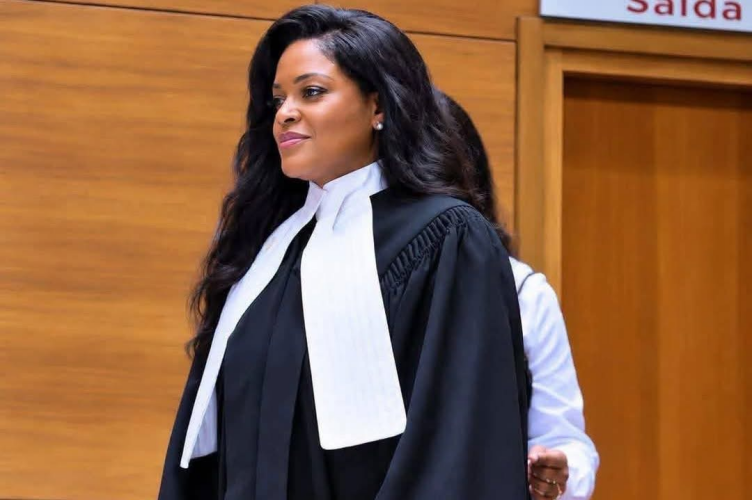
Charlyne Brumskine: Liberian Elected ECOWAS Court President
Summary
- Liberian lawyer Charlyne M. Brumskine was elected President of the ECOWAS Community Court of Justice on October 13, 2026, for a two-year term.
- She is the first Liberian woman to serve on the court, having been sworn in as a judge a week prior to her election.
- The court, operational since 2001, significantly expanded its reach in 2005 by allowing individuals to directly bring human rights cases.
- As President, Justice Brumskine will direct judicial business, set strategic direction, and advocate for member state compliance with judgments, a long-standing challenge for the institution.
- Her leadership begins at a critical time for ECOWAS, following the formal withdrawal of Mali, Burkina Faso, and Niger in January 2025, which impacts the court's jurisdiction and regional cohesion.
New Leadership at West Africa's Top Court
A central aspect of Justice Brumskine's presidential duties involves advocating for member states to comply with and enforce the court's judgments, a persistent challenge given the institution's lack of an independent enforcement mechanism.
Charlyne M. Brumskine, a distinguished Liberian lawyer and law professor, has been elected to lead the ECOWAS Community Court of Justice as its new President. Her election by fellow judges occurred on October 13, 2026, just one week after she was officially sworn in as one of five new judges joining the regional bench. This appointment marks a significant milestone, as Justice Brumskine becomes the first Liberian woman to serve on the court, taking on a two-year term at the helm of the Abuja-based judicial arm of the Economic Community of West African States.
In her acceptance address, Justice Brumskine conveyed a deep sense of humility and duty, expressing gratitude to her colleagues for their confidence. She acknowledged the profound obligations and high expectations inherent in leading a regional judicial institution responsible for interpreting and applying community law and, crucially, protecting human rights across West Africa. She emphasized that she views this prominent position not as a personal honor, but rather as a vital opportunity to serve the court, the broader ECOWAS community, and ultimately, the citizens of the region.
As the Charlyne Brumskine ECOWAS Court President, her responsibilities are extensive. She will preside over all court hearings and deliberations, directing its judicial business, which includes the assignment of cases and the scheduling of proceedings. Furthermore, she chairs the Bureau of the Court, a body instrumental in setting its strategic direction, work program, and budget priorities, while also overseeing the Registry and the court's administrative functions. Beyond these internal duties, she serves as the public face of the court, representing it externally and presenting its activity reports and budget to ECOWAS statutory bodies.
The Court's Evolving Mandate and Human Rights Focus
Established under the provisions of the ECOWAS treaty and becoming operational in 2001, the ECOWAS Community Court of Justice is tasked with interpreting and applying the bloc's laws and resolving disputes arising from them. Its jurisdiction covers disagreements between member states, ECOWAS institutions, and individuals. A pivotal expansion of its authority occurred in 2005, when a supplementary protocol was adopted, granting individuals the right to directly bring human rights cases before the court without first exhausting domestic legal remedies.
This unique feature has transformed the court into one of Africa's most accessible regional human rights forums. It has empowered ordinary citizens, journalists, and civil society organizations to challenge alleged abuses by their own governments, including arbitrary detention and restrictions on freedom of expression. This role as a West Africa human rights court underscores its critical importance in upholding fundamental rights across the region.
Challenges and the Path Forward for ECOWAS Judicial Leadership
A central aspect of Justice Brumskine's presidential duties involves advocating for member states to comply with and enforce the court's judgments, a persistent challenge given the institution's lack of an independent enforcement mechanism. The court relies heavily on national governments to implement its rulings, making diplomatic engagement and persuasion key components of the President's role in widening access to justice and ensuring the rule of law.
Justice Brumskine assumes her role at a particularly delicate moment for the ECOWAS bloc. In January 2025, Mali, Burkina Faso, and Niger, all currently under military rule, formally withdrew from the community. This significant development places their citizens outside the court's jurisdiction and presents a considerable test to the cohesion and future of the ECOWAS community. This context will undoubtedly shape the strategic direction and focus of the ECOWAS judicial leadership under Charlyne Brumskine 2026.
Her induction on October 6, 2026, at the ECOWAS Commission headquarters in Abuja, was part of a larger swearing-in ceremony for five new judges who will serve the 2026–2030 term. Senegalese President Bassirou Diomaye Faye, who chairs the ECOWAS Authority of Heads of State and Government, administered the oath of office. The other new judges include Désiré Henri Aihou of Benin, Awa Bah of The Gambia, Henrietta Uzoamaka Didigu of Nigeria, and Yaouza Ouro-Sama of Togo. They succeed five outgoing judges: Ricardo Cláudio Monteiro Gonçalves of Cape Verde, Sengu Mohamed Koroma of Sierra Leone, Dupe Atoki of Nigeria, Gberi-Bè Ouattara of Côte d’Ivoire, and Edward Amoako Asante of Ghana.
Practical Implications
Lawyers and compliance officers in West Africa should monitor the strategic direction and jurisprudence of the ECOWAS Court of Justice under its new president, particularly regarding human rights cases and efforts to ensure member state compliance with judgments, especially in light of recent withdrawals by some member states. This leadership change could influence the court's accessibility and effectiveness for regional legal matters.
Source
How does this affect you?
Get an AI analysis of this article grounded in your jurisdictions, practice areas, and any policy documents you've uploaded to Wansom.
Finish Reading the Full Story and the Expert Analysis.
Get the latest legal & regulatory intelligence in Liberia
Wansom is AI and can make mistakes.