
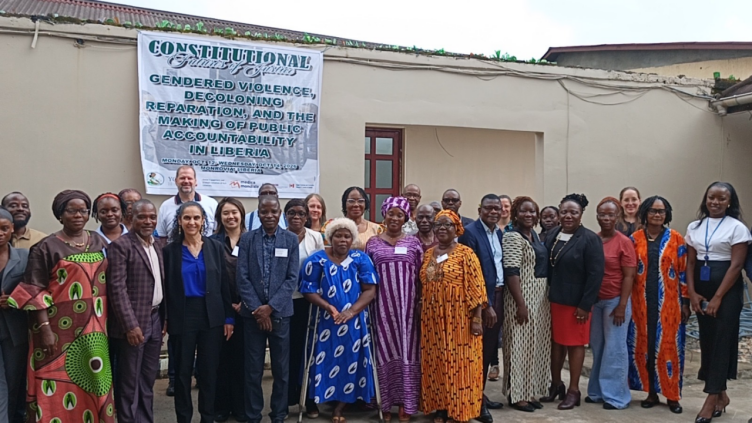
ADWANGA Liberia: Justice Conference for Survivors Addresses Gendered Violence
Summary
- ADWANGA hosted a three-day justice conference in Monrovia to address gender-based violence, accountability, and reparations for civil conflict survivors.
- The conference coincided with Liberia's efforts to establish a War and Economic Crimes Court (WECC), focusing on how it will handle conflict-related sexual and gender-based violence.
- ADWANGA's Amelia M. Cooper emphasized that justice for survivors extends beyond legal accountability to include recognition, support, dignity, and opportunities to rebuild lives.
- Deputy Gender Minister Curtis Dorley highlighted the lasting scars of sexual violence on Liberian women and girls, advocating for survivor-centered, compassionate justice.
- OHCHR's Marion Deniaud stressed that the WECC must earn public trust, respond meaningfully to victims, and incorporate survivor participation and gender-sensitive mandates.
What Happened
Instead, it encompasses a holistic process involving the acknowledgment of their suffering, provision of essential support and services, restoration of personal dignity, creation of opportunities to reconstruct their lives, and firm assurances against future recurrences of such violence.
The Aiding Disadvantaged Women and Girls Association (ADWANGA) recently convened a three-day justice conference in Monrovia, Liberia, from October 12 to 14. This significant gathering aimed to explore comprehensive strategies for addressing the enduring consequences of gender-based violence, bolstering public accountability, and ensuring that survivors of Liberia's civil conflicts receive meaningful access to justice and reparations. Under the theme, "Constitutional Futures of Justice: Gendered Violence, Decolonizing Reparations, and the Making of Public Accountability in Liberia," the event brought together a diverse group of participants, including government officials, international partners, researchers, legal practitioners, civil society organizations, and survivor advocates.
This ADWANGA Liberia justice conference for survivors takes place amidst Liberia's ongoing efforts to establish a War and Economic Crimes Court (WECC). The discussions at the conference are crucial for shaping the debate around how future accountability mechanisms should acknowledge conflict-related sexual and gender-based violence, address economic harm, and facilitate the restoration of survivors' dignity. Amelia M. Cooper, ADWANGA's Founder and Executive Director, articulated that for many survivors, true justice extends far beyond mere legal accountability for perpetrators. Instead, it encompasses a holistic process involving the acknowledgment of their suffering, provision of essential support and services, restoration of personal dignity, creation of opportunities to reconstruct their lives, and firm assurances against future recurrences of such violence. She urged attendees to identify practical approaches to survivor-centered justice in Liberia and beyond.
Legal and Societal Context
Deputy Gender Minister Curtis Dorley, representing the Ministry of Gender, Children and Social Protection, underscored the disproportionate impact of conflict-related violence on Liberian women and girls. He highlighted that sexual violence during the civil conflicts inflicted lasting physical, emotional, social, and economic scars that continue to affect individuals, families, and communities. Dorley emphasized that sustainable recovery necessitates more than just the absence of conflict; it requires formal recognition of the harm suffered, accessible justice pathways, the restoration of dignity, and concrete measures to assist survivors in rebuilding their lives. He further stressed the imperative of placing survivors at the core of all policies and institutions designed to address past abuses, asserting that justice must be responsive, inclusive, and compassionate, not merely legal and procedural. The minister also noted that the repercussions of sexual and gender-based violence often extend beyond the immediate incident, impacting survivors' health, education, livelihoods, family relationships, economic prospects, and societal participation.
Marion Deniaud from the Office of the United Nations High Commissioner for Human Rights (OHCHR) welcomed the conference as a timely opportunity to build upon the renewed momentum for implementing recommendations from Liberia’s Truth and Reconciliation Commission. She pointed out that the legacy of the conflicts includes not only sexual violence but also lost livelihoods, profound psychological trauma, economic vulnerability, and intergenerational harm, such as trauma affecting children born as a result of sexual violence. Deniaud stressed that the proposed Liberia War and Economic Crimes Court and the complementary National Anti-Corruption Court must be designed to cultivate public trust and respond meaningfully to victims and survivors. She advocated for survivor participation that goes beyond mere information-sharing, allowing them to actively shape the institutions themselves. Her recommendations included gender-sensitive court mandates, specialized expertise in gender-based violence, and robust safeguards to ensure the safe participation of victims and witnesses, alongside an emphasis on mental health support.
Why It Matters
The discussions at the ADWANGA Liberia justice conference are pivotal for the nation's future, particularly as the Liberia War and Economic Crimes Court moves closer to establishment. The focus on Liberia gender-based violence reparations and survivor-centered justice in Liberia represents a critical step towards comprehensive accountability. The outcomes of these deliberations will significantly influence how Liberia addresses the atrocities of its past, provides genuine redress, and supports the long-term recovery of those affected by conflict. The emphasis on a holistic approach to justice, which extends beyond punitive measures to include recognition, dignity, and rebuilding, sets a crucial precedent for transitional justice mechanisms globally. Ensuring that the WECC is designed with gender-sensitive mandates and robust survivor participation, as advocated by OHCHR Liberia conflict justice experts, is essential for its legitimacy and effectiveness in delivering true justice.
Practical Implications
Lawyers and compliance officers should closely monitor the ongoing discussions and eventual establishment of Liberia's War and Economic Crimes Court (WECC). Its design, particularly regarding gender-based violence, reparations, and survivor participation, will set precedents for accountability mechanisms and create new avenues for legal action or advocacy on behalf of civil conflict survivors.
Source
How does this affect you?
Get an AI analysis of this article grounded in your jurisdictions, practice areas, and any policy documents you've uploaded to Wansom.
Finish Reading the Full Story and the Expert Analysis.
Get the latest legal & regulatory intelligence in Liberia
Wansom is AI and can make mistakes.