
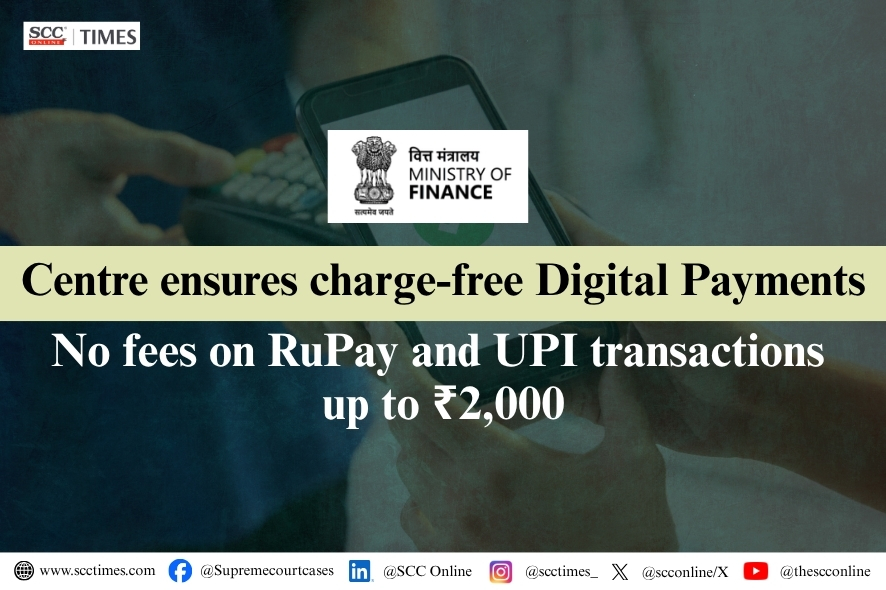
India Finance Ministry: RuPay UPI Fees Exempted Up To ₹2,000
Summary
- The Finance Ministry has issued a notification regarding digital payment fees.
- RuPay-powered debit card transactions and UPI payments up to ₹2,000 are now free from all direct or indirect charges.
- This directive is issued under Section 10A of the Payment and Settlement Systems Act, 2007.
- The measure aims to ensure charge-free digital payments for small-value transactions.
Regulatory Update on Digital Payment Fees
Lawyers advising these entities must ensure their clients' fee models and terms of service align precisely with this mandate, particularly concerning the prohibition of fees on RuPay and UPI transactions up to ₹2,000.
The Indian Finance Ministry has issued a significant notification clarifying the fee structure for certain digital payment methods, directly impacting the country's burgeoning fintech landscape. This directive mandates that transactions conducted using RuPay-powered debit cards and Unified Payments Interface (UPI) will remain exempt from any form of charges, whether direct or indirect. This crucial update specifically applies to transactions up to a value of ₹2,000, reinforcing the government's commitment to promoting accessible digital financial services across India. The notification aims to ensure that consumers and merchants can utilize these popular payment rails without incurring additional costs within the specified limit, thereby fostering greater adoption of digital payments. This move directly addresses concerns regarding potential India Finance Ministry RuPay UPI fees that could deter small-value digital transactions.
This policy is a key step in the government's broader strategy to encourage a cashless economy and enhance financial inclusion. By eliminating charges on these widely used platforms for smaller amounts, the Ministry seeks to remove financial barriers that might otherwise discourage individuals and small businesses from embracing digital transactions. The clarity provided by this notification is vital for all stakeholders, from payment processors to end-users, in understanding the operational parameters for digital payments in the country.
Statutory Basis and Scope
The legal authority for this directive stems from Section 10A of the Payment and Settlement Systems Act, 2007. This particular section empowers the Finance Ministry to regulate various aspects of payment and settlement systems within the country, ensuring their efficient and secure operation. By invoking Section 10A, the Ministry underscores the regulatory weight behind its mandate, making it a binding requirement for all entities involved in processing these transactions. The scope of the notification is precise, covering both RuPay debit card transactions and UPI payments, which are foundational to India's digital economy. This specific legal grounding ensures that the prohibition on UPI RuPay transaction charges India for amounts up to ₹2,000 is not merely a guideline but a statutory obligation.
Compliance with this provision is mandatory for all banks, payment gateways, and other financial institutions facilitating these transactions. The explicit reference to the Payment and Settlement Systems Act 2007 Section 10A highlights the government's intent to use its legislative powers to shape the digital payments landscape, ensuring that public interest, particularly the promotion of charge-free digital payments, is prioritized over potential revenue streams from small-value transactions.
Impact on the Digital Payments Ecosystem
This Finance Ministry digital payments notification has substantial implications for various stakeholders within the digital payments ecosystem, including banks, payment service providers, and merchants. The explicit prohibition on direct or indirect charges for INR 2000 limit digital payment fees means that entities cannot levy any fees on these specific transaction types and values. This effectively reinforces a "no merchant discount rate UPI RuPay" policy for small-value transactions, ensuring that the cost burden does not fall on either the consumer or the merchant for these essential digital services. The government's stance aims to maintain the affordability and accessibility of these payment methods, which are critical for driving financial inclusion and digitizing small-scale commerce across the nation.
For businesses, particularly small and medium enterprises (SMEs), this policy translates into reduced operational costs associated with accepting digital payments, potentially encouraging wider adoption. Payment service providers, however, may need to adjust their revenue models to account for the absence of fees on these specific transactions, especially given the high volume of small-value UPI and RuPay transactions in India. The long-term goal is to create a robust and cost-effective digital payment infrastructure that benefits all participants.
Broader Significance for Fintech Compliance
The directive from the Finance Ministry is a clear signal regarding the ongoing regulatory environment for digital payments in India. For fintech companies and payment service providers, this notification necessitates a thorough review of their existing fee structures and operational compliance. Adherence to these India fintech compliance regulations is paramount, as any deviation could lead to regulatory scrutiny. Lawyers advising these entities must ensure their clients' fee models and terms of service align precisely with this mandate, particularly concerning the prohibition of fees on RuPay and UPI transactions up to ₹2,000. This policy not only supports the broader goal of a cashless economy but also shapes the revenue models and operational strategies for businesses operating within India's dynamic digital payments landscape.
This regulatory move underscores the government's proactive approach to fostering a transparent and equitable digital payment ecosystem. It demands that all players in the fintech sector remain vigilant and adaptable to evolving compliance requirements, ensuring their services contribute to the national objective of widespread, affordable digital transactions. The implications extend to product development, marketing strategies, and customer communication, all of which must reflect the charge-free nature of these specific digital payment options.
Practical Implications
Lawyers advising payment service providers, fintech companies, or merchants must ensure their clients' fee structures and operational compliance align with this notification, which prohibits charging fees on RuPay and UPI transactions up to ₹2,000. This impacts revenue models and requires a review of existing terms and conditions for digital payment acceptance.
Source
How does this affect you?
Get an AI analysis of this article grounded in your jurisdictions, practice areas, and any policy documents you've uploaded to Wansom.
Finish Reading the Full Story and the Expert Analysis.
Get the latest legal & regulatory intelligence in India
Wansom is AI and can make mistakes.