
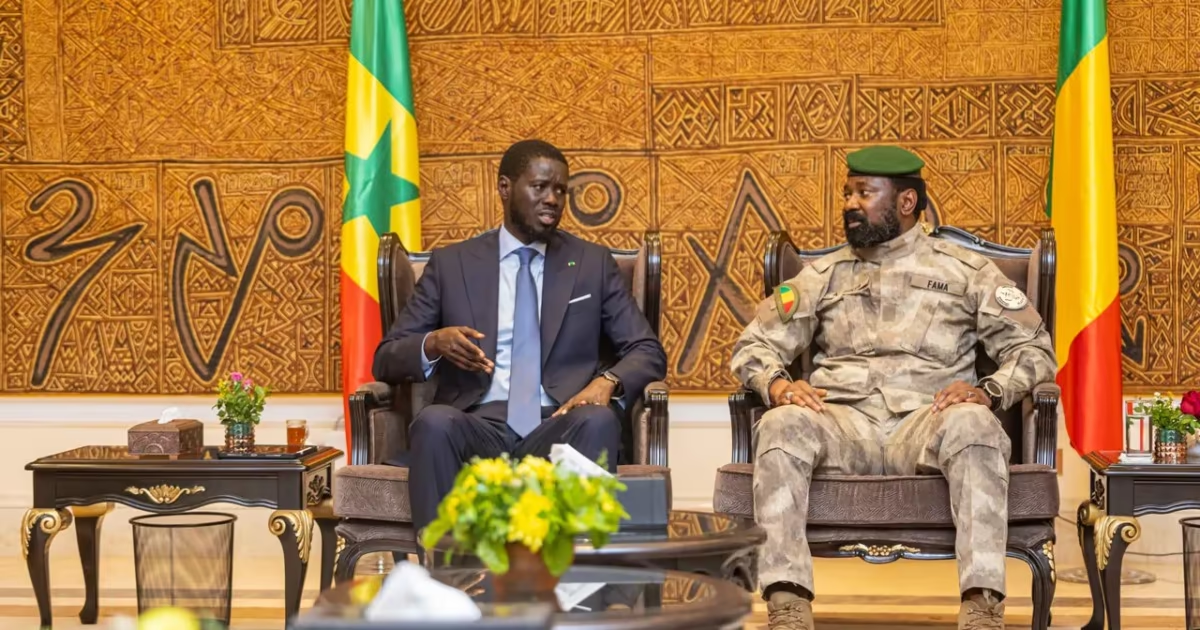
CEDEAO AES: Groupes Travail Coopération Dakar Established
Summary
- CEDEAO and AES have agreed in Dakar to form joint working groups to prepare a framework cooperation agreement.
- These are the first formal negotiations between the two organizations, with AES representing Burkina Faso, Mali, and Niger.
- The discussions aim for a "balanced" and "realistic" framework based on good neighborliness and sovereignty, but do not resolve existing divergences.
- No immediate changes to visas, border formalities, or the circulation of people and goods have been announced.
- Working groups will address topics including movement of people and goods, trade, cross-border cooperation, security, and legal/institutional matters.
Initial Steps Towards Regional Rapprochement
No immediate changes to visas, border formalities, or the circulation of people and goods have been announced.
The Economic Community of West African States (CEDEAO) and the Alliance of Sahel States (AES) recently convened in Dakar, reaching an agreement to establish joint working groups. This significant development marks the first formal negotiations between the two organizations, with the primary goal of laying the groundwork for a comprehensive framework cooperation agreement. The discussions aim to bridge existing differences while ensuring the enduring connections between the peoples of West Africa remain intact.
The AES delegation, representing a unified front from Burkina Faso, Mali, and Niger, arrived in Dakar following extensive internal preparations. Their foreign ministers had met in Ouagadougou on October 16, 2026, to meticulously review expert findings from October 14-15 and refine their strategic approach for the upcoming talks with CEDEAO. This preparatory work underscored AES's clear intention to engage in negotiations as a cohesive entity. These exchanges commenced shortly after Bassirou Diomaye Faye, who assumed the rotating presidency of CEDEAO at the Freetown summit on July 19, 2026, urged the organization to transition from mere observation to decisive action. The formation of these CEDEAO AES groupes travail coopération Dakar signifies a concrete move in that direction.
Foundations for a Future Framework
The proposed cooperation between CEDEAO and AES is intended to be built upon core principles of good neighborliness, mutual respect for state sovereignty, and a shared commitment to the dignity and well-being of West African populations. Both parties have expressed their ambition to forge a framework that is both "balanced" and "realistic," acknowledging the complexities of their relationship. It is important to note that while these initial steps are constructive, they do not, at this stage, resolve the underlying divergences that exist between the organizations.
The mandate of these newly formed working groups is to meticulously prepare the foundational elements for the future CEDEAO AES accord cadre. Their efforts will be crucial in defining the scope and nature of this cooperation. Potential areas for discussion within these groups are broad, encompassing critical aspects such as the movement of people and goods, trade regulations, enhanced coopération transfrontalière Afrique Ouest, regional security, and intricate questions juridiques institutionnelles CEDEAO AES. However, the joint communiqué, as reported by senenews, did not specify the exact topics to be assigned to each individual working group.
No Immediate Changes to Cross-Border Movement
Despite the initiation of these formal discussions and the establishment of working groups, a key point for individuals and businesses operating in the region is that pas de mesures visas immédiates have been announced. There are no immediate changes to border formalities or the general circulation of people and goods. The working groups are tasked with preparing the groundwork, but any concrete policy shifts regarding travel conditions or cross-border activities will only emerge from subsequent agreements.
The outcomes of these négociations circulation personnes biens could significantly impact citizens from Burkina Faso Mali Niger CEDEAO concerning their conditions for movement and residency within ECOWAS member states. Similarly, economic operators should closely monitor discussions that may shape rules governing trade and other cross-border commercial activities. The working groups are expected to present their findings to the respective ministers before a subsequent ministerial session, the date and location of which are yet to be determined. These ongoing negotiations are a continuation of earlier consultations that first began in Bamako on May 22, 2025.
Practical Implications
Lawyers and compliance officers should be aware that while formal negotiations are progressing between ECOWAS and AES to establish a cooperation framework through joint working groups, there are no immediate changes to visa requirements or border formalities. It is crucial to monitor the outcomes of these working groups, particularly concerning the movement of people and goods, trade, and legal/institutional matters, as future agreements could significantly impact cross-border operations and compliance obligations for clients in the region.
Source
Source: Original reporting via senenews
How does this affect you?
Get an AI analysis of this article grounded in your jurisdictions, practice areas, and any policy documents you've uploaded to Wansom.
Finish Reading the Full Story and the Expert Analysis.
Get the latest legal & regulatory intelligence in Senegal
Wansom is AI and can make mistakes.