
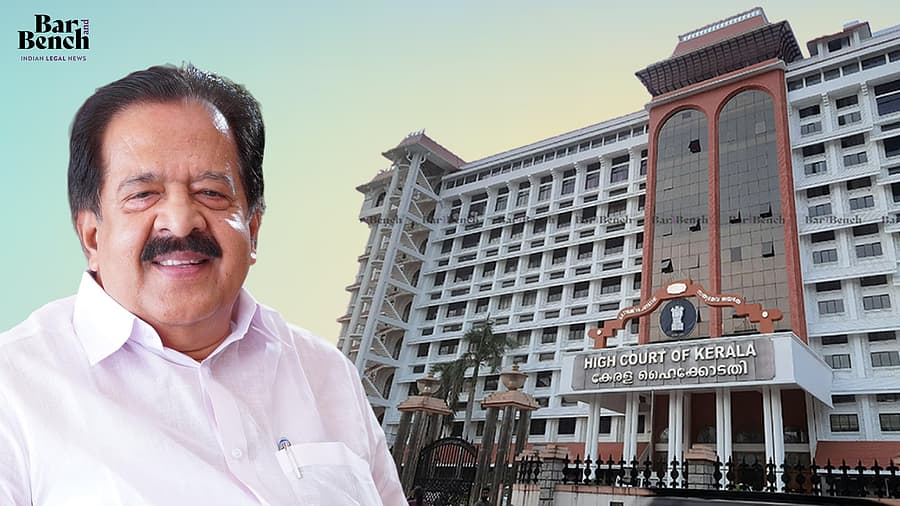
CBI Closes Titanium Corruption: No Prosecution for Chennithala
Summary
- The Central Bureau of Investigation has closed its probe into the Travancore Titanium corruption case against Ramesh Chennithala.
- The CBI informed the Kerala High Court that it found insufficient evidence to prosecute Ramesh Chennithala, currently the Minister for Home Affairs, Vigilance, Fire and Rescue Services, Prisons, and Coir in the Government of Kerala, and a senior leader of the Indian National Congress.
- The 2006 case involved alleged irregularities in setting up a ₹256 crore effluent treatment plant.
- A primary allegation was that the contract for equipment was awarded without a global tender.
- Chennithala withdrew his 2014 petition challenging the CBI probe, which the High Court accepted.
Investigation Concludes in Travancore Titanium Case
The CBI's decision to file a closure report, citing insufficient evidence to prosecute Ramesh Chennithala, underscores the stringent evidentiary thresholds required for criminal proceedings in high-profile corruption cases.
The Central Bureau of Investigation (CBI) recently informed the Kerala High Court that its extensive inquiry into the Travancore Titanium corruption case has concluded without sufficient material to warrant the prosecution of Ramesh Chennithala, currently the Minister for Home Affairs, Vigilance, Fire and Rescue Services, Prisons, and Coir in the Government of Kerala, and a senior leader of the Indian National Congress. This development marks the end of a long-standing investigation that began in 2006, focusing on alleged financial irregularities. The CBI communicated its findings to Justice C Jayachandran, indicating that a closure report had been formally submitted to the relevant special court, affirming the lack of prosecutable evidence against Chennithala.
Following this submission, counsel for Mr. Chennithala informed the High Court that their client would no longer pursue a petition he had filed in 2014, which had challenged the ongoing CBI probe against him. The Court acknowledged and accepted this withdrawal, effectively bringing an end to the legal proceedings surrounding his alleged involvement. The case centered on the establishment of an effluent treatment plant at the state-owned Travancore Titanium Products Ltd., an undertaking valued at ₹256 crores.
Core Allegations and Initial Scrutiny
The corruption allegations stemmed from the 2006 decision to construct an effluent treatment plant, a project undertaken by Travancore Titanium Products Ltd. The primary concern raised was that the contract for acquiring the necessary equipment for this substantial plant was awarded without the customary process of inviting a global tender, suggesting a lack of transparency and potential malfeasance. This decision to proceed with the plant's setup occurred during the tenure of a Congress-led United Democratic Front (UDF) government.
Initially, the Vigilance and Anti-Corruption Bureau conducted the preliminary investigation into these claims. Beyond Ramesh Chennithala, who served as a Member of the Legislative Assembly at the time, allegations of impropriety were also leveled against other prominent figures from that period. These included then Chief Minister Oommen Chandy and the State Industry Minister, VK Ebrahim Kunju, broadening the scope of the original corruption claims within the government.
Legal Precedent and Evidentiary Standards
The CBI's decision to file a closure report, citing insufficient evidence to prosecute Ramesh Chennithala, underscores the stringent evidentiary thresholds required for criminal proceedings in high-profile corruption cases. This outcome, communicated to the Kerala High Court, highlights the necessity for investigative agencies to gather robust and compelling material before proceeding with charges. The conclusion of the Travancore Titanium corruption case without prosecution for a key figure serves as a significant example of how even extensive probes can be terminated if the evidence does not meet the required legal standard.
This development offers a precedent for legal professionals, particularly those advising clients on the potential for challenging ongoing investigations or understanding the evidentiary burden faced by prosecuting agencies. The judicial oversight provided by the Kerala High Court in accepting the CBI's findings and the subsequent withdrawal of Chennithala's petition further illustrates the procedural checks and balances within the legal system. The CBI's "no evidence" report in the Travancore Titanium corruption case ultimately brings a definitive end to the Ramesh Chennithala CBI probe, emphasizing the importance of concrete proof in allegations of public sector malfeasance.
Practical Implications
This development illustrates the conclusion of a high-profile corruption investigation by the CBI due to insufficient evidence, offering a precedent for legal professionals advising clients on the evidentiary thresholds required for prosecution in such cases and the potential for challenging ongoing probes. It highlights the importance of robust evidence gathering by investigative agencies and the judicial oversight of their findings.
Source
Source: Based on recent news reports.
How does this affect you?
Get an AI analysis of this article grounded in your jurisdictions, practice areas, and any policy documents you've uploaded to Wansom.
Finish Reading the Full Story and the Expert Analysis.
Get the latest legal & regulatory intelligence in India
Wansom is AI and can make mistakes.