
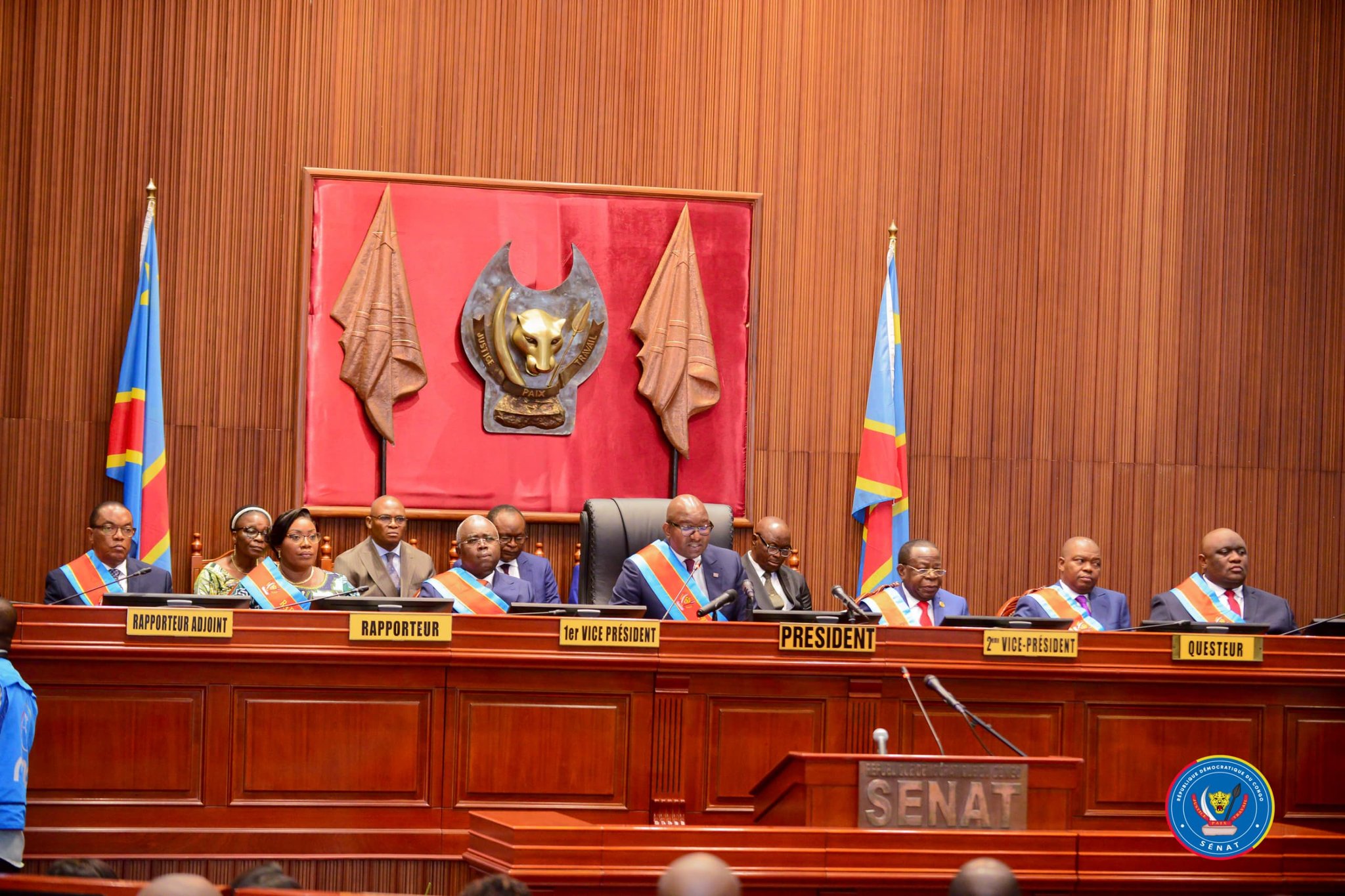
RDC Senate: Sama Lukonde Denounces Carole Agito Interpellation Immunité
Summary
- Senator Carole Agito Amela was questioned by security services on October 21.
- Senate President Jean-Michel Sama Lukonde denounced this action on October 22.
- Lukonde stated the interpellation violated parliamentary immunity laws.
- He cited Article 107 of the Constitution and Article 223 of the Senate's internal regulations.
- The Senate insists on legal procedure being followed, not opposing justice itself.
What Happened
For legal professionals, particularly those advising political figures or specializing in constitutional law in the DRC, this case serves as a crucial precedent.
On Thursday, October 22, the President of the Senate in the Democratic Republic of Congo, Jean-Michel Sama Lukonde, publicly condemned the questioning of Senator Carole Agito Amela by security services. This incident, which took place on Wednesday, October 21, has sparked significant concern within the legislative body regarding the proper adherence to legal protocols governing elected officials. The denunciation by Mr. Lukonde highlighted a perceived disregard for established parliamentary immunity procedures, which are designed to protect lawmakers from arbitrary actions.
The Senate President's strong reaction underscored the gravity of the situation, as he explicitly stated that the actions taken against Senator Agito were in direct contravention of the legal framework concerning parliamentary immunities. While the specific reasons or circumstances behind the senator's interpellation were not disclosed during his address, the focus remained squarely on the procedural missteps. This public rebuke from such a high-ranking official signals a firm stance by the Senate against any perceived overreach by security forces that bypasses constitutional and internal regulations.
Legal and Constitutional Context
The core of the Senate's objection, as articulated by President Jean-Michel Sama Lukonde, rests on specific provisions within the country's legal architecture. He specifically invoked Article 107 of the Constitution of the Democratic Republic of Congo and Article 223 of the Senate's own internal regulations. These articles collectively outline the stringent process that must be followed before any parliamentary immunity can be lifted, thereby allowing for the arrest or questioning of a sitting senator. The President emphasized that this prerequisite procedure for the levée immunité sénatrice Congo had been entirely circumvented in Senator Agito's case.
The invocation of these particular articles underscores the Senate's commitment to upholding the rule of law and protecting the institutional integrity of its members. The immunité parlementaire Sénat RDC is not an absolute shield against justice, but rather a safeguard ensuring that lawmakers can perform their duties without undue interference or politically motivated harassment. President Lukonde made it clear that the Senate does not oppose the pursuit of justice; however, it adamantly insists on the strict observance of legal procedures. This position reinforces the principle that even in matters of security or investigation, constitutional and regulatory frameworks must be respected.
Why It Matters
This incident, involving the Carole Agito interpellation immunité parlementaire RDC, carries significant weight for the functioning of democratic institutions in the country. The public condemnation by Jean-Michel Sama Lukonde dénonce arrestation of a sitting senator without due process sends a clear message about the boundaries of executive power and the protection of legislative independence. It highlights the critical importance of parliamentary immunity as a cornerstone of a robust democratic system, preventing arbitrary actions against elected representatives.
For legal professionals, particularly those advising political figures or specializing in constitutional law in the DRC, this case serves as a crucial precedent. It vividly illustrates the Senate's firm and unwavering interpretation and enforcement of parliamentary immunity procedures. The explicit reference to article 107 Constitution RDC and article 223 règlement intérieur Sénat by the Senate President signals that these provisions are not merely theoretical but are actively defended when challenged. Lawyers must therefore be acutely aware of these procedural requirements when an elected official faces investigation or potential arrest, as any deviation can lead to institutional conflict and legal challenges. This situation reinforces the necessity for all state organs to operate strictly within the confines of the law, ensuring that the rights and protections afforded to parliamentarians are meticulously observed.
Practical Implications
Lawyers advising political figures or involved in constitutional law in the DRC should note this case as it underscores the Senate's strict interpretation and enforcement of parliamentary immunity procedures, particularly concerning Articles 107 of the Constitution and 223 of its internal regulations, when an elected official faces arrest or investigation.
Source
How does this affect you?
Get an AI analysis of this article grounded in your jurisdictions, practice areas, and any policy documents you've uploaded to Wansom.
Finish Reading the Full Story and the Expert Analysis.
Get the latest legal & regulatory intelligence in DR Congo
Wansom is AI and can make mistakes.