
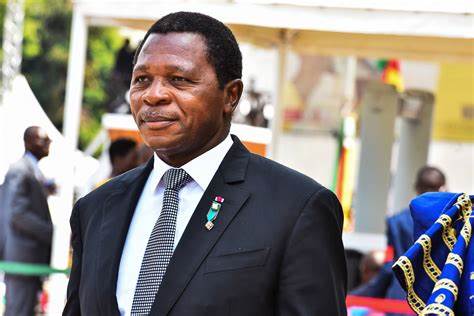
Cameroon Minister Suspends FSNC Political Party Ahead of Elections
On October 27, in Cameroon, the Minister of Territorial Administration, Paul Atanga Nji, issued an order suspending the Front pour le salut national du Cameroun (FSNC) political party for a period of three months, effectively freezing its activities nationwide. This significant administrative action, taken just months before legislative and municipal elections, targets the party whose candidate, Issa Tchiroma Bakary, placed second in the last presidential election. The ministerial order cites a range of serious allegations against the FSNC, including calls for insurrection, undermining territorial integrity, national unity, and sovereignty, incitement to violence leading to the destruction of public and private property, and severe public disorder. Additionally, the minister noted that one of the party's statutory leaders resides abroad. These alleged acts are stated to have occurred before, during, and after the presidential election of October 12, 2026, a date which, given the context of "last presidential election," appears to be a forward-looking typo in the source, but the suspension itself is immediate and current.
This suspension carries substantial legal and political significance for Cameroon, particularly for practitioners advising political entities, civil society organizations, and businesses operating within the country. The immediate impact is the silencing of a prominent opposition party, led by Issa Tchiroma Bakary, ahead of crucial elections, which could reshape the political landscape and potentially influence electoral outcomes. For legal professionals, it highlights the extensive powers vested in the Minister of Territorial Administration and the government's willingness to exercise them in matters of national security and public order. The allegations themselves, such as "appel à l’insurrection" and "atteinte à l’intégrité territoriale," are grave and touch upon fundamental aspects of state security, underscoring the high stakes involved in such administrative decisions. The order also serves as a stark reminder of the potential for administrative measures to impact political participation and freedom of association, raising questions about due process and the avenues for challenging such decisions.
The legal context for such a suspension in Cameroon typically involves the country's constitutional framework, laws governing political parties, and administrative law principles. While the specific legal instrument invoked by Minister Atanga Nji is an "arrêté ministériel," its legality would generally be assessed against the Law on Political Parties (e.g., Law No. 90/056 of 19 December 1990 relating to political parties in Cameroon, as amended) and other relevant legislation concerning public order and national security. These laws often grant the executive branch, through ministries like Territorial Administration, powers to regulate and, in extreme cases, suspend or dissolve political associations that are deemed to threaten national stability or public order. The allegations of undermining territorial integrity and inciting violence fall squarely within the scope of actions that could trigger such executive intervention. However, such administrative actions are generally subject to judicial review by the administrative chambers of the Supreme Court, allowing affected parties to challenge the legality and proportionality of the decision, although the excerpt does not report any such challenge at this stage.
For attorneys and legal professionals, this development underscores the critical importance of understanding the interplay between administrative powers, political rights, and national security legislation in Cameroon. Practitioners advising political parties must be acutely aware of the legal boundaries of political expression and activity, particularly in the lead-up to elections, and the potential for swift and decisive administrative action. Businesses, especially those with operations or investments sensitive to political stability, should monitor such developments closely as they can signal shifts in the regulatory environment and potential for increased political risk. Furthermore, legal counsel should be prepared to advise on potential avenues for challenging administrative suspensions, including the procedural requirements for seeking judicial review and the substantive arguments that might be raised against such an order. The explicit warning of judicial prosecution for contravening the suspension also highlights the need for strict compliance and careful legal guidance for the FSNC and its members during this three-month period.
How does this affect you?
Get an AI analysis of this article grounded in your jurisdictions, practice areas, and any policy documents you've uploaded to Wansom.
Finish Reading the Full Story and the Expert Analysis.
Wansom is AI and can make mistakes.