
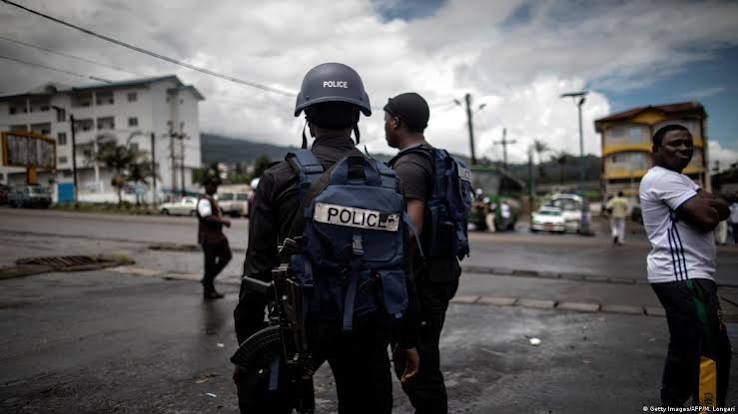
Cameroon Police Deployment: UN Human Rights Training Detailed
Summary
- Cameroon reported deploying 12,000 retrained police officers to crisis zones between 2016 and 2026 for anti-terrorism operations.
- This information was shared with the UN Human Rights Committee during its periodic review on October 23-24, 2026.
- The government stated that all security forces receive initial training to prevent human rights violations before deployment.
- At least 250 national gendarmerie personnel received seven humanitarian law training sessions between 2024 and 2025, organized with the ICRC.
- These disclosures addressed concerns raised by the committee regarding Cameroon's anti-terrorism measures and the definition of terrorist acts.
Cameroon's Security Force Deployments and Training Disclosures
By formally declaring that its personnel, including those involved in the Cameroon police deployment, receive training to prevent human rights violations in anti-terrorism contexts, the government establishes a benchmark against which its actions can be measured.
During a periodic review by the United Nations Human Rights Committee, Cameroon's delegation announced the deployment of 12,000 police officers to various security crisis zones across the country. These deployments, which occurred between 2016 and 2026, followed specialized retraining for the officers, specifically in the context of anti-terrorism operations. This information was presented to the committee during its sessions held in Geneva on October 23 and 24, 2026, as part of its oversight of the International Covenant on Civil and Political Rights.
The Cameroonian government further detailed its commitment to ensuring its security forces are adequately prepared before deployment. The delegation affirmed that all defense and security personnel undergo initial training designed to prevent human rights violations, particularly during counter-terrorism efforts. This comprehensive approach aims to equip officers with the necessary knowledge and ethical frameworks to operate effectively while upholding international standards.
International Scrutiny and Human Rights Commitments
The disclosures regarding the Cameroon police deployment and associated training initiatives were made in response to specific concerns raised by the UN Human Rights Committee. Notably, committee member Ms. Bassim had questioned certain anti-terrorism measures implemented by the Cameroonian state, as well as the broad and potentially ambiguous definition of terrorist acts within national legislation. The government's presentation aimed to address these points, emphasizing its efforts to align security operations with human rights principles.
Further illustrating its commitment to international humanitarian law, the delegation reported on specialized training for its gendarmerie. Between 2024 and 2025, at least 250 personnel from the national gendarmerie participated in seven distinct training sessions focused on humanitarian law. These crucial sessions were organized through ongoing dialogue and collaboration with the International Committee of the Red Cross (ICRC), underscoring a partnership aimed at enhancing the adherence of Cameroon's security forces to global humanitarian standards.
Implications for Accountability and Compliance
The statements made by the Cameroonian delegation to the UN Human Rights Committee are significant for assessing the state's accountability regarding the conduct of its security forces. By formally declaring that its personnel, including those involved in the Cameroon police deployment, receive training to prevent human rights violations in anti-terrorism contexts, the government establishes a benchmark against which its actions can be measured. This explicit commitment to training in international humanitarian law, particularly for the national gendarmerie, provides a basis for future monitoring and evaluation by international bodies.
For legal professionals and organizations engaged in human rights compliance or security sector reform in Cameroon, these declarations offer critical insights. The government's stated policy of retraining and initial instruction for its security forces, coupled with specific training for the gendarmerie on humanitarian law, highlights an official recognition of the importance of human rights in anti-terrorism operations. This context is crucial for understanding the government's position and for evaluating potential risks and compliance challenges related to security force conduct in the country.
Practical Implications
Lawyers advising on human rights compliance or security sector engagement in Cameroon should note the government's stated commitment to training security forces in international humanitarian law, particularly in anti-terrorism operations, as presented to the UN Human Rights Committee. This context is crucial for assessing state accountability and potential risks related to security force conduct.
Source
Source: Original reporting via DW
How does this affect you?
Get an AI analysis of this article grounded in your jurisdictions, practice areas, and any policy documents you've uploaded to Wansom.
Finish Reading the Full Story and the Expert Analysis.
Wansom is AI and can make mistakes.