
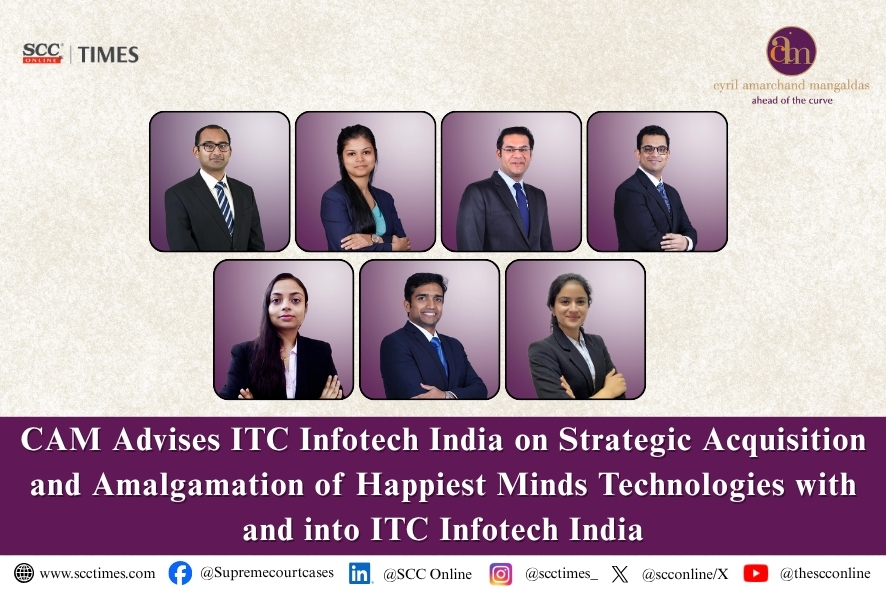
CAM Advises ITC Infotech Happiest Minds Acquisition
Summary
- ITC Infotech India is undertaking a strategic acquisition and amalgamation of Happiest Minds Technologies, with definitive agreements signed on August 31, 2026.
- Cyril Amarchand Mangaldas (CAM) is providing legal counsel to ITC Infotech India for this transaction.
- The acquisition is contingent upon obtaining various regulatory approvals from relevant authorities, including the CCI, stock exchanges, and NCLT.
- The amalgamation component specifically requires the formal consent of both shareholders and creditors.
- This deal highlights the complex, multi-layered approval processes typical for significant M&A transactions in India, with an expected completion within approximately 15 months.
Transaction Overview
The necessity of securing multiple layers of consent—from regulators, shareholders, and creditors—underscores the intricate legal and procedural demands inherent in significant corporate restructuring in India.
ITC Infotech India is proceeding with a strategic acquisition and subsequent amalgamation of Happiest Minds Technologies. Definitive agreements to combine the businesses were signed on August 31, 2026, marking a notable development in the Indian technology sector. The transaction involves integrating Happiest Minds Technologies directly into ITC Infotech India.
Legal counsel for ITC Infotech India in this complex transaction is being provided by Cyril Amarchand Mangaldas (CAM). The firm's involvement underscores the intricate legal considerations inherent in such large-scale corporate restructuring efforts.
The successful completion of this CAM advises ITC Infotech Happiest Minds acquisition is contingent upon several critical conditions. Foremost among these are various regulatory approvals that must be secured from relevant authorities, including the Competition Commission of India, relevant stock exchanges, and the National Company Law Tribunal. Additionally, the amalgamation component of the deal specifically requires the formal consent of both the shareholders and creditors of the involved entities, highlighting the multi-stakeholder nature of such corporate actions. The companies expect the transaction to be completed within approximately 15 months and will continue to operate independently until all approvals have been obtained.
Navigating India's Amalgamation Framework
The requirement for regulatory, shareholder, and creditor approvals for this amalgamation is a standard, yet complex, feature of significant M&A and corporate restructuring deals in India. Under the Companies Act, 2013, amalgamations typically necessitate a multi-stage approval process designed to protect the interests of all parties involved and ensure compliance with legal frameworks.
This process often begins with board approvals from both ITC Infotech India and Happiest Minds Technologies, followed by seeking the affirmative vote of their respective shareholders, frequently requiring a supermajority. Creditors also play a crucial role, as their consent may be sought, particularly if the amalgamation could impact their existing rights or claims. Beyond internal corporate governance, external regulatory bodies, such as the Competition Commission of India (CCI), may need to grant their approval if the transaction meets certain thresholds, ensuring that the amalgamation does not lead to anti-competitive practices.
Crucially, schemes of amalgamation in India usually require sanction from the National Company Law Tribunal (NCLT). This judicial oversight involves a detailed petition, public notices, and hearings to ensure the scheme is fair, reasonable, and in the public interest, as well as compliant with all statutory provisions. This rigorous framework ensures transparency and accountability throughout the amalgamation process.
Strategic Implications and Legal Expertise
The strategic acquisition of Happiest Minds Technologies by ITC Infotech India, advised by Cyril Amarchand Mangaldas ITC Infotech, reflects a broader trend of consolidation and growth within the Indian technology landscape. Such strategic moves are often aimed at enhancing market position, expanding service offerings, or achieving operational synergies.
However, the path to realizing these strategic benefits is paved with significant legal and procedural hurdles. The necessity of securing multiple layers of consent—from regulators, shareholders, and creditors—underscores the intricate legal and procedural demands inherent in significant corporate restructuring in India. This multi-faceted approval process can be time-consuming and requires meticulous planning and execution.
The involvement of a prominent firm like Cyril Amarchand Mangaldas as Indian M&A legal counsel highlights the specialized expertise required to navigate these complexities. Their role in advising ITC Infotech India on this strategic acquisition and amalgamation demonstrates the critical importance of experienced legal guidance in successfully steering through the regulatory maze and securing the necessary approvals for such high-stakes corporate transactions.
Practical Implications
This transaction highlights the complex regulatory, shareholder, and creditor approval processes involved in significant M&A and amalgamation deals in India. Lawyers advising on similar corporate restructuring or acquisitions should anticipate these multi-layered approval requirements and consider the expertise of firms like CAM in navigating them.
Source
Source: Original reporting via SCC Times
How does this affect you?
Get an AI analysis of this article grounded in your jurisdictions, practice areas, and any policy documents you've uploaded to Wansom.
Finish Reading the Full Story and the Expert Analysis.
Wansom is AI and can make mistakes.