
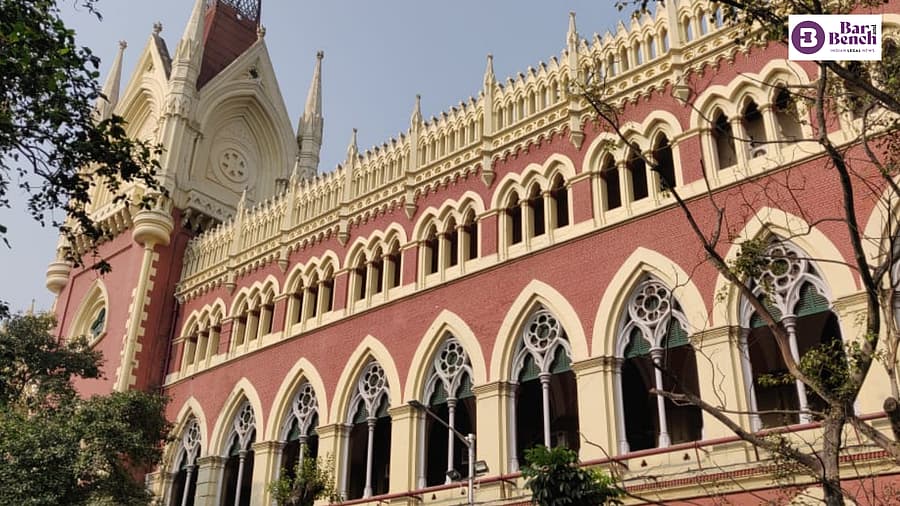
Calcutta High Court: Orders Detailed Police Report on Gnanananda Samanta
Summary
- The Calcutta High Court ordered a detailed police report regarding allegations that TMC block president Gnanananda Samanta was assaulted and paraded naked.
- Gnanananda Samanta's office-cum-house in Bishnupur was reportedly attacked on August 25 by thugs, allegedly affiliated with the BJP.
- Samanta claimed he was stripped, beaten, and paraded after his personal items were stolen during the incident.
- Justice Saugata Bhattacharyya initially considered referring the matter to a magistrate but then ordered the Inspector-in-Charge of Bishnupur Police Station to file a report.
- Samanta's plea sought an independent and effective investigation into the events.
The Allegations of Assault
This judicial directive sets a precedent for legal practitioners, indicating that the Calcutta High Court is prepared to intervene and compel detailed police reports in circumstances where severe misconduct is alleged and the initial investigation is deemed unsatisfactory.
On the night of August 25, Gnanananda Samanta, the Trinamool Congress (TMC) block president from Bishnupur, reportedly endured a brutal assault at his office-cum-house located in Bibighat. According to his account, a group of individuals, allegedly affiliated with the Bharatiya Janata Party (BJP), launched an attack, armed with sticks, stones, and various sharp objects. The assailants first forcibly seized his mobile phone, ATM card, and government-issued identification documents.
The situation escalated rapidly as Samanta was subjected to a severe physical beating, involving kicks, blows, and dangerous weapons. The violence culminated in his being stripped naked, further beaten, and then paraded publicly. Following this harrowing ordeal, Gnanananda Samanta required medical attention and was subsequently admitted to a private hospital for treatment. His plea to the court sought a directive for police authorities to conduct an independent and effective investigation into these grave incidents.
Calcutta High Court's Intervention
The Calcutta High Court recently intervened in the matter of Gnanananda Samanta v. State of West Bengal and Ors., addressing the serious allegations of assault and public humiliation against the TMC block president. Justice Saugata Bhattacharyya, presiding over the case, initially considered referring the petition to the jurisdictional magistrate, given that Samanta's primary request centered on rectifying an unsatisfactory police investigation into the alleged incident.
However, recognizing the extreme gravity of the reported events, Justice Bhattacharyya ultimately decided against this course of action. Instead, the court issued a direct order to the Inspector-in-Charge of the Bishnupur Police Station. This directive mandates the submission of a detailed Calcutta High Court police report Gnanananda Samanta, outlining all steps taken in response to Samanta's complaint. This order underscores the court's commitment to ensuring a thorough examination of the police's handling of such severe allegations.
Demanding Accountability and Oversight
The Calcutta High Court's decision to demand a comprehensive report from the Bishnupur police, rather than simply deferring to a lower court, highlights a significant judicial emphasis on accountability, particularly in cases involving alleged political violence and police inaction. The Justice Saugata Bhattacharyya order reflects the judiciary's willingness to exercise direct oversight when initial investigative efforts are perceived as inadequate or biased. This intervention is crucial for ensuring that the Bishnupur police investigation into the alleged TMC block president assault Calcutta HC is conducted with the necessary diligence and impartiality.
This judicial directive sets a precedent for legal practitioners, indicating that the Calcutta High Court is prepared to intervene and compel detailed police reports in circumstances where severe misconduct is alleged and the initial investigation is deemed unsatisfactory. Such actions provide a vital mechanism for seeking judicial oversight, particularly when there are concerns about the adequacy or fairness of police responses to serious complaints. The court's insistence on a detailed account of the steps taken reinforces the principle that law enforcement agencies must be transparent and effective in their duties.
Practical Implications
Lawyers should note the Calcutta High Court's willingness to intervene and demand detailed police reports in cases alleging severe misconduct and unsatisfactory investigation, providing a precedent for seeking judicial oversight in similar circumstances where police action is deemed inadequate or biased.
Source
How does this affect you?
Get an AI analysis of this article grounded in your jurisdictions, practice areas, and any policy documents you've uploaded to Wansom.
Finish Reading the Full Story and the Expert Analysis.
Get the latest legal & regulatory intelligence in India
Wansom is AI and can make mistakes.