
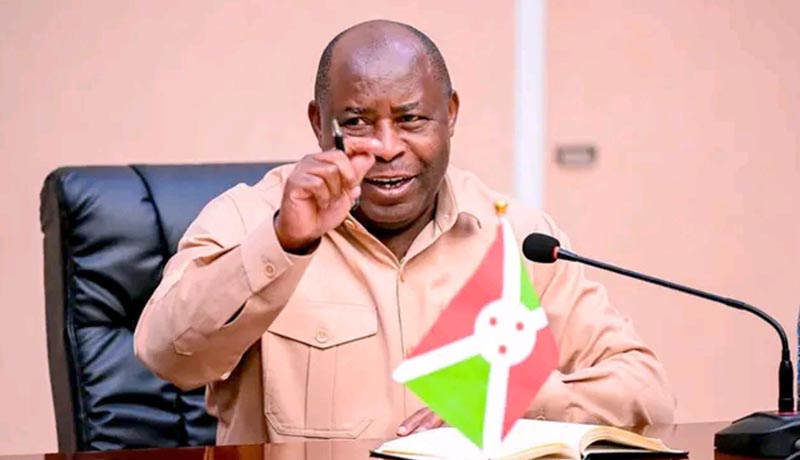
Burundi Ndayishimiye: Mining Budget 2026-2027 to Fund 50% of State Budget
Summary
- Burundian President Evariste Ndayishimiye has condemned officials for plundering state wealth, specifically citing mismanagement within the Ministry of Mining, Energy, Industry, Commerce, & Tourism.
- The Ministry of Mining, Energy, Industry, Commerce, & Tourism has been mandated to contribute at least 50% to the general state budget for the 2026-2027 fiscal period.
- Economist Jean Ndenzako supports this objective as politically pertinent but stresses the necessity of good economic governance, including production, traceability, and compliance.
- The President's ambitious revenue targets signal increased regulatory scrutiny and potential policy shifts for companies operating in Burundi's mining sector.
- The government aims to improve revenue collection and compliance to ensure the mining sector effectively contributes to national finances.
President Ndayishimiye's Directives
This ambitious target underscores President Ndayishimiye's explicit reliance on the mining sector to bolster national finances, particularly for the upcoming 2026-2027 fiscal period.
Burundian President Evariste Ndayishimiye has issued a stern rebuke against government officials accused of illicitly enriching themselves from state resources. The President specifically criticized those entrusted with safeguarding national wealth but who instead engage in its plunder. This strong condemnation highlights a broader concern within the administration regarding the management of public assets and the integrity of state institutions.
Among the entities singled out for poor management is the Ministry of Mining, Energy, Industry, Commerce, & Tourism. President Ndayishimiye's remarks indicate a significant dissatisfaction with the current operational standards and oversight within this crucial ministry. The criticism comes as the government prepares its financial strategy for the coming years, placing considerable emphasis on contributions from key economic sectors.
In a clear demonstration of this reliance, the Ministry of Mining, Energy, Industry, Commerce, & Tourism has been assigned an ambitious mandate: to contribute at least 50% to the general state budget for the 2026-2027 fiscal cycle. This directive underscores a strategic shift towards leveraging the nation's natural resources as a primary driver for national revenue, directly linking the performance of the Burundi Ministry of Mining, Energy, Industry, Commerce, & Tourism to the country's overall financial stability.
Ambitious Financial Mandate and Governance Concerns
The directive for the Ministry of Mining, Energy, Industry, Commerce, & Tourism to finance half of the 2026-2027 state budget represents a substantial Ndayishimiye mining revenue target. This ambitious goal reflects President Evariste Ndayishimiye's explicit reliance on the mining sector to bolster national finances. The expectation is that improved management and increased output from this sector will significantly enhance the Burundi mining sector financing capabilities.
Economist Jean Ndenzako has weighed in on this development, describing the objective as both "politically pertinent" and a "good orientation" for the nation's economic future. While acknowledging the strategic importance of the President's vision, Ndenzako also emphasized that the successful realization of this target hinges critically on the implementation of robust "good economic governance." This crucial caveat suggests that while the ambition is commendable, the practical execution requires fundamental improvements in operational frameworks.
Ndenzako further elaborated that effective economic governance in the mining sector must encompass three key pillars: enhanced production, stringent traceability of resources, and strict compliance with regulatory standards. These elements are vital to ensure that the increased revenue targets are met sustainably and transparently, addressing the underlying issues of mismanagement that President Ndayishimiye has highlighted. Without these foundational changes, the ambitious budget contribution may prove challenging to achieve.
Implications for Burundi's Mining Sector
The President's strong stance signals a new era of heightened scrutiny and accountability for entities involved in the nation's resource extraction, particularly as the sector is tasked with an ambitious 50% contribution to the 2026-2027 state budget. Companies currently operating or planning to operate within the Burundi mining sector should anticipate a significant increase in regulatory oversight and potential enforcement actions. This renewed focus on the Burundi Ndayishimiye mining budget 2026-2027 underscores a governmental push to maximize returns from natural resources.
The emphasis on good economic governance, including production, traceability, and compliance, suggests that the Evariste Ndayishimiye mining policy will likely involve stricter adherence to licensing agreements, environmental standards, and revenue reporting. This shift is designed to curb the alleged plundering of state wealth and ensure that the benefits of mining operations are properly channeled into national development. The government's determination to improve Burundi economic governance mining practices will undoubtedly reshape the operational landscape for all stakeholders.
Ultimately, the success of these Ndayishimiye mining revenue targets will depend on the government's ability to translate its strong rhetoric into concrete policy changes and effective enforcement. For companies, this means a need for proactive engagement with evolving regulations and a commitment to transparent and compliant operations to align with the state's ambitious financial objectives and avoid potential penalties.
Practical Implications
Companies operating or planning to operate in Burundi's mining sector should anticipate increased regulatory scrutiny, enforcement actions, and potential policy shifts aimed at improving revenue collection and compliance, given the President's explicit reliance on the sector for the 2026-2027 budget and concerns over mismanagement.
Source
Source: Original reporting via Iwacu
How does this affect you?
Get an AI analysis of this article grounded in your jurisdictions, practice areas, and any policy documents you've uploaded to Wansom.
Wansom is AI and can make mistakes.